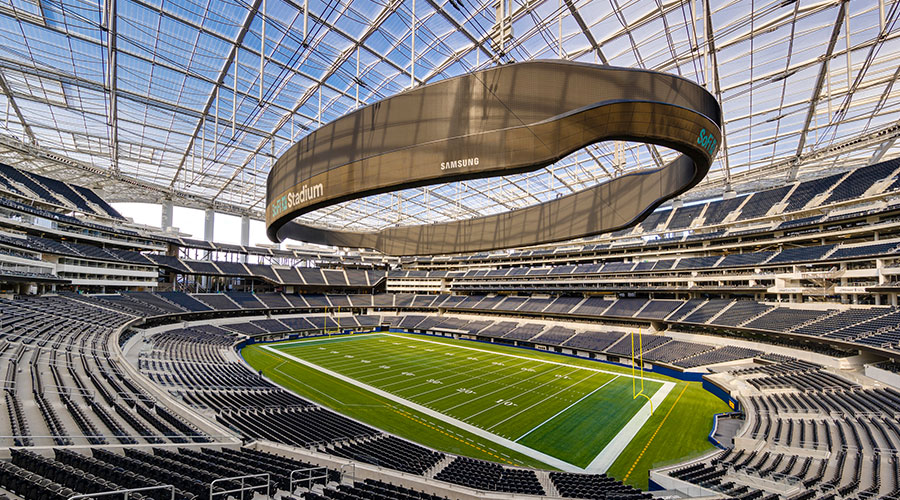
 Photo credit: Kevin Korczyk
Resilient Stadiums: A Touchdown for Safety and Revenue
Structural flexibility and comfort are key to creating a unique, memorable, in-person experience that draws attendees time and again.
By Valerie Dennis Craven, Contributing Writer
With the opening of new sports complexes comes a lot of buzz and excitement for guests, teams, employees and the local community. While stadium must-haves have shifted over time, today’s trend is for a multipurpose event area, both inside the arena and surrounding it.
This creates a space where resilience equals revenue, not just a structure that survives an extreme event from time to time, but a sustaining facility that offers comfort and safety throughout the wear and tear of use, weather, technology and events.
Where the recent-day trend was to create more intimate spaces that reflected original stadium designs, nowadays sports venues are built for year-round use with a focus on comfort. That includes structural and mechanical details inside such as coverings and windows, and heating and cooling. Stadiums today often serve as a hub for a multitenant experience that can include restaurants and bars, hotels or retail offerings.
The goal of such sites, explains sports and entertainment structural engineer Ryan Anderson, is for attendees to “have a unique and memorable experience in person that they won’t get at home, even though they might have a 80-inch TV at home with a fully stocked fridge and a really comfortable couch.”
Safety from day one
One of the main roles of structural engineers is to ensure the safety of the building and its patrons not just from Day One, but throughout the life of the building, Anderson notes.
Building owners need to consider occupant safety through events that can be expected, such as aging infrastructure and shifts in use and unexpected occurrences, such as environmental changes. Engineers such as Anderson and those at his firm, Walter P Moore, employ advanced methods like performance-based design (PBD).
“The stadiums and arenas that we design are very unique compared to traditional buildings, and therefore some of those general rules of thumb don’t always apply to sports venues,” he explains. “One way to have a better-performing building is a performance-based design. It is a finer level of analytical modeling of the true behavior of our buildings whether that's structural steel, structural concrete or other materials.”
This allows for the team to get to know the project site better by understanding atmospheric conditions, prediction information and gaining “a much better handle on how that individual building will behave with its true design versus the generalities of more of a prescriptive building.”
While Anderson acknowledges that PBD may not always be feasible or initially conducted, for stadiums and unique venues that do employ it, building owners and facility executives will have much better data on how the building can be expected to perform and more confidence in its resiliency if a large, unexpected event were to occur.
Revenue and resilience
One way to enhance stadium resilience is through enclosing stadiums to withstand elements. This increases occupant comfort and provides more event opportunities, which brings more people to these venues, says Bart Miller, a senior principal of structures at Walter P Moore.
This protective shell provides building safety because a covered venue will protect the structure, systems and components from weather conditions, reducing damage and wear-and-tear. For managers, that equals “less time, less people, less resources going into repair and maintenance of your structure,” according to Miller.
As trends shift in stadium design, there’s a concerted effort of moving away from each stadium having one use to “a single venue that’s able to do a variety of things,” Miller says.
From the very beginning, the multiple uses these structures must support is key to the building’s lifetime value and resilience. With an eye for attracting a variety of events and, therefore, increasing occupancy and revenue, Anderson, Miller and their teams consider structural needs such as:
Increased rigging capacity, points and access. New stadiums are being designed to handle a wide variety of rigging from each point, and sometimes “doubling or tripling the number of locations and extent” people can rig from to accommodate a wide variety of equipment throughout the venue, Anderson says. Advanced elements like a sky deck allow riggers more accessibility to rig points, for a quicker setup and teardown. Because of these considerations, Miller explains that the new Nissan Stadium in Nashville will be able to accommodate massive arena shows as well as the Tennessee Titans football team.
Flexible and accommodating loading spaces. There has been a “massive effort” in venues like the Intuit Dome in Inglewood, California, home of the NBA’s Los Angeles Clippers, to feature loading docks with column-free spaces and massive trusses for trucks to get in and out quickly for a full-turn radius.
Extreme durability and capacity expectations. Stadium flooring needs to be able to accommodate “way beyond what is just normal foot traffic” as crowds flex for special events, Anderson says. The show floor itself is often expected to hold dirt for motocross at one time, multiple concert stages another, or even a temporary swimming pool when SoFi Stadium will be a host during the Los Angeles Olympics in 2028.
Rightsizing for the event experience. To maintain revenue and attraction to a variety of shows or events, multipurpose functionality is key. For events that don’t require maximum capacity, the ability to create smaller and more intimate experiences will draw more performers and guests alike. Additionally, when the full stadium isn’t in use, building executives will see cost and operational advantages, Miller says.
Overall, resilience through flexibility ensures a venue can easily be adjusted as needs and preferences change. Should an owner, team, group or fans expect details to stay competitive – such as better video boards, more premium spaces, better seating, and contactless food and shopping options to keep people moving – a resilient venue can shift to meet demands.
Creating districts
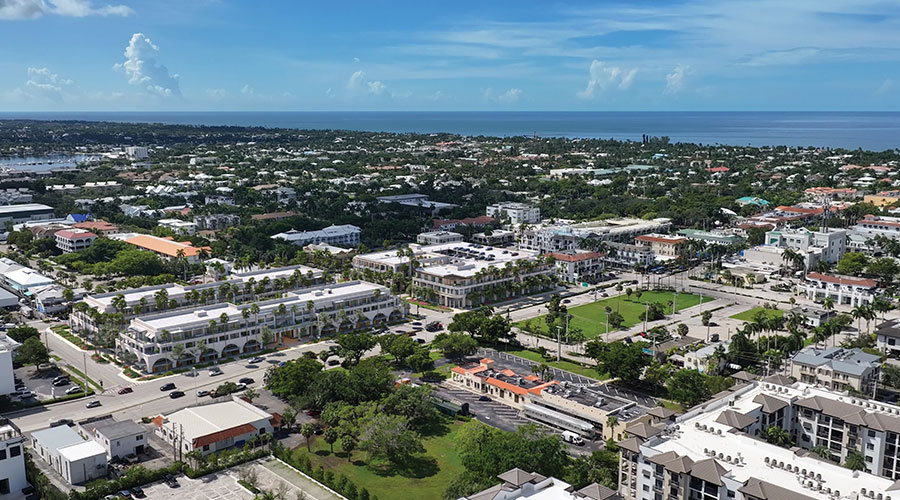
Stepping outside the venue, the trend is for the stadium to serve as a hub within a multi-use district. This can include retail, food and beverage, sleep accommodations or more. This creates a need for facility managers to make considerations beyond stadium walls, such as how to keep people safe, parking and transit options and what is needed to run a larger district.
One positive, from a resilience consideration, is that it can ease the traffic – both foot and auto – right before or immediately following the event, since people may come early for a meal or stay later for shopping, easing congestion at any one location or time.
Miller cited venues that have created these multi-use districts to draw and retain fans including Truist Park and The Battery Atlanta serving baseball’s Atlanta Braves and Texas Live! in Arlington near both the stadiums for the Texas Rangers baseball and Dallas Cowboys football.
Looking ahead
Building codes are written with a lot of generalities in mind for the vast majority of buildings that are fairly similar, Anderson explains. With PBD, practitioners are often thinking five or so years ahead of where the industry is as a whole. This insight supports safety and resilience planning.
“We wouldn’t design a structure in a way that it can’t be modified in the future,” Miller says. “Part of our job and an architect’s job is to predict where the industry may be headed and to build that kind of flexibility into the structure and into the design. It’s much more resilient to modify and improve an existing building rather than tear one down.”
True resiliency is a building that can support, as it is, events as quickly and seamlessly as possible, which, in turn, supports safety and revenue in a resilient fashion.
Valerie Dennis Craven is a freelance writer based in Plymouth, Minnesota.
Related Topics: