What Happens to Buildings When Downtowns Evolve
Adaptive reuse is addressing immediate market needs while preserving the architectural character that defines cities.
By Jennifer Picquet-Reyes, Contributing Writer
As cities across the United States confront a widening housing shortage alongside shifting workplace dynamics, adaptive reuse has emerged as one of the most effective strategies for revitalizing urban cores. By transforming underused buildings into housing, hospitality and mixed-use environments, adaptive reuse is addressing immediate market needs while preserving the architectural character that defines cities.
In Dallas, this approach has been underway for decades, positioning the city ahead of many peers, particularly across the South, where similar efforts are only beginning to accelerate.
Transforming city centers
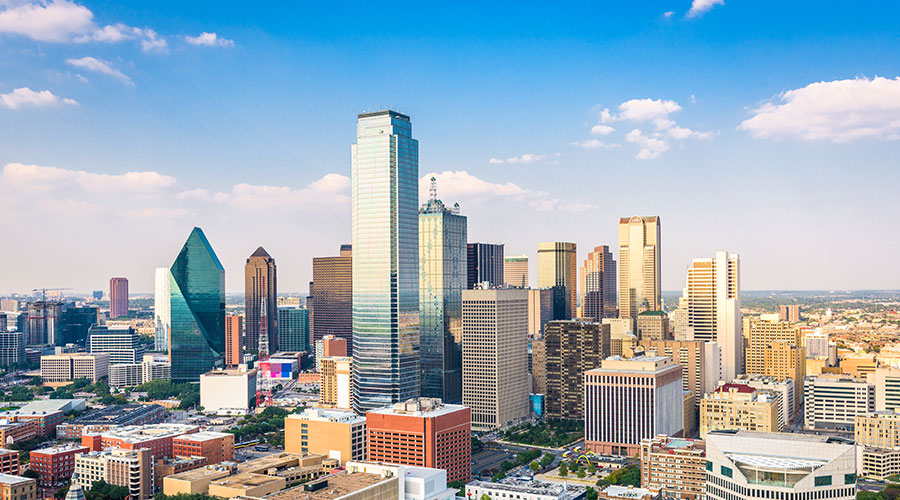
Downtown Dallas once mirrored the challenges facing many American city centers. In the early 2000s, large portions of the district were underused, with roughly 40 buildings sitting functionally vacant and several facing potential demolition. During that period, Merriman Anderson Architects made a deliberate commitment to downtown and to adaptive reuse as a long-term strategy, locating its office in the urban core and focusing on existing buildings.
Over time, that approach contributed to the transformation of downtown from a primarily nine-to-five business district into a mixed-use environment that supports residents, workers, visitors and nightlife. More than 20 buildings in and around downtown have since been converted to new uses, including high-profile projects such as the Statler Hilton and The National.
With a new convention center planned, downtown Dallas is positioned for continued growth in residential and entertainment density. At the same time, the area remains in a period of evolution. Recent corporate relocations have underscored that downtowns nationwide are still adjusting to changes in how and where people work.
The announced relocation of AT&T’s headquarters to Plano has drawn renewed attention to the future of legacy office buildings in the urban core. While high-profile moves carry symbolic weight, they reflect broader shifts in workplace flexibility and corporate real estate strategy rather than a wholesale retreat from downtown. Many employers continue to gravitate toward new developments in and around the central business district, reinforcing that downtown is not static but actively evolving.
Qualified candidates
Not all buildings are straightforward and easily configured for conversion, and challenges extend well beyond building geometry. Outdated infrastructure, inefficient layouts, code deficiencies and environmental issues such as asbestos-containing materials can significantly affect feasibility and cost.
Mixed-use conversions introduce additional operational complexity, particularly around separating residential and hotel functions, managing security, and organizing vertical circulation. In buildings with limited lobbies and one bank of elevators, wayfinding and access control require especially careful planning. By contrast, buildings with multiple entry points and elevator banks allow for clearer separation of uses and more efficient circulation once occupied. All of these challenges have been overcome by creative design and leveraging financial incentives at a city, state and national level.
Oversized floor plates remain one of the most persistent design challenges in adaptive reuse projects, but one strategy has been to design creative solutions that have made many buildings with oversized floor plates viable for conversion. Strategies such as atriums, solariums and targeted programming have been used to address limited access to natural light.
In residential conversions, interior zones are commonly dedicated to uses that do not require daylight, while unit layouts are organized to draw light inward without compromising privacy or acoustics. The Mosaic, the Mayflower and the Butler Brothers buildings in Dallas all demonstrate the way these strategies can be combined to successfully adapt deep floor plates for contemporary use.
From a development and capital perspective, the adaptive reuse market in Dallas has continued to mature. Projects that were once driven primarily by local developers are increasingly attracting out-of-state investors, many responding to prolonged softness in the office market.
At the same time, interest is growing in conversions that proceed without state or federal historic tax credits. While such incentives traditionally have helped close financial gaps, many investors and lenders are evaluating adaptive reuse projects based on their underlying economic fundamentals rather than on subsidy alone.
As urban cores continue to adjust to shifting work patterns and housing demand, adaptive reuse remains a critical tool for repositioning underperforming buildings. Offices are likely to remain the most common candidates due to their abundance, but other building types will continue to emerge as viable opportunities.
Our firm has converted buildings in many markets, and we continue to see interest in bringing buildings back to life throughout the country. In Dallas, the ongoing evolution of downtown underscores that adaptive reuse is not a response to decline but a strategy for long-term resilience, reinvention and sustained urban vitality.
Jennifer Picquet-Reyes, AIA, LEED BD+C, is principal and director of hospitality, historic and adaptive reuse with Merriman Anderson Architects.
Related Topics: