Electrical Safety Compliance Under NFPA 70B
Preventive maintenance of critical equipment is an essential part of managing risk, protecting people and ensuring operational continuity.
By Elbert Walters III, Contributing Writer
Electrical systems are the backbone of institutional and commercial facilities. From municipal buildings and healthcare campuses to commercial real estate and fleet operations, electrical infrastructure supports nearly every critical function. Yet for many organizations, electrical maintenance historically has been reactive, addressed only after a failure, outage or safety incident forces action.
That approach is no longer sufficient, according to the National Fire Protection Association (NFPA). As the electrical industry moves toward full implementation of NFPA 70B, Standard for Electrical Equipment Maintenance, facility owners face a clear shift in expectations. Preventive maintenance (PM) is no longer a recommendation or best practice. It is an essential part of managing risk, protecting people and ensuring operational continuity.
Why PM matters
The urgency behind NFPA 70B is supported by hard data from federal agencies responsible for public and workplace safety. Approximately 7,400 electrical malfunction fires occurred in non-residential buildings in 2023, according to the U.S. Fire Administration. They resulted in more than $354 million in property loss, underscoring that electrical issues are a major risk to institutional and commercial facilities and business continuity.
Electrical reliability must be understood as a business risk, not simply a technical concern. Fires, outages and equipment failures disrupt operations, damage property, increase insurance exposure and place people in harm’s way. Federal workplace safety regulations reinforce this reality. Occupational Safety and Health Administration (OSHA) electrical standards require that equipment be free of recognized hazards likely to cause death or serious physical harm.
PM plays a critical role in meeting that expectation. When equipment is inspected, tested and maintained according to a documented schedule, risk is reduced, and accountability is strengthened.
Real-world electrical hazards
Arc flash remains one of the most serious electrical hazards facing facilities. Arc-flash incidents commonly occur in switchgear, panels, motor control centers, transformers, disconnects and similar equipment — the same assets that NFPA 70B maintenance programs prioritize.
These risks exist across nearly every sector, including municipal infrastructure, commercial properties, industrial facilities and transportation systems. Electrical equipment degrades over time due to heat, vibration, dust, moisture and normal use. Without proactive maintenance, problems often go unnoticed until an incident occurs.
Electrocution also remains a persistent occupational hazard. Surveillance data from the Centers for Disease Control and Prevention (CDC) and the National Institute for Occupational Safety and Health (NIOSH) continue to track worker fatalities caused by contact with energized conductors and equipment. Many of these incidents are preventable through proper maintenance planning, condition assessments and work practices that reduce the need for energized work. NFPA 70B directly addresses these risks by requiring facilities to adopt a structured, proactive approach to electrical maintenance.
NFPA 70B: From recommendation to standard
For decades, NFPA 70B existed as a recommended practice. In January 2023, it transitioned to a formal standard, introducing enforceable language for the development, implementation and operation of an electrical maintenance program. This shift represents a higher level of accountability.
While OSHA does not directly enforce NFPA standards, it frequently cites them when issuing citations for unsafe electrical conditions. Insurance carriers are also paying closer attention to electrical maintenance practices and might request documentation after incidents or during risk assessments.
NFPA 70B provides a clear framework that requires maintenance and engineering managers to inventory electrical equipment, establish inspection and maintenance intervals, perform testing and remediation and maintain detailed records. As outlined in Powering Chicago’s guide, Understanding NFPA 70B: Ensuring Electrical Safety and Reliability, compliance is not about paperwork alone. It is about creating a repeatable process that protects people, property and operations over time.
Compliance in practice
For many building owners, the question is not whether NFPA 70B matters but where to begin. Compliance does not happen all at once, but organizations can take clear steps now.
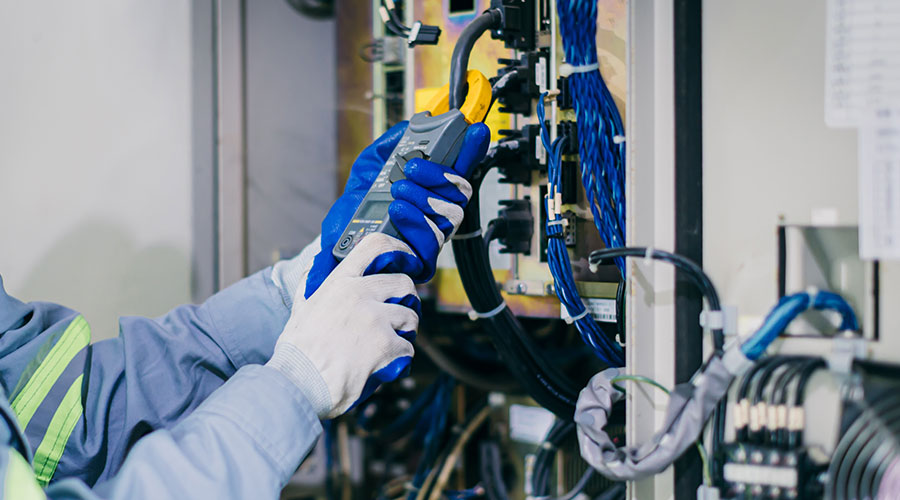
Conduct a comprehensive electrical assessment. Start by understanding the equipment in place and its current condition. This process includes switchgear, panels, transformers, motor control centers and disconnects. A thorough assessment establishes a baseline and identifies equipment that poses the greatest safety or operational risk.
Develop a formal electrical maintenance program. NFPA 70B requires a documented electrical maintenance program. An effective program defines maintenance tasks, inspection methods, testing requirements, safety procedures and documentation protocols. The program should be tailored to the facility’s operational needs rather than treated as a generic checklist.
Establish maintenance intervals based on risk. Manufacturer recommendations should be followed when available. When they are not available, NFPA 70B provides guidance on inspection and maintenance frequencies. Prioritizing high-risk, mission-critical equipment enables organizations to allocate resources effectively while improving safety and reliability.
Address identified deficiencies. Hazards, degraded components and code issues identified during assessments must be addressed in a planned and documented manner, and qualified personnel should prioritize, schedule and complete corrective actions. Documentation is essential for compliance, insurance and liability protection.
Ensure qualified electrical professionals perform work. NFPA 70B emphasizes training and qualifications. Electrical maintenance should only be performed by professionals who understand the construction, operation and hazards of the equipment they service and who are trained in applicable standards. Partnering with experienced electrical contractors helps ensure maintenance programs are implemented safely and correctly in compliance with local codes and national standards.
Maintenance as an operational strategy
Preventive maintenance is not solely about compliance. It also supports operational performance. The U.S. Department of Energy’s Federal Energy Management Program describes retrocommissioning and recommissioning as tune-ups that restore systems to their intended performance. When electrical maintenance aligns with broader asset management strategies, facilities often see improved reliability, reduced downtime and better long-term cost control.
Modern maintenance approaches, including condition-based and predictive maintenance, allow organizations to focus attention where it matters most. These strategies help facilities move away from emergency repairs and toward planned, data-driven decision-making.
NFPA 70B represents a shift in the way electrical maintenance is viewed across industries. It moves the conversation from reacting to failures toward planning for safety, continuity and resilience. Building owners and facility managers should begin reviewing current practices, identifying gaps and developing a roadmap for compliance.
Working with qualified electrical professionals can simplify this process and ensure maintenance programs are practical, defensible and effective. PM is not just about meeting a standard. It is about protecting people, preserving assets and supporting communities.
Elbert Walters III is executive director for Powering Chicago, an electrical industry labor-management partnership between the International Brotherhood of Electrical Workers Local 134 electricians and the Electrical Contractors’ Association of Chicago and Cook County.
Related Topics: