Sustainability Spotlight: Water Conservation via Hydration Stations
Hydration stations help facilities minimize plastic waste and make drinking water more accessible.
By Dave Lubach, Chief Editor
Key Takeaways:
- Bottle-filling stations promote reusable-bottle use, reduce single-use plastic waste and make tap water a more convenient, appealing alternative to bottled water.
- To support WELL goals, stations should provide reliable access to quality drinking water—ideally within a 100-foot walk of regularly occupied areas—while encouraging regular water use that can also help prevent plumbing stagnation.
- Long-term results depend on strategic placement, visible cleanliness and disciplined maintenance, including daily cleaning, water-quality monitoring and timely filter replacement.
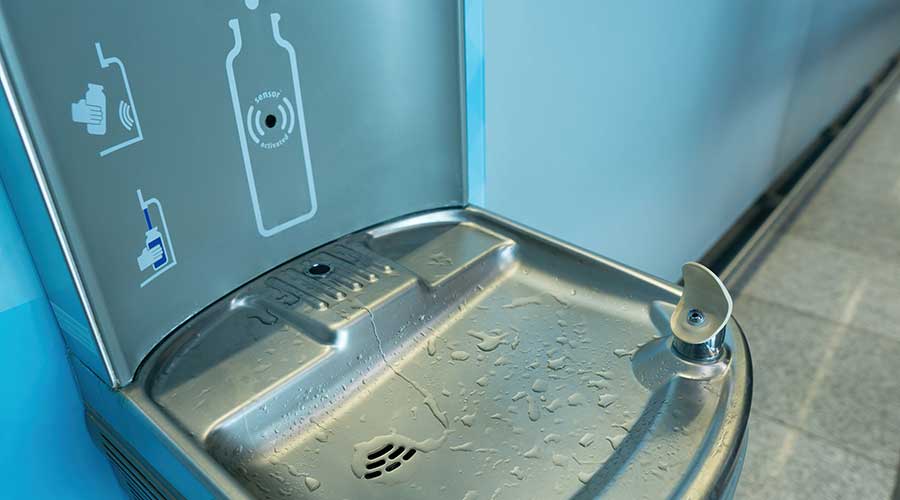
Water bottle filling stations are increasingly popular options for maintenance and engineering managers in institutional and commercial facilities looking to minimize waste and prevent the spread of illness.
In this article, Facility Maintenance Decisions speaks with Rodolfo Perez, the vice president, standard development, water and materials concept lead for the International WELL Building Institute, who discusses the value of installing water bottles in facilities.
FACILITY MAINTENANCE DECISIONS: What are the biggest sustainability benefits of installing water bottle fillers compared with relying on traditional drinking fountains or bottled water?
RODOLFO PEREZ: Bottle-filling stations have become an increasingly common way for schools, workplaces and other facilities to make drinking water more accessible and appealing. Research in schools and community settings has found that introducing hydration stations can increase water use and encourage the use of reusable bottles. Compared with single-use bottled water, bottle-filling stations can significantly reduce the amount of plastic waste generated by a building while encouraging occupants to choose tap water as their primary source of hydration. That can help reduce the environmental impacts associated with producing, transporting and disposing of single-use plastic bottles.
Bottle fillers can also address some of the practical and perceptual barriers associated with traditional drinking fountains. Sometimes, people may be more comfortable filling their own reusable bottle than drinking directly from a fountain and having convenient filling stations makes hydration easier throughout the day. The sustainability and health benefits really come together when we make good-quality drinking water both readily available and appealing to use.
FMD: How can water bottle fillers contribute to meeting the WELL Building Standard’s requirements related to drinking water quality and occupant hydration?
PEREZ: The WELL Building Standard looks at drinking water from both a quality and an access perspective. Projects pursuing WELL Certification are required to verify drinking water quality through on-site testing, while WELL also rewards strategies that make drinking water readily available and encourage water as a primary source of hydration.
Bottle-filling stations can be an important part of that strategy because they make it easier for people to access and regularly consume drinking water. There is also an operational benefit that is sometimes overlooked: regular water use helps maintain flow through a building’s plumbing system. When water sits unused for extended periods, stagnation can create water-quality challenges. Encouraging regular use can therefore support both occupant hydration and sound building water management.
FMD: Are there specific WELL features or criteria where installing conveniently located water bottle fillers can help a facility earn points or demonstrate compliance?
PEREZ: Yes. W06 Drinking Water Promotion within the WELL Water concept addresses convenient access to drinking water and encourages projects to provide drinking water dispensers within a 100-foot walking distance of regularly occupied areas.
The underlying idea is simple: access influences behavior. If we want people to choose water as their primary source of hydration, it needs to be convenient. A high-quality bottle filler hidden away in an inconvenient location is much less likely to accomplish that goal.
FMD: Beyond installing bottle fillers, what steps should managers consider to maximize their contribution to WELL Certification?
PEREZ: Installation is only the beginning. Placement, water quality and ongoing operations all determine whether a bottle filler actually delivers the intended health benefit.
First, put filling stations where people will see and use them. Low use can allow water to remain stagnant within a fixture or connecting plumbing, which can contribute to corrosion and microbial growth. Frequent use helps keep water moving through the system.
Facility managers should also understand the quality of the water entering and moving through their building. That means paying attention to municipal water-quality reports and notifications, monitoring relevant water-quality parameters and understanding building water-use patterns. Depending on local conditions and the building, point-of-use filtration or other treatment may provide additional consistency or improve taste and user acceptance. But adding a filter also adds a maintenance responsibility: cartridges and media need to be replaced on schedule and equipment needs to be installed and maintained correctly to avoid leaks or declining performance.
WELL also requires proper dispenser maintenance in that dispenser outlets, protective guards, aerators (if present), basins and touch points are cleaned on a daily basis.
The goal isn’t simply to install more equipment. It is to create a reliable system that consistently delivers good-quality drinking water people actually want to use.
FMD: How much can facilities potentially reduce plastic waste and operating costs by encouraging occupants to refill reusable water bottles?
PEREZ: The savings can add up quickly. A peer-reviewed life-cycle assessment of drinking water found that, based on one liter of drinking water consumed outside the home each day, one person could go through about 730 half-liter single-use bottles in a year. Providing convenient bottle-filling stations gives occupants an alternative: refill and reuse rather than continually dispose of individual bottles. Scale that across an office, school or large campus, and the potential reduction in single-use bottles becomes significant.
There are environmental benefits beyond the number of bottles avoided. Bottled water requires materials and energy for bottle manufacturing, packaging and distribution, adding to life-cycle environmental impacts. The exact financial savings will vary considerably depending on bottled water purchasing, local water costs, filtration and maintenance.
For facility managers, that makes convenient access to good-quality drinking water an opportunity to address hydration and waste reduction at the same time.
FMD: What should facility managers consider when deciding where and how many bottle fillers to install in a building or campus?
PEREZ: Start with how people actually move through and use the building. Bottle fillers should be conspicuous, easily accessible and close enough to regularly occupied spaces that getting water doesn't become an inconvenience. The WELL Building Standard's W06 Drinking Water Promotion feature uses access within a 100-foot walking distance as an important benchmark.
Facility managers should also consider occupancy patterns, high-traffic areas and the existing plumbing infrastructure. On a campus, for example, that may mean looking beyond the number of stations in each building and considering whether people have convenient access along the routes they regularly travel.
Ideally, these decisions should be made early in design or renovation. That allows teams to locate stations where they will be most useful without requiring unnecessary or costly modifications to plumbing later.
FMD: How have newer bottle-filling stations improved water quality, energy efficiency, accessibility and user convenience?
PEREZ: One of the most important improvements is simply that today's bottle-filling stations can make drinking water more convenient and appealing. Features such as touchless dispensing can improve the user experience and reduce unnecessary contact with the equipment, while integrated filtration and chilling can help address taste and temperature preferences that sometimes lead people to choose bottled water instead.
Many stations also include counters showing how many disposable bottles have potentially been avoided. That may seem like a small feature, but it makes an otherwise invisible environmental benefit visible to occupants. When people see those numbers adding up, it can reinforce the value of choosing a reusable bottle.
The larger point is that the best drinking-water system is one people will actually use. Technology can help remove barriers and make the healthier, more sustainable choice the easier choice.
FMD: What maintenance requirements should facility managers be aware of, and what can they do to ensure bottle fillers remain clean, reliable and well-used over the long term?
PEREZ: Bottle fillers require regular cleaning and maintenance to help ensure reliable performance and good water quality over time. Facility teams should follow the manufacturer's recommended cleaning and maintenance procedures, including using appropriate cleaning products so they don't inadvertently cause corrosion or damage to surfaces and components. Keeping the station visibly clean and in good condition matters, too. If a fixture looks poorly maintained, people may be less inclined to trust or use it.
Filter maintenance is equally important. Where filtration is provided, facility managers should understand the manufacturer's replacement schedule and recognize that actual replacement needs may depend on water quality and usage. Filters that have reached the end of their useful life can compromise performance rather than improve it.
Finally, pay attention to usage. An unexpectedly low-use station can be a signal to investigate—not only because the location may be inconvenient, but because low flow can contribute to stagnation. Ultimately, good maintenance is about protecting water quality while maintaining people's confidence in the water the building provides.
Dave Lubach is the chief editor of the facilities market. After serving as associate editor for Facility Maintenance Decisions from 2012 to 2016, he returned to Trade Press Media Group in 2021 and was elevated to his current position in October 2025. Dave manages the facilities team and helps shape the education content for NFMT and Elevate events.
Related Topics: