Preventing Water Damage in Healthcare Facilities
Water damage can disrupt critical healthcare operations, damage specialized equipment and create infection risks.
By Valerie Dennis Craven, Contributing Writer
Key Takeaways:
- Common sources of water damage in healthcare facilities include aging plumbing, HVAC drainage problems, sprinkler discharges, roof leaks and poor exterior grading.
- Facility managers should identify the five to 10 areas most vulnerable to water damage, document nearby water sources and shutoffs, and address maintenance issues before they cause disruptions.
- Developing a water-related disaster recovery plan with facility leadership and restoration providers helps clarify emergency responsibilities, prioritize critical spaces and accelerate response efforts.
Facilities teams are expected to prevent disruptions while managing constant operational demands. In critical healthcare spaces — including operating rooms, imaging suites, pharmacies, labs and data-adjacent infrastructure — water-related issues often go undetected for some time before becoming a problem.
In terms of damage and claims in healthcare facilities, water damage can be the most expensive item to address, where specialty equipment and patient water-related co-infection — such as waterborne pathogens like Legionella pneumophila and fungal spores like Aspergillus — can drive up claims.
Building teams are stretched for time and money, which can create a challenge to proactively watch for unseen problems. But because a healthcare facility is a place of constant human safety, knowledge is key.
Understanding what to look for and how to quickly respond to issues before, during and after water issues appear is critical for healthcare facilities managers to maintain continuity of operations.
Assess the facility
Common water-damage-related issues including faulty plumbing, especially in older facilities that have undergone less preventive maintenance, says Steve Willis, chief commercial officer with MOORING Commercial Disaster Restoration.
Common sources of water damage include:
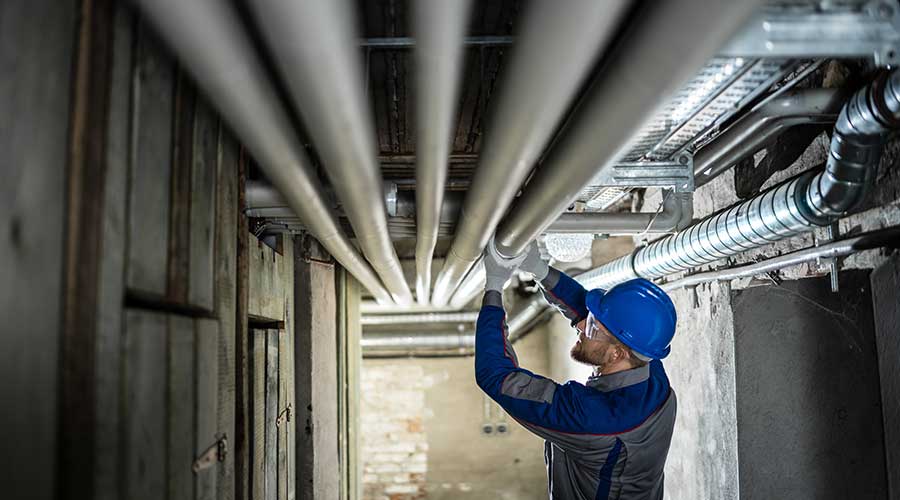
- Plumbing and utility lines. Faulty domestic water supply lines, age-related pipe corrosion, back-pitched drainage, sewage backups and toilet overflows are the issues most prevalent in aging facilities with deferred maintenance.
- HVAC and building systems. Clogged condensate lines, overflowing drain pans, failing float switches and relative humidity spikes can cause wallpaper adhesives to fail and foster surface mold.
- Fire suppression and envelope. Accidental sprinkler head discharges can be caused by equipment strikes in corridors, roof leaks and poor exterior grading.
“While there may be no way to prevent all water damage threats, some proactive ways to help prevent these issues is a regularly scheduled preventative maintenance program, monitoring of building conditions and partnering with an experienced restoration vendor that will walk your facility with you and assist in identifying potential threats,” Willis says.
He recommends identifying the top five to 10 areas in a facility where water would cause the most harm or disruption. Evaluate each area, documenting water above, beside or below this space, how a technician would be alerted to a leak and where the shutoff is.
Once potential areas for water damage are assessed, go to your maintenance log and address easy hazards. Common examples of quick solutions could be to:
- repair plumbing minor issues
- install sprinkler head guards in loading docks, corridors and storage areas where equipment moves
- put drip pans underwater-connected equipment in critical rooms
- clear floor drains and roof drains
- check condensate pans and float switches on air handlers serving critical spaces
- test sump and ejector pumps and their high-level alarms.
Steve Leasure, vice president of operations with Rainbow Restoration, a Neighborly company, says managers should create a water-related disaster recovery plan with facility leadership and the restoration provider. This preventive documentation should clearly outline who to contact, building access information, the priority areas and their shutoffs and additional steps to take in an emergency.
All teams should then review the documentation together.
“The best time to prepare for water damage is before it happens,” Leasure says. “Having a simple emergency response plan in place can help facilities respond faster and minimize disruption.”
Valerie Dennis Craven is a freelance writer in Plymouth, Minnesota.
Related Topics: