 Photo credit: Knott Laboratory
Warning Signs: How Small Envelope Failures Lead to Big Building Problems
Knowing and responding to early warning signs is critical to the building’s health and the organization’s bottom line
By Stanley Stoll, Contributing Writer
Key Takeaways:
- Small issues such as drafts, condensation and water stains can signal larger building envelope problems that may lead to costly structural and energy-related damage.
- Building envelope components, including roofs, walls, windows and flashing, function as an interconnected system, meaning failures in one area can affect another.
- Proactive inspections, preventive maintenance and early repairs can significantly reduce long-term costs and extend the life of building systems.
The costliest failures in commercial facilities rarely begin with dramatic events. More often, they start quietly. Tenants might notice light drafts near windows, a small water stain along a ceiling line or condensation that appears only under certain conditions.
These issues are easy to dismiss as minor problems that can wait until later. The reality is they are often the first notable signs of deeper issues within the building envelope that can become major undertakings if left unchecked.
Since the building envelope serves as the primary barrier between interior conditions and the exterior environment, its performance depends on the integrity of individual components and how well those components function together as a continuous system controlling air, water and thermal flow running through the structure’s exterior walls and roof. When even a small part of that system begins to fail, moisture gets trapped where it should not be, and deterioration begins.
Knowing and responding to early warning signs is critical to the building’s health and the organization’s finances. What might be deemed insignificant today eventually can be substantial structural damage, energy inefficiency and indoor environmental concerns if left unaddressed.
Small signs, significant implications
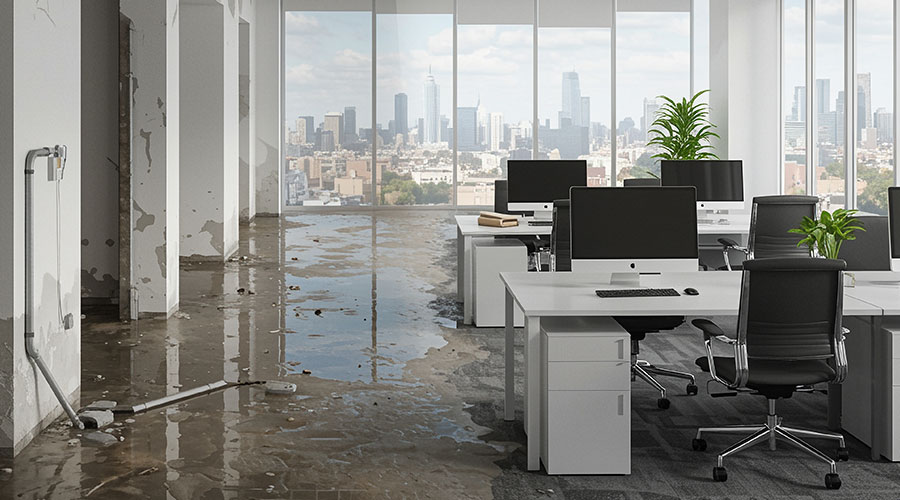
Water infiltration presents the most obvious signal of an envelope issue, yet it is still commonly underestimated in its severity. A small stain or intermittent leak might suggest a localized issue, such as a minor crack in a roofing membrane or sealant failure around a window frame. In practice, water rarely travels in a straight path. It can migrate along structural elements, insulation layers or vapor barriers, making the visible point of entry only part of the actual problem.
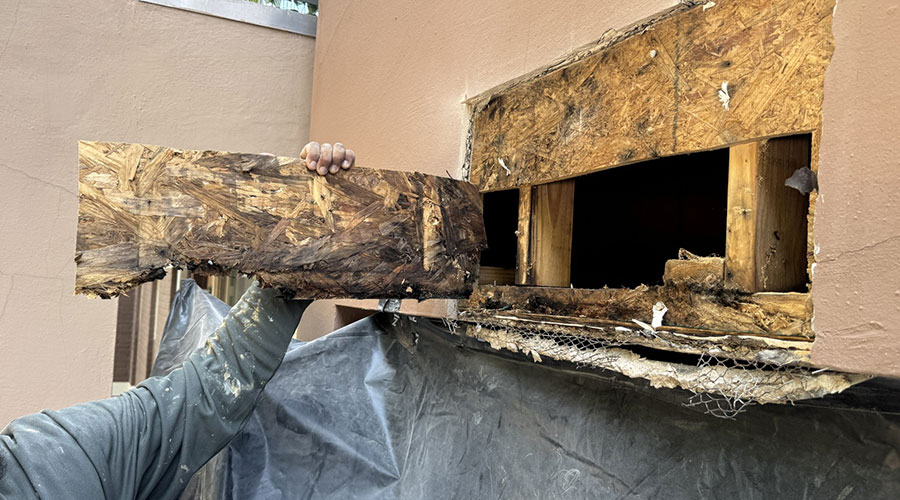
Often, the visible moisture stain is minor because building materials in the wall and roof have absorbed much of the moisture before it penetrates to an interior surface, where it is visible. What is visible might have been hidden for years, causing material degradation, corrosion, deterioration and mold development.
Condensation might appear as a temporary or seasonal occurrence with fogging on glazing or moisture forming on interior surfaces, but it often signals underlying thermal imbalances. Thermal bridging — insufficient insulation — or uncontrolled air movement can create conditions in which warm, moisture-laden air meets cooler surfaces, resulting in condensation in wall cavities or roof assemblies. Over time, this hidden moisture can contribute to mold growth and long-term deterioration of building materials.
Modern energy-efficient buildings have adopted a much tighter overall building envelope. Older buildings used to breathe on their own due to gaps and, overall, looser construction practices. These practices allowed the air in a building to change over and take with it the humid interior moisture-laden air to the exterior in dry climates.
Building codes now require facilities to be tight and not leak air. To accommodate this tight construction, building codes require either a heat recovery ventilator (HVR) or energy recovery ventilator (ERV), which pull in fresh air and exhaust humid air to the exterior or vice versa. When these systems are not operating properly, facilities generally experience condensation on the interiors that will lead to material degradation.
Temperature inconsistencies — particularly hot and cold spots near windows and doors — offer additional clues about the health of the building envelope. These localized discomfort zones typically indicate gaps in insulation, failing glazing systems or uncontrolled air infiltration. Occupants usually bring attention to this issue, but it goes beyond comfort. They reflect moisture management issues and inefficiencies in the building envelope that place additional strain on HVAC systems and increase operational costs.
It is also important to pay attention to all the small visual cues on the exterior, including cracked sealants, gaps around frames and deteriorating caulking. These materials are critical components of the envelope’s defense system and require routine maintenance.
As they degrade due to ultraviolet exposure, weathering or building movement, they create pathways for air and water intrusion. Similarly, flashing failures at roof edges and parapets are among the most vulnerable points in the envelope. Improper installation or material aging at these transitions can concentrate water entry, accelerating damage in localized areas.
A system, not a collection of parts
When diagnosing envelope issues, it is important to recognize that roofing systems, walls, windows and doors are not independent operations. They function as an interconnected system, and failures in one area can manifest symptoms in another.
Roof systems serve as the first line of defense against bulk water intrusion. But their effectiveness depends heavily on the integrity of the flashing at penetrations, edges and transitions to vertical surfaces, which is where failures occur most often. A failure at a roof-to-wall interface might present as water infiltration around a window opening several feet away. Issues attributed to window performance also might originate from deficiencies in adjacent wall assemblies or air barrier systems.
These interactions underscore the importance of system-level thinking. Addressing symptoms in isolation can lead to incomplete repairs and recurring problems, while a comprehensive evaluation of the envelope can identify root causes and prevent future failures. When the path of moisture intrusion cannot be readily identified, it is useful to perform flood testing to find the actual origin. Thermal cameras can be particularly useful during these evaluations.
The cost of inaction
Deferred maintenance is one of the most significant risk factors in building envelope performance. What begins as a minor sealant failure or isolated leak can escalate as moisture infiltrates concealed areas. Insulation becomes saturated and loses effectiveness, structural components begin to deteriorate, and microbial growth can develop in conditions that remain undetected for extended periods.
From a financial perspective, the difference between early intervention and delayed response is substantial. Routine maintenance and targeted repairs cost relatively little when compared to the expenses associated with major remediation and system replacement.
W.R. de Sitter’s Law of Fives — which states that if maintenance is not performed, they require repairs equaling five times the maintenance costs — holds true. In turn, if those repairs are not implemented, then renewal expenses can reach five times the repair cost. Postponing the maintenance compounds the amount of deferred maintenance.
Essentially, if a building is not maintained for 10 years, small issues become large issues, and the cost to repair is five times the cost of maintenance. And the costs compound from there.
Operationally, unresolved envelope issues can impact occupant comfort, indoor air quality and overall building performance. In commercial settings, these factors can influence tenant satisfaction, productivity and even lease retention. And when repairs are performed, they can be much larger, including temporary tenant relocation.
Proactive strategies, long-term performance
Effective management of the building envelope requires a proactive and informed approach. Routine inspections are a critical first step. Seasonal assessments, particularly after severe weather, should focus on high-risk areas, including roof membranes, flashing details, sealants and window perimeters. Identifying early-stage deterioration allows for timely intervention before conditions worsen.
Preventive maintenance is critical to the long-term health of the structure. Sealants and weatherproofing materials have finite service lives and should be replaced before failure occurs. The cause of minor leaks should be determined and addressed immediately. Maintaining proper drainage through gutters, downspouts and roof slopes is also essential to preventing water accumulation and intrusion, and it might be one of the most effective measures taken to preserve the building’s integrity.
Advanced diagnostic tools can provide valuable insight into hidden conditions in the envelope. Infrared thermography, moisture mapping — flood testing — and air leak testing can reveal issues that are not visible during standard inspections. These methods allow technicians to move beyond reactive maintenance and adopt a predictive approach to building performance.
Facility managers and technicians also should pay close attention to transitions and interfaces, where most envelope failures occur. Ensuring proper design, installation and maintenance of flashing and connection points is critical to maintaining continuity in the air and water barriers.
Finally, partnering with experienced forensic engineers who can provide thorough building assessments and offer guidance on immediate repairs and long-term capital planning can help facility managers tackle this daunting task. Comprehensive condition assessments provide a clearer understanding of current performance, remaining service life and prioritization of future investments.
Buildings communicate their condition through small, often subtle signals. Drafts, stains, condensation and minor material failures are early warnings of larger issues developing within the envelope system.
Facility managers who recognize and act on these signals can significantly extend the lifespan of building components while avoiding expensive failures and repairs. Shifting to a proactive mindset with a strategy grounded in regular observation and technical understanding, building owners can ensure small problems remain that way, and the building performs well for many years to come.
Stanley Stoll is principal engineer and CEO of Knott Laboratory, a forensic structural engineering company.
Related Topics: