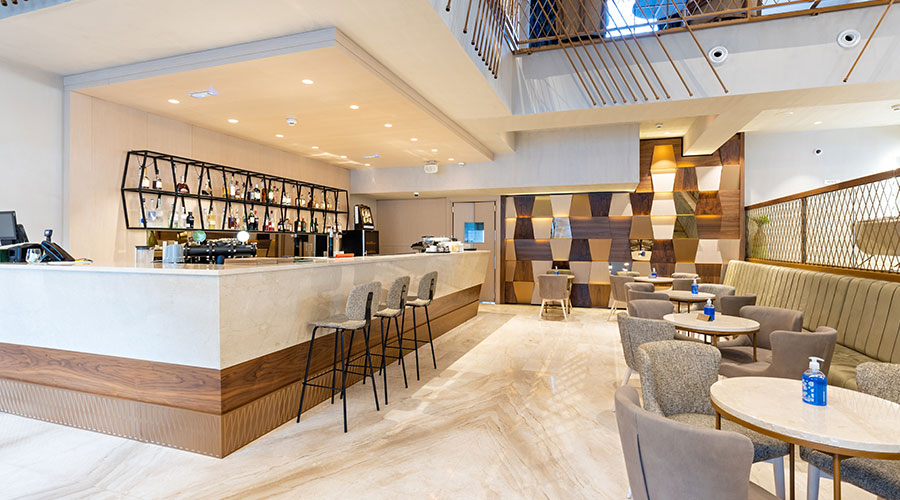
Hybrid Work Reshapes the Future of Workplace Cafeterias
A recent report reveals declining employee satisfaction, rising costs and inconsistent usage are pushing facility managers toward more flexible food service models. March 27, 2026
By Jeff Wardon, Jr., Assistant Editor
The 2026 Cafeteria Report from ezCater found that workplace cafeterias are becoming increasingly out of step with the needs of a hybrid workforce, creating new challenges — and opportunities — for facility managers.
While employers continue to view cafeterias as a valuable workplace amenity, employee sentiment tells a different story, according to the report. Nearly 9 in 10 decision-makers rate their cafeteria offerings positively, but fewer than half of employees agree, pointing to a widening perception gap that could impact engagement and return-to-office efforts.
At the same time, shifting work patterns are complicating operations. Hybrid schedules have reduced consistent foot traffic, making it more difficult to justify the space, staffing and overhead required to run traditional cafeteria models. For managers, that variability raises questions about how to best allocate square footage and resources in an already evolving workplace.
Cost is another factor. A notable share of employees report avoiding workplace cafeterias due to high prices, while organizations face rising expenses tied to food service operations, from labor to maintenance. Combined, these pressures are prompting many companies to reconsider whether full-service cafeterias remain the most effective solution.
Instead, the report points to a growing shift toward more flexible food programs. Options such as on-demand catering, meal stipends and partnerships with local restaurants are gaining traction as organizations look to reduce infrastructure demands while still offering food as a workplace benefit. These models pose an opportunity to ease operational burdens and free up space for alternative uses for managers.
Despite the challenges, food remains a key tool for enhancing the workplace experience. Many organizations continue to invest in food programs to encourage in-person collaboration and strengthen culture. Overall, workplace dining is shifting from a fixed amenity to a more adaptable service, one that must align with both employee expectations and the realities of hybrid work.
Jeff Wardon, Jr., is the assistant editor of the facilities market.
Next
Read next on FacilitiesNet