Smart Visitor Management is Reshaping the Modern Building
Visitor management systems are evolving into a critical operational tool for facility managers focused on security, efficiency and tenant experience.
Key Takeaways:
- Modern visitor management has evolved into an integrated, software-driven platform that enhances security, streamlines visitor experiences and connects with access control, building systems and cybersecurity tools.
- Mobile credentials, AI and system interoperability are enabling seamless, personalized visitor workflows while improving operational efficiency, accessibility and real-time security management.
- By integrating visitor data with elevators, building management systems and occupancy analytics, facility managers can make more informed decisions about staffing, energy use, emergency response and long-term space planning.
Visitor management used to be simple: a clipboard, a pen and a temporary badge.
Today, it’s a dynamic, data-driven ecosystem that touches access control, cybersecurity, mobile credentials, artificial intelligence (AI), elevators, HVAC systems and tenant retention strategies.
That shift presents opportunities and complexities for facility managers.
“When I started in the industry, it was all pen, paper and visitor logbooks,” says Andrew Campagnola, chair of the Security Industry Association’s (SIA) Built Environment Advisory Board and director of product management at Kastle. “Visitor management is not a standalone product anymore. It's a mainstream solution, and we're seeing it everywhere.”
Geoff Kohl, senior director of marketing at SIA, agrees.
“Today, visitor management is primarily a software-based operation,” he says. “Whether it’s used in the lobby or as a modern system that handles identity vetting through links, apps or QR codes, you’re dealing with software.”
That shift has significant business implications. Software-driven applications can affect an organization’s security posture, operational efficiency, data visibility and even tenant satisfaction.
From clipboards to connected systems
Today’s digital systems allow visitors to be preregistered, categorized and time bound. Hosts are notified automatically when visitors arrive. Meanwhile, credentials, be it QR codes or mobile-based tokens, are issued with defined expiration windows.
“We’ve connected the dots,” Kohl explains. “That guest is now an intentional visitor. Modern visitor management platforms create a more controlled environment, while also delivering a concierge-style experience.”
Technology now allows buildings to classify visitors differently and apply policies accordingly. The rules may differ for subcontractors, vendors, regular visitors and one-time guests. The system functions as a structured identity workflow, Kohl stresses.
This shift will streamline visitor management in commercial real estate and multifamily housing, where base-building and tenant systems typically operate separately.
In the past, a landlord might control lobby turnstiles and elevators, while tenants managed their own visitor management systems upstairs. This required visitors to navigate two systems and carry two credentials.
Interoperability has changed this scenario for the better, Campagnola says.
“Systems can now talk to each other,” he explains. “A tenant can connect directly to the visitor management system used in shared spaces or their own system and have it flow down through every access point a visitor needs to pass through. This creates a seamless experience for the tenant, user, visitor and facility manager.”
In multifamily properties, the same principle applies. Residents can issue temporary credentials to dog walkers, delivery personnel or guests through QR codes, mobile credentials or one-time passes, all of which can be integrated into a unified access environment.
The rise of mobile credentials
The experience visitors expect is also changing, adds Matthew Lewis, director of product marketing at HID.
He explains that since COVID, hybrid work and mobile-first lifestyles have reshaped how people approach physical spaces. Today’s visitors expect the same seamless experience they receive at airlines or hotels.
“We’re used to checking into our hotel before we arrive and to our flight before we get to the airport,” he explains. “Being able to push that check-in process earlier, before someone even gets on site, is important.”
Mobile technology makes this possible. Pre-registration links, QR codes and mobile credentials allow visitors to check in before arrival, receive directions and parking instructions, understand where to go upon entry and reduce their time at the lobby desk.
“These seemingly small touches, ‘park here, walk here, go to elevator bank 7’ can dramatically elevate the guest experience,” Lewis says.
Mobile credentials are becoming table stakes in modern visitor management. Employees, tenants and visitors can all use their smartphones to gain entry to authorized spaces. Mobile interaction can even begin days before scheduled guests arrive.
Mobile adoption is also laying the groundwork for broader biometric use, Campagnola adds.
“Biometrics are going to be the future,” he says. “I’m not saying in the next two or three years. But long term, I believe we’re going to see the ‘Star Trek’ model where you walk up to a door and it opens automatically because it knows you’re authorized to enter based on who you are.”
The real impact of AI
Current visitor workflows often rely on repetitive, rule-based steps that AI can automate easily.
For instance, AI-powered platforms can notify hosts via email, SMS or collaboration platforms automatically. These systems also can issue reminders when visit windows are about to expire; flag unusual patterns or anomalies; and reduce manual data entry.
“The future of visitor management is that many of these tasks can be handled by an agentic flow, while the human stays in the loop to identify abnormalities or security risks,” Kohl says.
Campagnola emphasizes that humans are still crucial, even when AI is used.
He explains, “With any good AI, you take its suggestions and either you execute them, or you let the system do them, and then you reinforce it if it was a good decision.”
One example is alarm management. Doors held open too long routinely generate nuisance alerts in office environments. When alarms flood a security operations center, complacency follows.
But with an AI-driven system, it’s possible to analyze patterns, such as lunchtime spikes in door-held-open events and automatically adjust thresholds during predictable windows. The result is fewer false alarms without compromising security.
AI can also adapt to accessibility needs. If a credential holder routinely requires extended door-open times, the system can adjust settings when that individual badges in.
“The management and upkeep of systems is where we see AI really doing a great job,” Campagnola adds. “Technology is useful for establishing initial workflows, but it’s the dynamic changes over time where AI really shines.”
Integration and data
Modern visitor management systems increasingly extend beyond entry points. For instance, these platforms might integrate with internal access control systems, lobby turnstiles, elevator control systems, video surveillance platforms and building management systems (BMS).
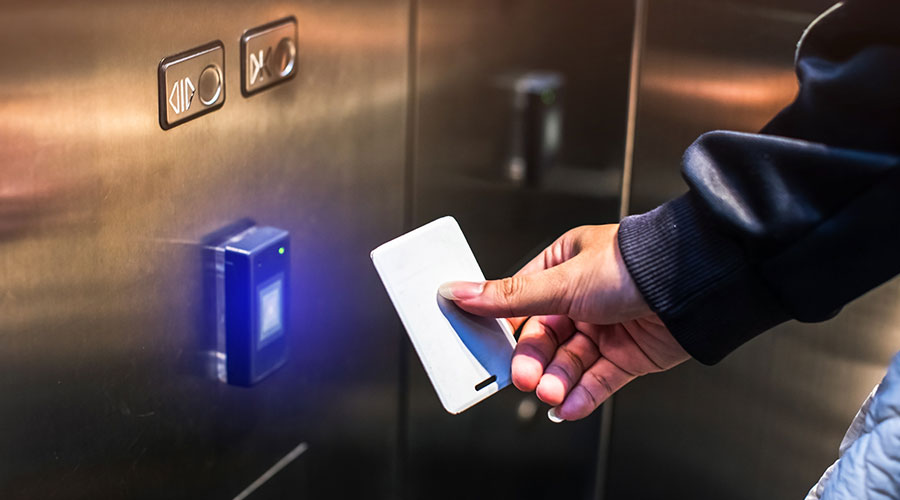
Elevator integration has become essential in many commercial properties, according to Campagnola. With destination dispatch systems, a visitor’s QR code or mobile credential can automatically call the appropriate elevator and restrict access to authorized floors, removing guesswork and improving security.
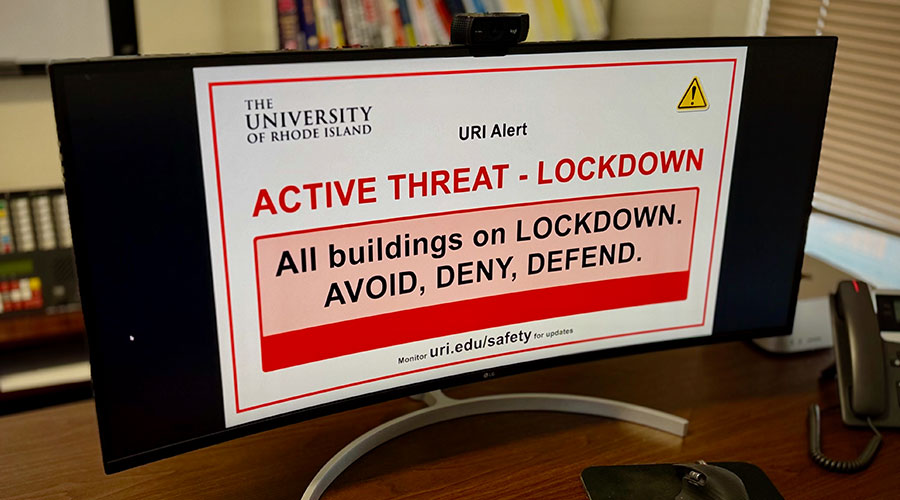
Emergency response integration is also gaining traction, Lewis adds. He explains that visitor systems can generate real-time occupancy data and support mass notifications via email or text during emergencies.
“You can message everyone who has checked in with a ‘stay in place’ or ‘leave the building’ alert,” he says.
Modern systems also provide real-time dashboards that show who is in the building and how many people there are. This allows facility managers to adjust lobby staffing, anticipate peak arrival times, prepare for large meetings or tenant events and improve traffic flow.
“Over time, historical data can reveal broader trends in occupancy and usage that can inform long-term operational decisions,” Lewis says.
Integration even reaches BMS, allowing control of HVAC and lighting systems, for example. Occupancy and visitor data can inform staffing decisions, cleaning schedules, energy usage and long-term space planning.
“All the data that comes from our systems is extremely helpful for running the core business of a property management company or a landlord,” Campagnola notes.
However, Kohl warns that integration can be complex.
“These systems don’t just integrate out of the box,” he says. “They’re built by different companies. So, while integration can be done, it requires effort, coordination and ongoing maintenance.”
Kohl emphasizes that system integrators are crucial for keeping complex systems working together. By accounting for API compatibility, version control, data security and ongoing maintenance, facility managers, in turn, gain a realistic understanding of what system integration entails.
Ronnie Wendt is a freelance writer based in Minocqua, Wisconsin.
Related Topics: