Specifying Door Hardware for Historic Buildings
Historic preservation, aesthetics, climate and performance all play a role when selecting exterior door hardware for renovation and adaptive reuse projects.
Key Takeaways:
- Historic status and architectural style should guide door hardware selections, with landmarked buildings potentially requiring preservation office approval.
- Exterior door hardware must be selected with local climate and exposure in mind, particularly in areas affected by deicing salts or marine conditions.
- Managers can balance preservation, cost and lead times by considering substitute materials or custom hardware while maintaining the building’s intended aesthetic.
Renovation and adaptive reuse of existing buildings are increasingly embraced as vehicles for sustainability and preservation, and the repair and replacement of exterior doors is an integral component for many of these projects. Appropriate specification of door hardware is critical to performance and aesthetics, but given the multitude of design criteria and potential combinations, its selection can seem overwhelming.
By identifying and addressing essential hardware design considerations, engineering and maintenance managers can streamline the process of selecting fittings for door projects in existing buildings. Various important door sub-components could be defined as hardware — including weatherstripping and electronic keyless locks, alarm systems, doorbells and accessibility devices — but it is prudent to focus on the primary metal hardware that affects door mechanics, integrity and appearance.
A question of history
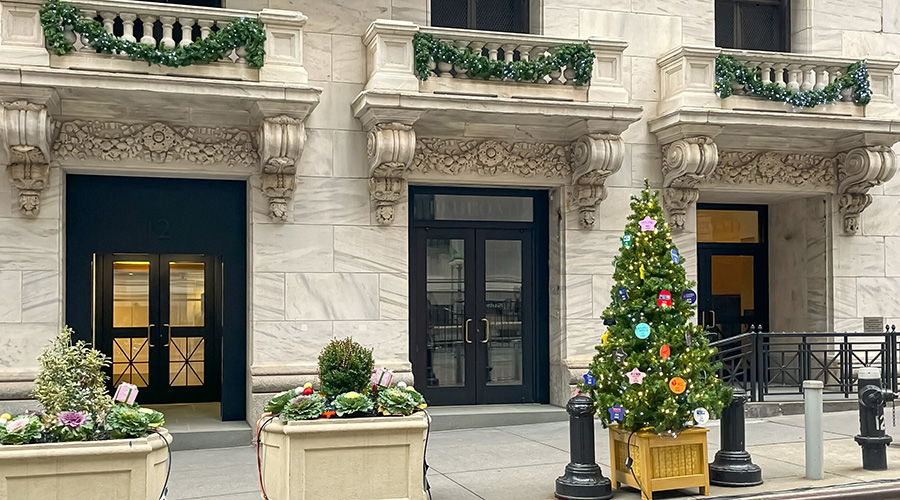
One of the first considerations for door hardware on an existing building is determining whether it is a historic landmark or part of a historic district, which might be designated at the municipal or state level. If it is, the proposed scope of work often requires review by a preservation office. This review can determine that visible replacement door components must match the original materials and configuration or reflect those of the historical period to which the building is being restored.
Special attention is frequently paid to opening devices such as doorknobs, levers, pull handles and associated escutcheons. Even if the building is not landmarked, a historic building's architectural style is a good starting point for evaluating the way hardware can complement its aesthetics. A more classically inspired, pre-war structure, such as Beaux-Arts style, might employ ornate hardware made of brass, oil-rubbed or patinated bronze or even wrought iron.
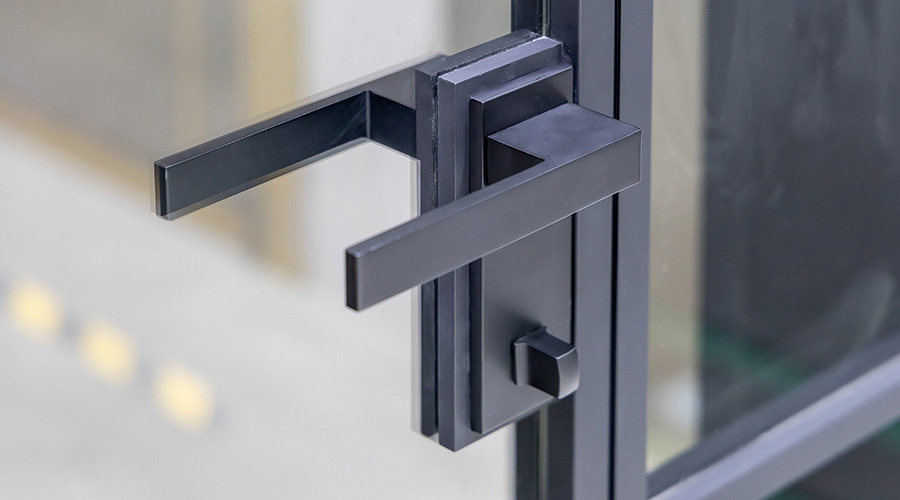
A more modern structure, such as Mid-Century style, might use minimalist hardware of stainless steel or clear anodized aluminum. In some cases — especially in adaptive reuse projects — an intentional contrast between old and new might be desired. But when such buildings are individually landmarked, preservation board approval might require a persuasive appeal driven by performance requirements.
Replicating historic hardware can be expensive and involve long lead times due to limited availability of specialized craftspeople. Where cost or lead time are significant constraints, managers might consider selecting substitute materials, such as black-painted steel in lieu of oil-rubbed bronze or yellow anodized aluminum in place of brass. Hardware manufacturers that produce such options typically offer a catalog of available profiles, but their configurations might not match historic designs precisely.
For landmarked structures, custom fabrications still might be required, even when alternative materials are permitted. Exceptions might be granted when hardware is replaced throughout an entire facade so that new components will not stand out against the old.
Corrosion considerations
Since exterior door hardware is directly exposed to the elements, including rain and snow, protection from corrosion is a major performance consideration. Many pre-war historic materials were naturally corrosion-resistant — especially copper alloys like brass and bronze — but the degree of resistance needed for a project ultimately is governed by local climate and the level of exposure.
For example, street-level doors with steel, aluminum and even brass hardware are vulnerable to deicing salts, with saddles — threshold covers — and outboard kick-plates typically most susceptible. Exterior doors in marine environments, especially those along coastlines, can have similar issues. Using bronze or stainless steel or at least traffic-grade powder coatings on steel or aluminum is recommended for such applications.
While solid brass can provide sufficient protection where contact with salt is not a concern, brass-plated zinc hardware, although less expensive, typically is not recommended for exteriors. The thin layer of brass wears away from use, and the exposed zinc substrate can corrode.
Richard W. Off is a partner, senior project manager and architect at Hoffmann Architects + Engineers. With expertise in preservation and enclosure systems, he oversees architectural and engineering teams in completing numerous multi-million-dollar rehabilitation projects, several of which have received recognition, including multiple Lucy G. Moses awards from The New York Landmarks Conservancy.
Related Topics: