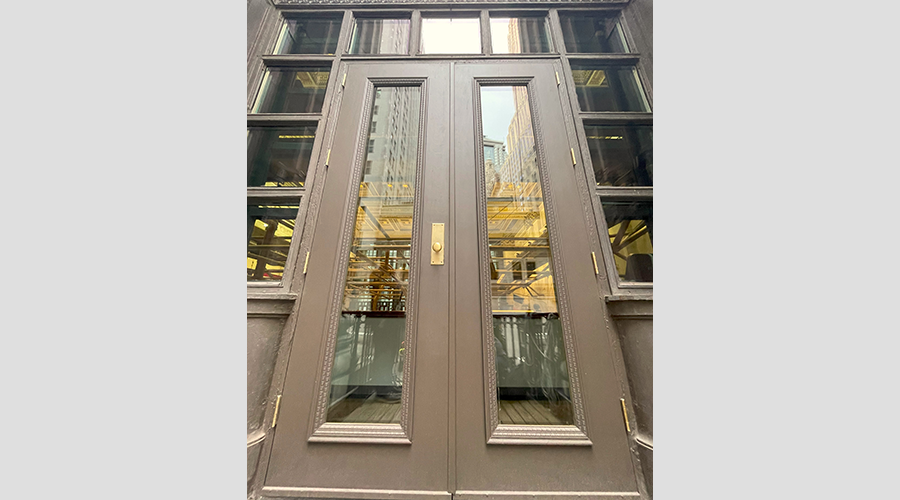
 Photo credit: Hoffmann Architects + Engineers
Door Hardware Selection: Matching Strength to Weight and Traffic
Proper door hardware must support the assembly’s weight, withstand daily traffic and protect long-term performance—especially in commercial, institutional and historic applications.
Key Takeaways:
- Heavy steel, solid wood and insulated glass doors require robust, properly spaced supporting hardware and corrosion-resistant fasteners to safely carry weight, wind and impact loads.
- When replacing doors or hardware, assess and repair surrounding doors, frames and rough openings so they can securely accommodate new components.
- High-traffic entrances benefit from durable ANSI Grade 1 hardware, ball-bearing hinges and balanced door systems that reduce friction, stress and long-term wear.
A door assembly’s weight and structural integrity also are important factors in hardware selection. Steel, solid wood and even glass doors — especially those with double-pane insulating glazing units — require stronger or more frequently spaced supporting hardware to carry their heavier weight and to transfer wind and impact loads.
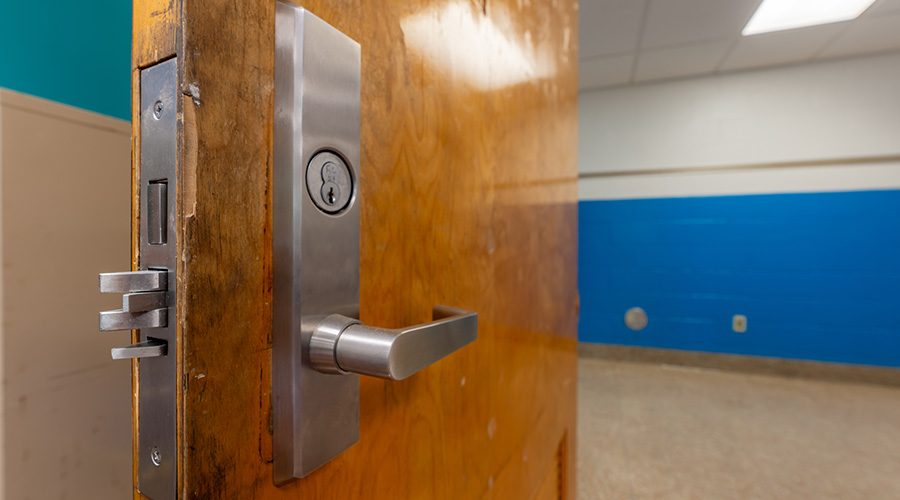
The fasteners that secure the hardware also require comparably strong materials in sufficient number and size. These fasteners are often stainless or galvanized because they can be susceptible to rust and are among the first hardware components to fail if not properly specified and installed.
When hardware is replaced on an existing door or a new door is installed in an existing opening, it also is essential that surrounding substrates are appropriately assessed, repaired and modified as needed to receive the new components. This process could involve epoxy or Dutchman repairs to wood doors, metal reinforcement of existing frames or masonry or concrete repairs at rough openings. It also might require cutting recesses or pockets to accommodate new lock sets or opening devices.
Spotlight on traffic
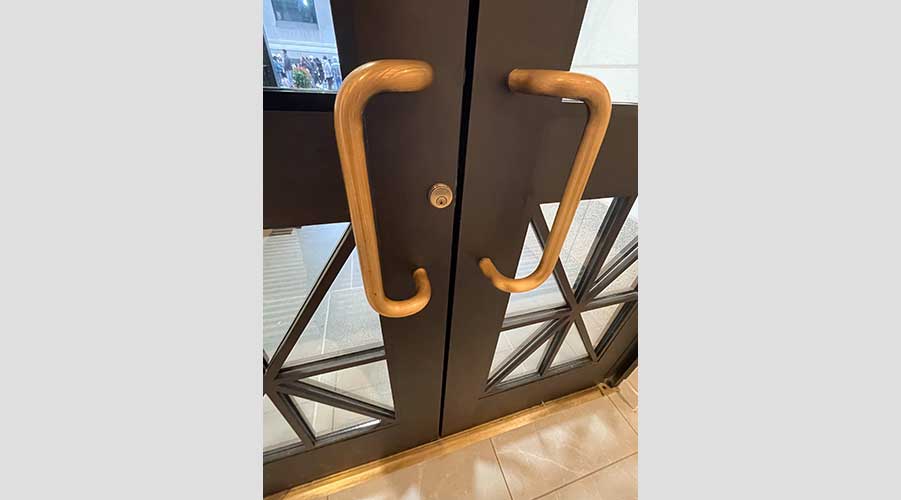
The level of door traffic is also an important consideration when specifying hardware. Frequently used doors, like those in high-occupancy commercial, multi-family residential or institutional buildings, often experience more wear and tear, so selecting an appropriate grade of hardware can minimize mechanical deterioration.
The American National Standards Institute classifies hardware into three grades based on rigorous testing, with Grade 1 being the most resilient. Solid brass hardware, which is more malleable than steel and stronger than aluminum, along with ball-bearing hinges that reduce friction, can be beneficial for high-traffic applications. For replacement metal doors, balanced door systems are increasingly popular because they include integral, robust, pivot-arm hardware that reduces stress within the assembly, enhancing smooth operation and longevity.
Balanced assemblies come in a variety of materials and finishes and can have minimal stile and rail profiles that mimic historic steel doors. The hardware itself is often cast bronze, providing similar benefits to solid brass.
Richard W. Off is a partner, senior project manager and architect at Hoffmann Architects + Engineers. With expertise in preservation and enclosure systems, he oversees architectural and engineering teams in completing numerous multi-million-dollar rehabilitation projects, several of which have received recognition, including multiple Lucy G. Moses awards from The New York Landmarks Conservancy.
Related Topics: