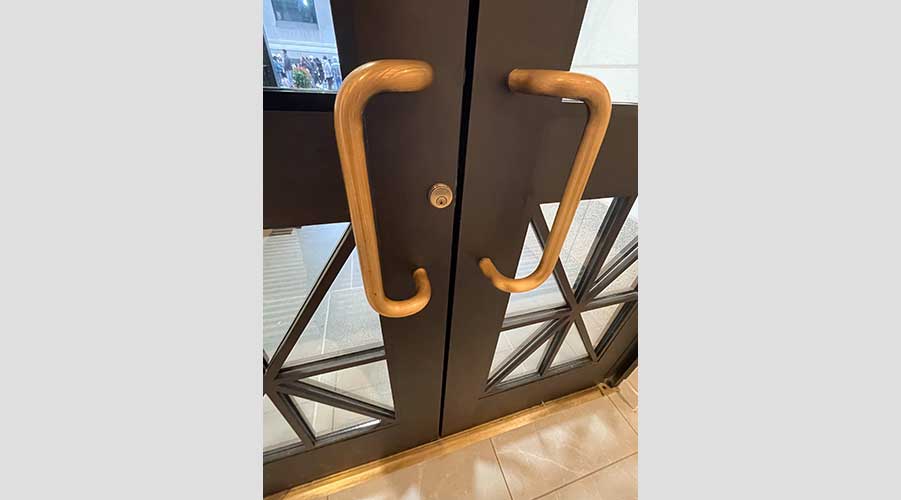
 Photo credit: Hoffmann Architects + Engineers
Choosing Door Hardware for Safety, Security and Performance
Explore how panic hardware, door closers and locking systems support safe egress, fire protection, energy efficiency and building security.
Key Takeaways:
- Emergency-exit doors in high-occupancy buildings often require push bars and panic hardware that allow occupants to quickly release latches and locks during an evacuation.
- Door closers on fire-rated exits help contain fire and smoke while also supporting energy efficiency and security by ensuring doors close, latch and seal properly.
- Selecting mortise, cylindrical or multi-point locking systems requires balancing security, installation constraints, door alignment and the functional or historic characteristics of the building.
A door’s role in a building egress system affects requirements for door operating hardware. When a door is a designated emergency exit in a high-occupancy building, it typically requires horizontal push bar hardware across the door’s width at the inboard side for ease of opening. If the door automatically latches or locks when shut, the bar must include panic hardware, which releases the latch and lock when pushed.
At the outboard side, if the door acts as a building entrance, the hardware is typically a pull — vertical handle — and might include a thumb press if the door latches. If it is an exit only, the outside might include a rotating lever.
Door closers also are required on emergency exits that require a fire rating. They consist of lever arms mounted to the head of the door at the inboard side that force it to close following opening, but they use spring systems so they do not slam shut and damage the assembly or cause harm.
Closers not only reduce the spread of fire but have energy-conservation benefits because they help seal doors tightly, diminishing drafts and heat transfer. They also improve door security because they encourage doors to latch when closed and lock automatically where set to do so. Balanced doors also carry these benefits because the pivot-arm hardware inherently acts as a door closer.
Closer look at locks
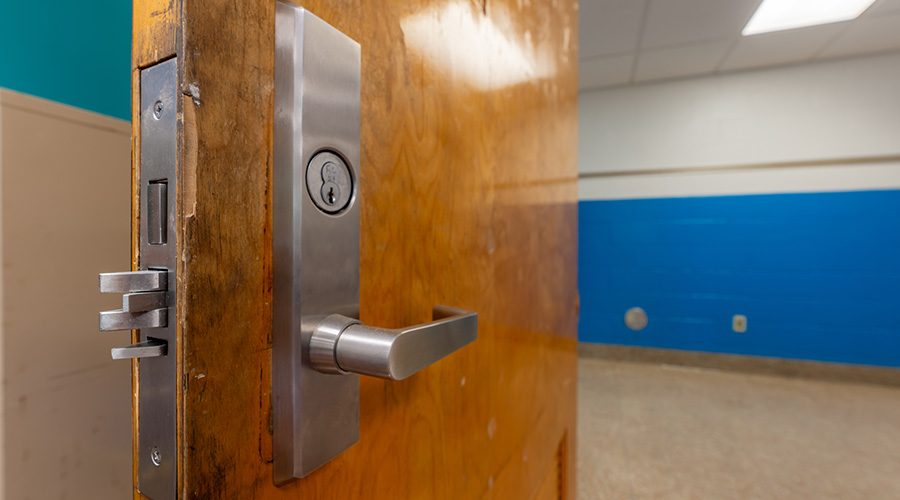
Most door locks can be classified as mortise or cylinder type. Mortise locks were a major advance over surface-mounted deadbolts, as they consist of a heavy-duty box set into a mortise pocket within the body of the door. This integrated configuration makes them more durable and resistant to tampering and forced entry.
Cylindrical locks can be installed through a basic bored hole in a door or integrated with a doorknob or rotating lever. This makes cylindrical locks less expensive and easier to install, so they are commonly used in smaller-scale commercial construction, but they are also less secure. Both lock types come in a variety of materials and configurations and generally can be paired with most types of opening devices.
A multi-point locking system offers still greater security, with locks at the door head and sill, not just the jamb. For these systems, it is essential that doors remain aligned so all lock points engage the surrounding frame. Multi-point systems can be challenging with existing door retrofits, since they typically are installed during door construction and as a result might require surface-mounted or independent components rather than an integrated system.
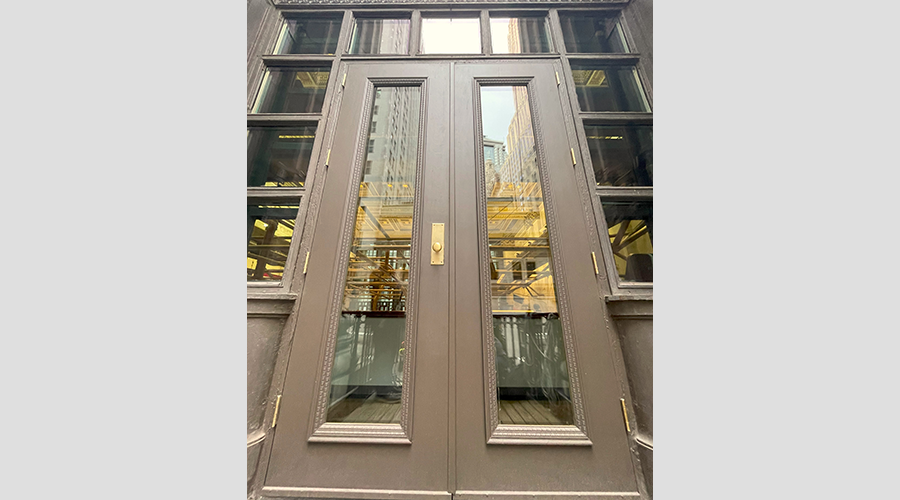
Many historic pre-war wood doors incorporate multi-point hardware that may appear decorative but can also play a functional role. For example, surface-mounted straps and through-bolted clavos enhance security by binding together door panels, stiles and rails to reinforce door strength and provide impact resistance.
The numerous options for hardware can be complex, and no one size fits all door types. But since doors are one of the first components that people engage with and one of the most dynamic parts of a building exterior, hardware can play a major role in defining architectural character and enhancing user experience and enclosure performance.
However small door hardware might seem, it is worth careful thought. Design professionals and consultants who specialize in exterior rehabilitation can help managers determine the best strategy for existing door repair and replacement projects.
Richard W. Off is a partner, senior project manager and architect at Hoffmann Architects + Engineers. With expertise in preservation and enclosure systems, he oversees architectural and engineering teams in completing numerous multi-million-dollar rehabilitation projects, several of which have received recognition, including multiple Lucy G. Moses awards from The New York Landmarks Conservancy.
Related Topics: