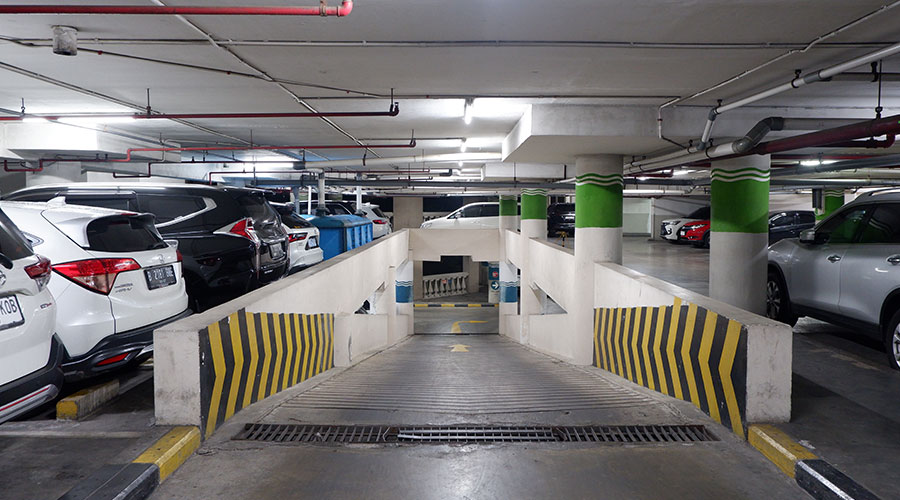
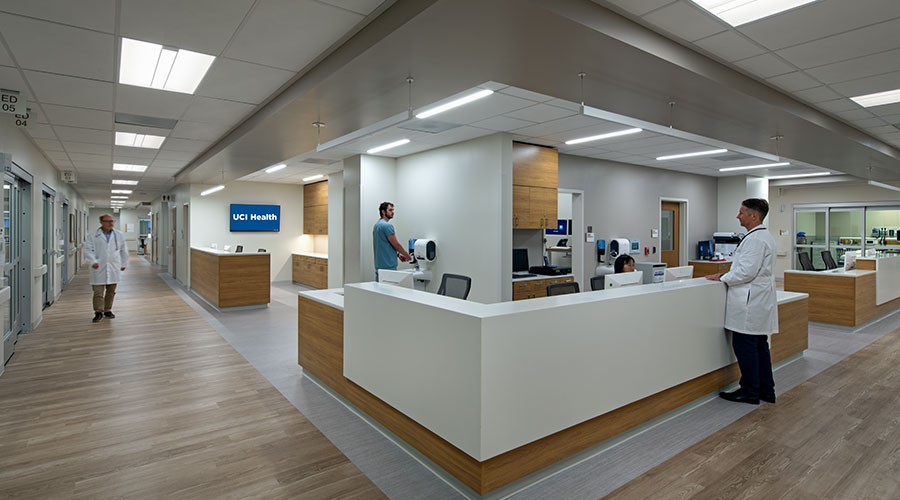
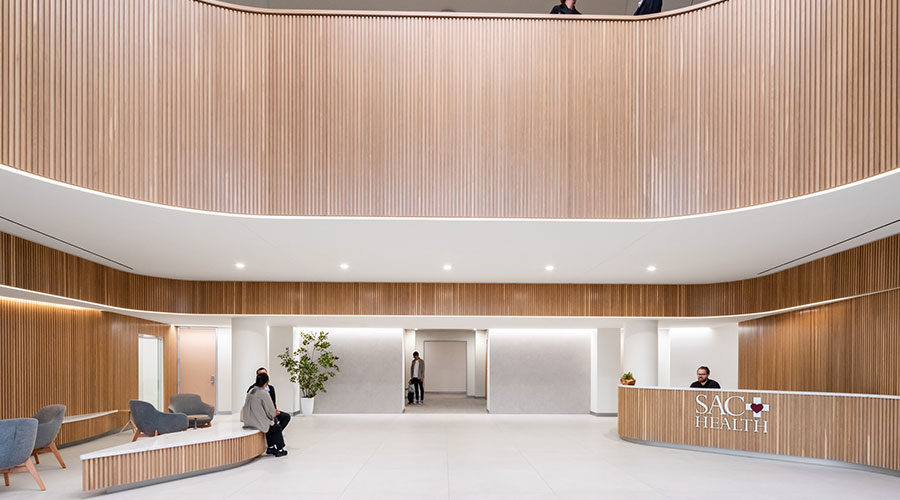
 Photo credits: UCI Health and CO Architects
All-Electric, All New: Inside UCI Health’s Ground-Up Hospital
UC Irvine's facilities team played significant role in hospital construction.
In a profession that generally involves maximizing the performance of aging, compromised facilities, Joe Brothman and his team achieved the rarest of rare accomplishments — designing and taking charge of a brand new, state-of-the-art, all-electric facility. Brothman, who is director of facilities and general services with UCI Health in Irvine, California, knows just how rare the opportunity is.
“I’m very grateful for our leadership team to let us roll with this, and I can’t give them enough kudos, as well as our construction leads, to the beautiful place that we have,” Brothman says. “It’s an absolutely beautiful site. I compare it to a five-star hotel in terms of experience, and I’m grateful to be part of it.”
Going electric
The new hospital, UCI Health-Irvine, opened in December 2025. The seven-story acute inpatient facility has 350,000 square feet and 177 beds, and it offers specialty services, including cancer, cardiology, digestive health, neurology and orthopedics. Also on site are advanced imaging, laboratory services, pharmacy services and a 24-hour emergency department with 20 treatment rooms. UCI Health also includes the Orange campus, which lies about 14 miles from the Irvine campus.
The new hospital joins two existing facilities on the UCI Health-Irvine campus — the Center for Advanced Care and the Ambulatory Care Center and Cancer Center.
“The hospital and the cancer center are a combined site,” he says. “They share a ground level that has what we call a surgery megafloor — 22 ORs. It spans multiple football fields both in distance and width, and it’s an incredibly busy location.”
Electricity powers all of the facilities.
“There’s no natural gas coming into any location on the site,” Brothman says. “All utilities and all services are provided through electric chillers, electric pumps, everything like that. It’s a fairly advanced central utility plant with central plant operators who are specially educated to the unique needs of that site.”
Brothman says he was an early advocate of an all-electric hospital.
“I’m a big advocate of sustainability, so I was advocating strongly that we move forward with it,” he says. “There were plenty of designs that came up and engineering models of what was capable of powering the site. That’s the primary scope of plant services, and we were asked very early on, and there was an assessment made that this could be an all-electric site. We had a stretch goal of all-electric, but it wasn’t mandatory.”
The planning process for any capital project of a certain scale and scope for the University of California includes an assessment of the feasibility of electrification.
“When that assessment was complete and it was deemed feasible, my initial thought was that we should definitely move forward with this,” he says. “It made sense from my standpoint and my department’s standpoint that we do move forward with this. We had an initial goal of all electrification for the heating hot water systems. The stretch goal was for humidification because those two services are typically the most energy intensive, and you typically use natural gas for those utilities.”
Dan Hounsell is senior editor for the facilities market. He has more than 30 years of experience writing about facilities maintenance, engineering and management.
Related Topics: