 Image credit: TeraWulf
 Inside TeraWulf’s Fast-Track Data Center Expansion
TeraWulf COO Sean Farrell is front and center in the data center boom.
By Dave Lubach, Chief Editor
Key Takeaways:
- TeraWulf is accelerating data center development by standardizing designs and streamlining construction, enabling the company to deliver large AI-ready facilities on aggressive timelines.
- Proactive, AI-enabled condition-based maintenance and mission critical training are central to the company's strategy for ensuring long-term reliability and uptime.
- Site selection prioritizes abundant low-carbon power, brownfield redevelopment and strong utility infrastructure while emphasizing community engagement and sustainable operations.
The race to build data centers is alive and well, and TeraWulf’s Sean Farrell is square in the middle of it.
TeraWulf develops and operates large-scale digital infrastructure designed for artificial intelligence (AI) and high-performance computing workloads. One of its current projects is proceeding in western New York along Lake Ontario at the Lake Mariner Data campus, a 180-acre site of a former coal plant that is one of the fastest growing data center builds in the United States.
Farrell, TeraWulf’s chief operating officer, leads design and construction for the Lake Mariner project, which is on an accelerated schedule to construct three data center buildings in less than a year that will house more than 360 megawatts (MW) of IT capacity.
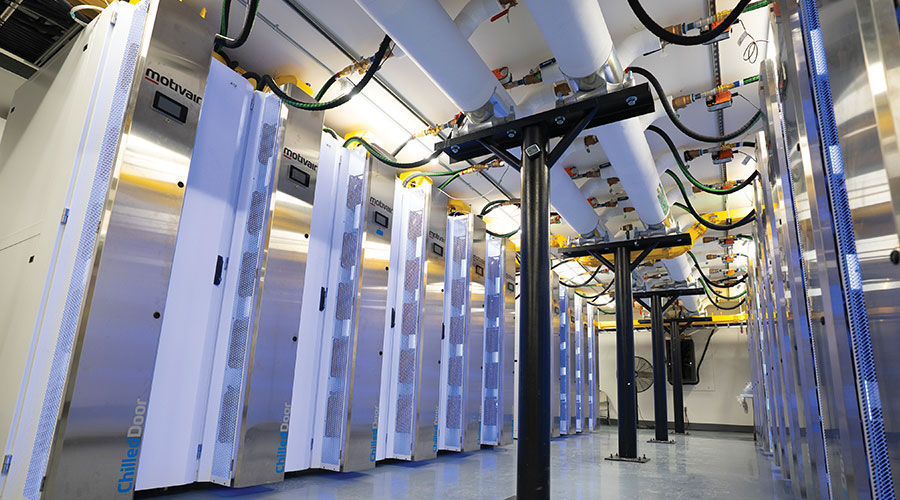
In May, a group of international reporters who cover data centers and facilities management were invited to the Lake Mariner site by Schneider Electric, which announced a $290 million agreement with TeraWulf to provide power and liquid cooling infrastructure for the site’s buildings.
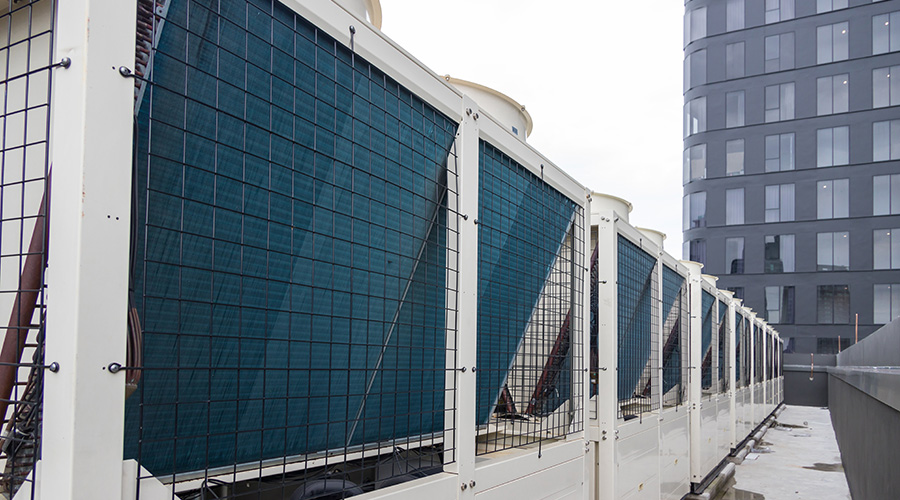
At the time of the tour, Farrell and his team were constructing CB4, a 330,000-square-foot facility that will contain more than 160 MW of power for clients. The building was being equipped with cooling units, and teams were preparing to install uninterruptible power supply (UPS) units.
In addition to the Lake Mariner site, Farrell manages six other sites across the country and plays a significant role in purchasing others.
Farrell joined TeraWulf four years ago after more than a decade in sales in the energy sector.
A few weeks after the tour, Farrell talked with Building Operating Management about his responsibilities with TeraWulf, the challenges of managing a data center site and the mushrooming interest in data center buildouts.
BOM: What does a typical day look like for you?
Sean Farrell: We have six sites and roughly four gigawatts of assets, so I’m working with my engineering team to develop sites. We have a rule inside of our company: If the project manager can’t do it in 24 hours, it gets escalated to my VP of capital projects. If he can’t do it in 24 hours, then it goes to me. There’s constant escalation on getting equipment delivered and getting equipment energized. Construction is never easy, but it’s more common sense and doing the right thing and understanding what needs to be done to keep the construction going.
BOM: What role do you play in selecting future sites for operations?
Farrell: My team will put together the preliminary master planning for sites. We’ll look at the electrical infrastructure, how we would connect to the grid, if there’s any environmental concerns (and) what the risk and the cost and the scope is to make those sites shovel ready. Then we also look at master planning of how the site would look from a very high level to see how much capacity we can put on the site and how that’s going to connect to the grid and the timeline to do so.
BOM: How unique is the Lake Mariner campus?
Farrell: It’s very unique and I’d say superior to most sites. First off, it’s a 1,800-acre campus (TeraWulf leases 180 acres). Second, it’s the first load coming off Niagara Falls, so you’re roughly 90 percent carbon-free power for that area. You’ve got a lot of hydro and nuclear power (several plants are in the region), so in that area, you have an abundance of energy.
BOM: What is your role in working with entities like local utilities, governments, media outlets and residential communities when a site is being planned?
Farrell: We have four different primary groups. The first is origination, which is getting a site procured— getting it in the boat, as we call it. Once we have a grasp on the project, then it goes to development operations, which gets it ready for me to build. From there, it goes to construction. That third bucket, construction, that includes engineering, procurement, construction and commissioning. When we first get to the site, you’ve got to get construction permits and go through the planning board, so that’s a lot of media and external relations. We also have a government affairs individual that’s involved and a strategy team that leads the permitting and local community efforts. I support that, but I do not lead that.
BOM: What is your strategy for building different sites?
Farrell: The market is crazy, and we’ve got a good team to tackle it. Lake Mariner is the tip of the iceberg for us. We’ve got a pretty good cookie cutter design that we’re going to be rolling out at other sites, so it will be easier. It’s like a teacher out of their first year in education: They have to build the curriculum and go from there. We built a curriculum at Lake Mariner, and now we’re rolling it out to other sites, so I’m super optimistic.
BOM: What are the myths and misconceptions about data centers?
Farrell: Our primary goal — and I’d ask the same questions — is to educate the truth. You see a lot of things in the media, and not all data centers are created equally. TeraWulf is a very ESG-focused company. The Lake Mariner site has an abundance of power. We’re going in and taking brownfield sites, where a lot of these towns lose hundreds of jobs, and we’re bringing those jobs back. We focus on areas that do not have grid stress. We utilize ultra-low-noise fans. We do closed-loop cooling systems, so we’re not consuming water like you would have seen in the data centers of five to 10 years ago. Our main thing, again, is educating the community.
BOM: What are the roles of managers onsite once a data center is up and running?
Farrell: We send all our employees to mission critical training. It’s just a different mindset on how you look at something. It’s not, ‘Hey, I’ll fix it later.’ It’s always, ‘I’ll fix it now.’ Then there’s a lot of proactive maintenance. We run operations 24/7, and we have one guy in the control room, and the rest of the guys are just doing rounds. They’re doing oil checks, filter checks and looking for any kind of areas for cleaning. It’s very hands-on. Initially, during the warranty period, we usually get our critical vendors to do long-term service agreements, so that performance or reliability is completely out of our hands, and that allows us to be trained to operate all the equipment. When you hear mission critical training, it’s all hands on deck. We’re just north of 100 people, and the majority of those are literally just operators that walk the site looking for things, doing daily checks. They have performance logs and make sure you maintain the equipment. You never want to do reactive maintenance. It’s always proactive and condition-based maintenance. We actually use AI to monitor vibration and monitor heat to better forecast if a maintenance cycle needs to be done before it’s scheduled on paper. Conditioned-based maintenance heavily uses AI to ensure you’re doing maintenance before it’s needed.
BOM: How do you approach your specification process and choose the vendors to work with?
Farrell: We do a competitive bidding process. We typically have an engineer record for each site, and they help us develop a specification that goes out to bid. We usually shortlist down to three, and then we’ll go in commercial negotiations with one. There are a lot of different pillars that we evaluate – price obviously, lead time but also commercial factors. ... Most importantly, past success. Every vendor is going to have issues, and you want issues. You want to see how that vendor responds to those issues. A mentor told me, ‘How do you know you have such a good relationship with all of your customers?’ His answer was, ‘I pick up the phone.’ That is huge in our space. We need a lot of contracts. What that means is that a critical vendor needs to have someone on the phone in 15 minutes.
BOM: How do you see the data center industry evolving over the next decade or so?
Farrell: As you get more power dense, you might just see a smaller footprint inside a data hall, so you might just have less space that you’re utilizing inside the data hall. One thing that there is a lot of chatter out there about is instead of the data center being alternating current power, it’s going to be direct current.
BOM: Your job requires a lot of traveling. What kind of schedule do you maintain?
Farrell: We’re moving so fast, it’s critical for the executive team to be together. I go to New York City at least once a month so we can all get together to understand strategy and where we’re at with both scheduling, financing, new developments, how the design changes or how you tweak commercial agreements as we go forward. Other than that, I’m out of sight. I love putting on a hardhat and steel-toed boots and getting out there with my team. I think that goes a long way. It shows that we’re moving a million miles an hour. It’s very stressful, but we do it together.
BOM: What is the most appealing aspect of your position?
Farrell: Go to a site and see what we’re building. Two days ago, I was stressed out at our site, and I just walked through some of the buildings. I like the team that we have established, and I don’t think we could have picked a better team for how quick we’re building and how safe we’re doing it. It just gets me going. That’s my high — to see the infrastructure. We’re building 1.1 million square feet in just over a year.
Dave Lubach is the chief editor of the facilities market. After serving as associate editor for Facility Maintenance Decisions from 2012 to 2016, he returned to Trade Press Media Group in 2021 and was elevated to his current position in October 2025. Dave manages the facilities team and helps shape the education content for NFMT and Elevate events.
Related Topics: