Growing Safely: Data Center Safety
As the industry continues to grow, ensuring the buildings containing servers stay safe should remain the priority.
By Dave Lubach, Chief Editor
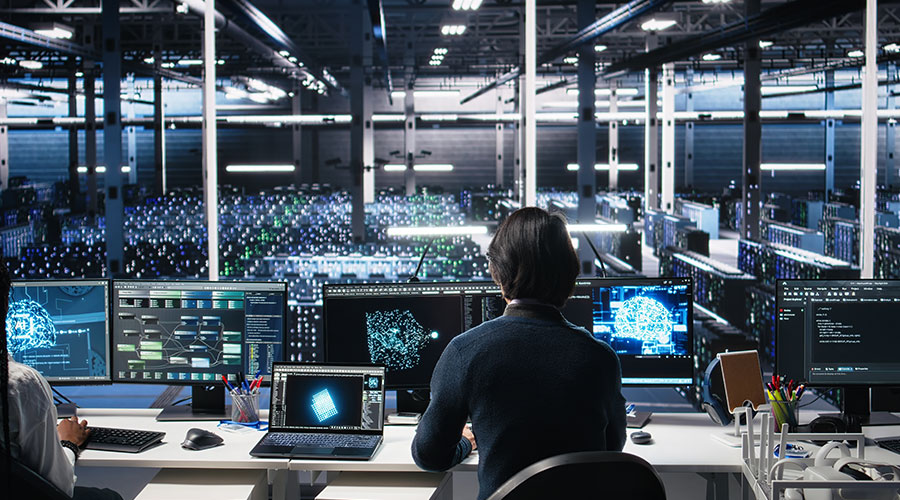
Data centers are changing the landscape for institutional and commercial buildings. Thanks to the ever-increasing impact of artificial intelligence (AI), demand will only continue to rise.
As the demand grows, the pressure will increase to construct more buildings. And companies like UL Solutions can help facility managers stay within codes and standards during the construction process and during a rapid period of increased operations.
During Data Center World 2026, we spoke with Milan Dolitch, VP of data center and business transformation for UL Solutions, about the evolving industry and what it means for facility managers.
FN: How unique are data center operations when compared to other institutional and commercial facilities?
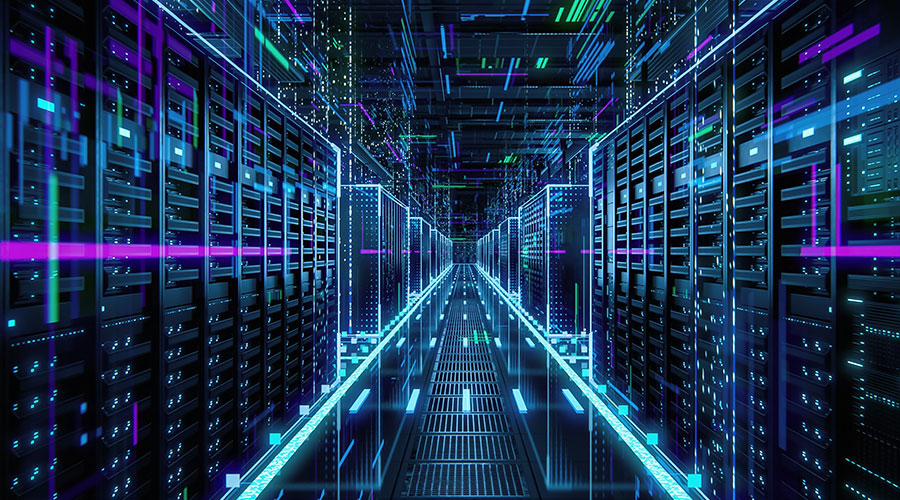
MD: I think data centers used to have to be commercial buildings with computers inside of them. Many of them today still are, because you’ll see racks and servers, and similar fire protection that they’ve had for computer recovery for a long time, similar pooling and similar electrical distribution. With the advent of AI, more computing power is needed in smaller areas. And power density, for the computing needs, is what’s creating new hazards, all solutions we like to resolve. It’s now about safe power delivery, safer cooling, safer connectivity, or seeing liquid cooling connections and conduits and safer fire protection. When we put more power density into a smaller area, it creates a lot more heat, and that’s what creates new hazards.
FN: How do you see the roles of the facility manager evolving in the data center space?
MD: I think first, it starts with the design and how you put the data center together. When you put the equipment in place, it’s not just, ‘Can I get it quickly,’ it’s how do I get access to power? How do I distribute that power safely? And when the power is inside the information factory, the AI factor, if you want to call it, how do I make sure that when I'm having things that are cooled and taking that extra power out, how is my liquid cooling working? So as a facility manager, it starts with design. How do I make sure I'm designing it correctly, so I have the hazards mitigated for that? And then it’s when I'm operating. How do I make sure that it’s safe for people, property?
FN: What are some critical certifications and standards that facility managers must be aware of for data centers?
MD: There are about 55 standards that we're working with in the data center space, everything from fire protection and the selection of building materials to the electrical distribution standards, to computing standards, or the racks and the servers, and that, to the cooling standards, and other connectivity standards — that’s your cable, your busways, and a whole list.
FN: How can UL Solutions help facility managers with the operations of their data centers?
MD: We can help with safe equipment selection. We can help with working with authorities having jurisdiction (AHJs) to make sure everything is installed correctly. We can help a lot on the power side, doing advisory around how much power you need to come in the building, how much you get out of your microgrid or your renewable energy or your generation set, because a lot of these data centers are going to be done more off the grid because it's hard to get you grid power. We do a lot with helping for equipment selection, for fire protection, for electrical distribution, for cooling, and then helping to make sure it can get installed, because a lot of the AHJs now are looking at these differently because the hazards have changed. As more power goes to smaller areas, the risks go up. We help with insurance and help facility managers mitigate their risks.
Dave Lubach is the chief editor for the facilities market.
Related Topics: