 Photo credit: Dan Schied
How Cornell Manages a 1,000-Acre Campus With a Modern Grounds Strategy
Cornell University's strategic equipment planning and sustainability initiatives shape ground maintenance.
By Elaina Myers, Assistant Editor
For many universities, the campus grounds are the first introduction that students, parents and visitors have to the institution. Before anyone steps inside a classroom or lecture hall, they experience the campus through its landscape.
At Cornell University, those first impressions go a long way. Cornell’s main campus spans more than 1,000 acres and includes over 300 acres of turf, 80 acres of maintained beds and gardens, 61 miles of sidewalks and a network of roads, and agricultural outposts stretching well beyond the university’s Ithaca hillsides. Maintaining all that land requires not only a highly skilled grounds team, but also a carefully planned fleet of equipment capable of supporting operations through the changing seasons.
Modern grounds management involves much more than keeping the grass cut, says Dan Schied, director of grounds at Cornell.
“You have to be looking and paying attention to trends and new ways of doing things,” Schied says. “It’s all about being flexible and creative.”
Managing diverse equipment
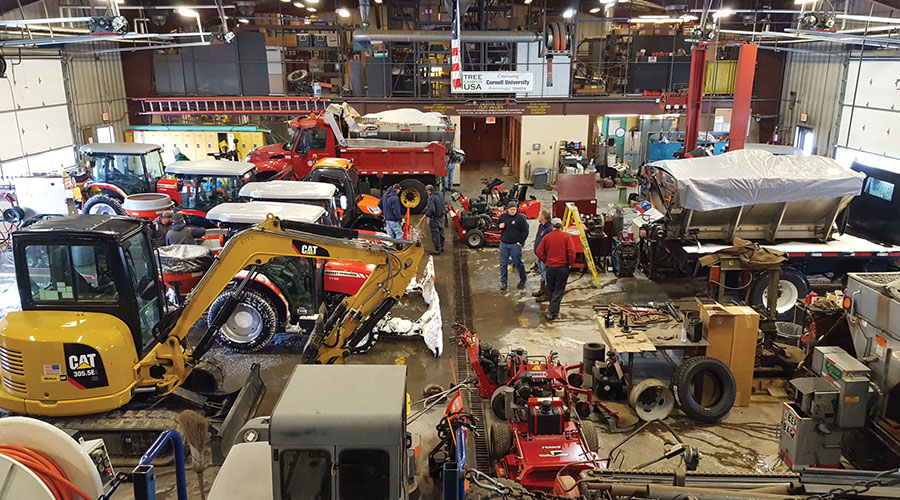
Cornell’s grounds operation relies heavily on a variety of equipment to maintain a functional, safe and visually appealing campus year-round.
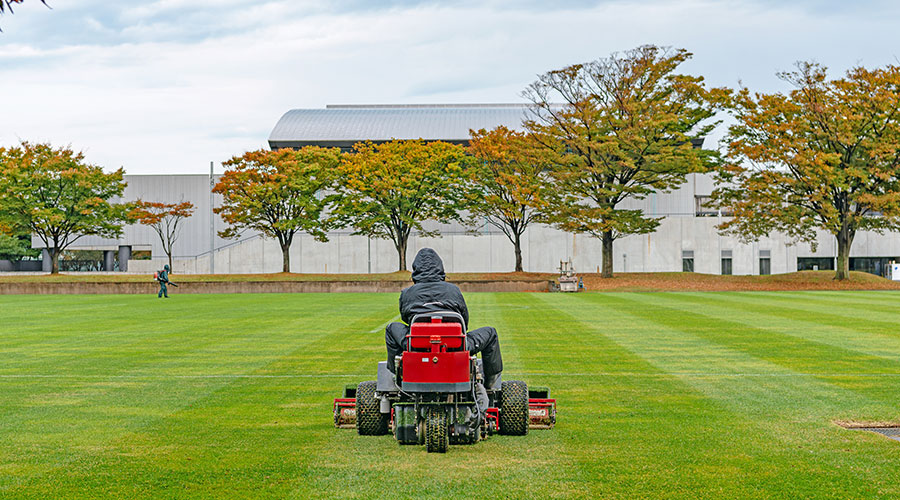
“We have a lot of different pieces,” Schied says. “Obviously, mowers are a big category. We have the big 11-foot wing mowers, zero turns, some stand-on and walk-behind mowers.”
The department’s fleet also includes tractors, utility vehicles, handheld equipment, snow removal equipment and specialty machines designed for specific tasks. Due to the size of Cornell’s campus, equipment utilization is carefully planned to maximize efficiency.
“All of our summer equipment we also use in the winter,” Schied says. “Versatility is important. It’s hard to justify a piece of equipment that sits most of the time.”
While some seasonal equipment naturally has limited use — such as hydroseeders or water tanks for irrigation — Cornell prioritizes equipment that can serve multiple purposes.
“The tractors and rough terrain vehicles get plows once the snow starts to fall,” Scheid says. “And then in the summer, they’re used to transport staff around to pruning beds, weeding, mulching, everything else you can think of.”
Evaluating new equipment
When Schied evaluates new equipment purchases, he says there is no single factor driving his decision. Instead, his department weighs multiple priorities simultaneously.
“Durability, of course, is a big priority,” Scheid says. “Cost is also important. We really want the best value.”
Sustainability has become an important part of those conversations, especially as battery-powered equipment proves more cost competitive and beneficial for grounds operations. Cornell has expanded its use of battery-powered handheld equipment including hedge trimmers, chainsaws and string trimmers.
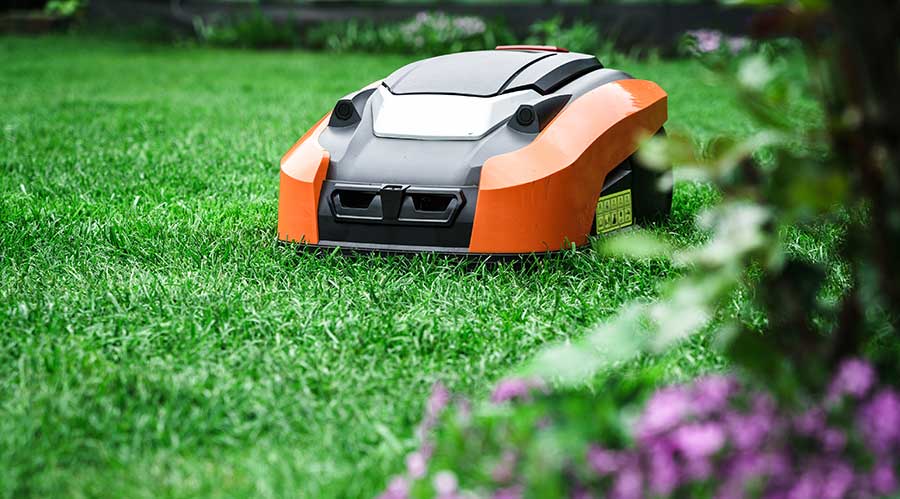
The university also uses battery-powered push mowers in smaller interior courtyards, which allows staff to easily swap batteries rather than refueling with gas. Larger battery-powered equipment, however, remains a more difficult financial decision.
“We’re just starting to look at zero-turn battery-powered mowers,” Schied says. “But they were priced too high for us when we started the process. They were three times the cost of what we were paying for a gas-powered unit, so ultimately, we had to pass.”
A strategic replacement cycle
One of Schied’s key operational strategies involves equipment replacement.
“We try to trade things in on a pretty aggressive cycle so that we get a good trade value for them and then we always have reliable equipment,” Schied says.
Utility vehicles typically operate on a four-year replacement cycle, he says, while utility trucks are replaced roughly every six years. Mowers are evaluated based on operating hours and conditions. Some of the bigger wing mowers can last closer to 10 years before replacement is necessary.
“As soon as we buy a piece, it goes on the calendar for a replacement,” Schied says. “Our equipment spreadsheet stretches all the way out to 2050 showing exactly when each piece is set to be traded in.”
That level of long-term forecasting helps the department handle budget fluctuations and avoid emergency replacement situations with equipment fleets that remain as new as possible.
Prioritizing sustainability
Some of Cornell’s most impactful sustainability initiatives involve operational changes rather than new machinery. One major initiative has been converting low-use turf areas into managed meadows that no longer have to be mowed every day and support wildlife.
The strategy began by targeting difficult or potentially hazardous slopes that required regular mowing. The environmental and financial benefits quickly became significant.
“By going from 25 mowings each year to just one mowing in meadow areas, we saved about 278 pounds of carbon per acre per year,” Schied says. “This process saved us about $1,100 per acre per year, totaling about $35,000 a year.”
Cornell also raised mowing heights by 1 inch in many turf areas to reduce maintenance frequency and improve turf resilience due to the reduced mowing time.
The university also reduced fertilizer applications significantly.
“When I started at Cornell, we used around 2.25 pounds of nitrogen a year,” Schied says. “We are currently at .75 pounds.”
Schied says the combination of reduced mowing and fertilizer use now saves Cornell more than 50 tons of carbon annually.
“What we have to do is talk to people about expectations. The less time our grounds teams spend mowing, the more time they can give to other areas and the more time our mowers will last,” Schied says. “At Cornell, we’re well maintained. We’ve got nice edges, but it’s not going to look like Disney World.”
Student involvement
One of Cornell’s most innovative equipment-related projects came through collaboration with students in the Cornell University Sustainable Design (CUSD), a multidisciplinary student group.
Schied originally approached the group with an idea for a mobile solar-powered trailer that can recharge battery-operated grounds equipment directly in the field, which would reduce the number of times his staff would have to go back and recharge equipment while landscaping.
“I told the students if they put together the design one semester, I would pay for them to build it the next,” Schied says.
The students designed and built a trailer equipped with rooftop solar panels, charging stations and organized storage for the various handheld equipment. The project also attracted outside support.
“They got the panels donated by a solar company. And they got an engineering firm to donate their time to help them hook everything up,” Schied says.
Although the trailer was completed shortly before the COVID-19 pandemic disrupted campus operations, Schied says the project is a glimpse into the future of grounds management.
“As the bigger equipment becomes more reasonable, we’ll be doing so much more with battery-powered equipment. This trailer will come in handy as that part of our equipment fleet grows,” Schied says.
Cornell’s approach to grounds operations demonstrates that success today requires more than maintaining appearance. It demands strategic planning, operational flexibility, sustainability strategies and a willingness to adapt equipment and practices to meet evolving campus needs.
Elaina Myers is the assistant editor of the facilities market.
Related Topics: