Turf Conversions Require Construction, Horticultural Knowledge
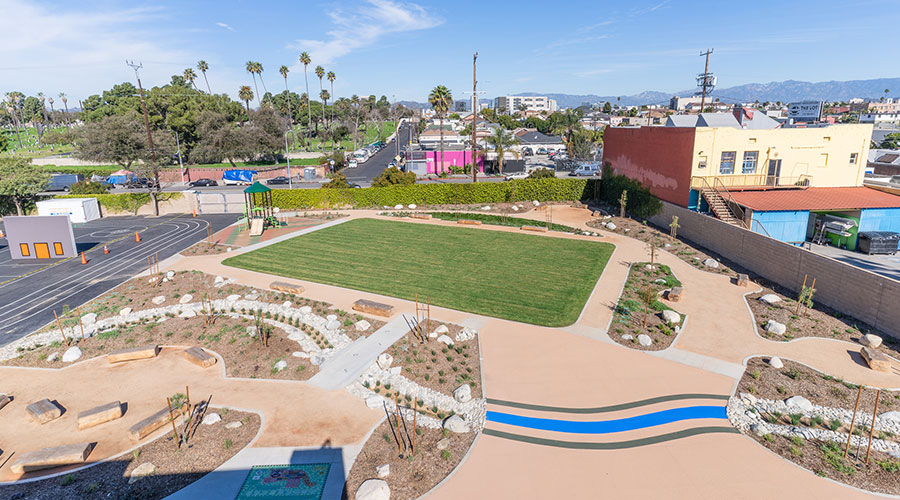
Completing a turf conversion requires the efforts of the entire landscape and grounds department. Members of the department's construction crew are responsible for demolition, grading, and pave-stone and sidewalk installation. Irrigation crew members redesign the converted area to accommodate a more water-efficient irrigation system, and the horticultural staff handles planting and ground-cover installation.
Properly maintaining plant material is essential to ensuring xeriscapes survive and thrive in their early stages. For example, applying herbicides at the proper rate and temperature is critical, especially in climates where temperatures can exceed 90 degrees by 9 a.m. In this scenario, the herbicide can vaporize and harm adjacent plant material.
As part of these projects, managers also should reach out to the campus community because large-scale projects, such as turf conversions, can obstruct sidewalks and parking lots for extended periods. It also is important to notify local fire departments because the projects might affect fire routes, Lynn says.
Related Topics: