Roofing Design: Key Considerations for Long-Term Performance
Roofing manufacturers discuss durability, resilience, lifecycle performance and planning for future rooftop technologies.
Key Takeaways:
- Long-term roofing performance depends on the entire assembly, including insulation, membranes, cover boards, attachments, flashings and other components working together.
- Facility managers should consider service life, environmental exposure, resilience and lifecycle impacts when evaluating roofing systems and materials.
- Early planning for solar, HVAC equipment, vegetative systems and other rooftop technologies can help protect roof integrity, simplify maintenance and avoid costly modifications later.
As facility managers pursue more efficient, resilient and sustainable buildings, roofing decisions increasingly extend beyond selecting a specific membrane or system. Factors such as service life, durability, weather resistance, installation, rooftop attachments and future uses can all affect a roof’s long-term performance.
In this manufacturer roundtable, Facility Maintenance Decisions spoke with roofing manufacturers to understand the design and material considerations facility managers should weigh when planning for both current needs and future rooftop technologies.
FMD: As facilities pursue goals such as improved energy efficiency, reduced carbon emissions and greater resilience, what roofing design or material considerations are becoming increasingly important, regardless of the specific system selected?
“The most important consideration is designing the roof as a complete system rather than a collection of individual components. Long-term performance depends on how insulation, cover boards, membranes, flashings, rooftop attachments and other system components work together to protect the building and improve overall performance.
Resilience has become just as important as energy efficiency. Roofs are expected to withstand increasingly severe weather events while continuing to protect building operations. Selecting assemblies that provide enhanced wind uplift, hail and fire resistance can help minimize damage, reduce business interruptions and extend service life.
Durability also remains one of the most important sustainability considerations. Choosing assemblies that resist foot traffic, rooftop equipment maintenance and environmental exposure helps maximize service life while reducing repairs and premature replacement. In many applications, high-density cover boards, thicker membranes or protective overburden systems can provide significant long-term value.
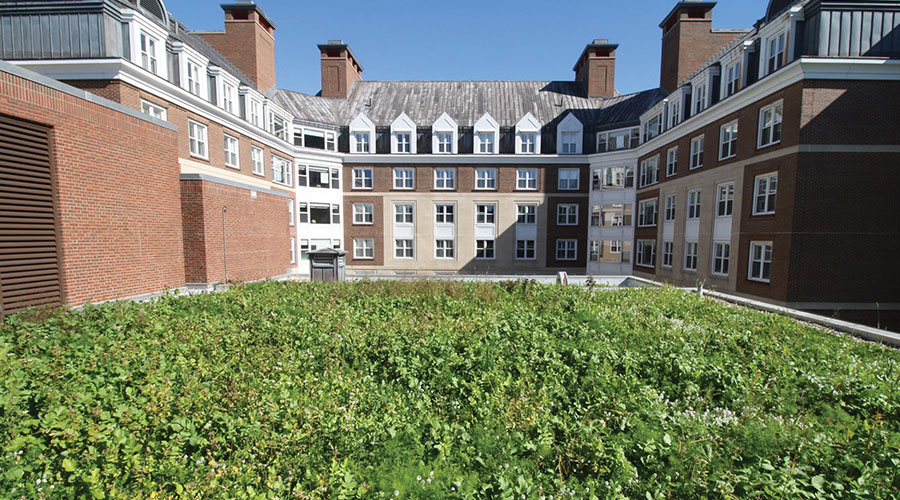
Another thing that facility owners should consider is how the roof may need to evolve over its lifetime. Rooftops are increasingly being used to support solar arrays, mechanical equipment, vegetative systems and amenity spaces. Designing with these future uses in mind can reduce costly modifications while helping the roof continue to meet both operational and sustainability objectives.”
— Chris Kann, Product Manager – Specialty Products and Sustainability. Carlisle Construction Materials, LLC
“The most important consideration is service life. A roofing material cannot be considered sustainable if it deteriorates prematurely and must be replaced. Facility managers should evaluate how well a system withstands long-term environmental exposures such as ultraviolet radiation, thermal cycling and ozone effects because those factors directly affect durability. More immediate environmental forces, including wind, hail, seismic activity, snow and rain, must also be considered.
Facility managers should also examine the material from cradle to grave. This includes how raw materials are sourced, how the product is manufactured, the carbon associated with transportation and installation, how often the roof will require replacement and whether the material can be recycled at the end of its service life.
Manufacturing methods also matter. In the steel industry, for example, the increased use of electric arc furnaces has reduced the environmental impact of steel production, but the broader point applies to any roof system: Sustainability should be based on measurable lifecycle performance and total carbon footprint, not on a single product attribute or short-term claim.
Roof integrity must also remain central to the design. Every roof-mounted mechanical penetration introduces a potential maintenance point and, if it is not properly designed and installed, can affect watertightness and shorten the roof’s service life. Facility managers should therefore consider not only how a roof performs in isolation, but also how attachments, penetrations and rooftop technologies may affect its long-term durability.”
— Rob Haddock, Director, Metal Roof Advisory Group, Ltd. & Founder and CEO of S-5!
“The basics are still the basics. Selecting the right roofing assembly and having it installed by a quality roofing contractor remain the foundation for achieving a facility's long-term performance goals. Pair that with the right amount of insulation and a durable waterproofing layer, and you've addressed the biggest pieces of the puzzle.
Where things are becoming more interesting is in how the roof is attached. New attachment methods that reduce thermal bridging can improve the overall energy efficiency of the roof assembly. It's a more nuanced part of roof design, but attachment methods represent one of the next frontiers for improving thermal performance while supporting energy savings and reducing carbon emissions.”
— Mitch Gilbert, Vice President of Technology, Duro-Last
FMD: Roofs are now expected to support a variety of functions beyond weather protection, including solar arrays, vegetation, HVAC equipment and other rooftop technologies. What planning considerations can help facility managers successfully integrate these features while maintaining long-term roof performance?
“Successfully integrating these features begins with planning early in the design process rather than treating them as additions after the roof has been designed.
Early coordination between the building owner, architect, structural engineer, roofing manufacturer and rooftop equipment suppliers helps ensure the roof is designed to accommodate anticipated loads, attachment methods, drainage and maintenance requirements. Just as importantly, it allows the project team to understand how rooftop features may impact the roof warranty and identify approved attachment methods that preserve system integrity. Addressing these considerations during design helps avoid costly modifications, preserve warranty coverage and support long-term roof performance.
Protecting the roofing membrane should also be a top priority. Rooftop equipment increases foot traffic and maintenance activity, making walkway systems, equipment supports and properly designed attachment methods important for minimizing damage to the waterproofing system. Whenever possible, rooftop penetrations should be minimized by using attachment methods that preserve the roof assembly while meeting applicable building code requirements.
Finally, facility managers should plan for the roof's entire service life - not just the day it's installed. Roofs require periodic inspection and maintenance, and rooftop systems should be arranged to preserve safe access to drains, flashings and other critical areas. Designing for maintainability not only protects the roof investment but also helps ensure rooftop technologies continue to perform as intended throughout the life of the building.”
— Chris Kann, Product Manager – Specialty Products and Sustainability. Carlisle Construction Materials, LLC
“These functions must be coordinated during the original building design rather than treated as equipment that can simply be added post-initial construction. Early planning helps protect roof integrity while avoiding conflicts among solar, HVAC and other rooftop systems.
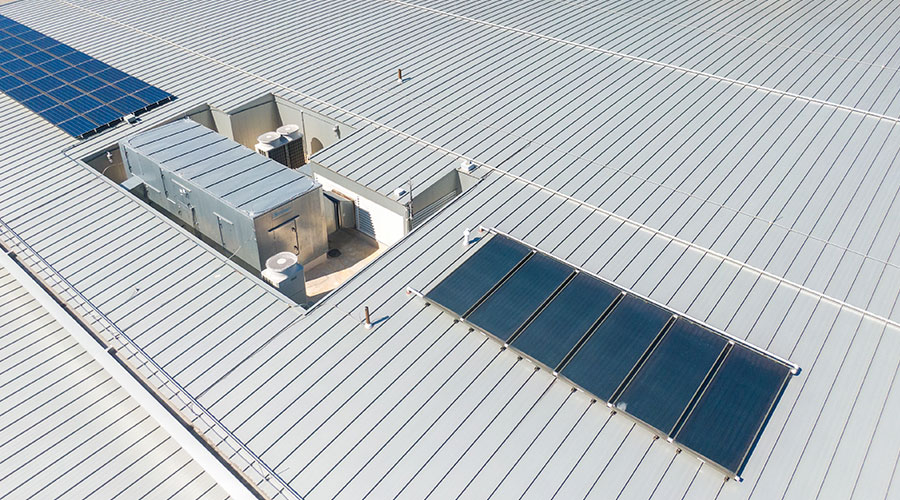
For solar, facility managers should establish an unobstructed solar zone before HVAC equipment, vents and other rooftop systems are laid out. The roof does not necessarily need to be steeply sloped or oriented directly south, but it does need adequate exposure and freedom from shading. Mechanical, electrical and plumbing teams must be told early that portions of the roof are being preserved for solar or other future uses and must be free of any other clutter.
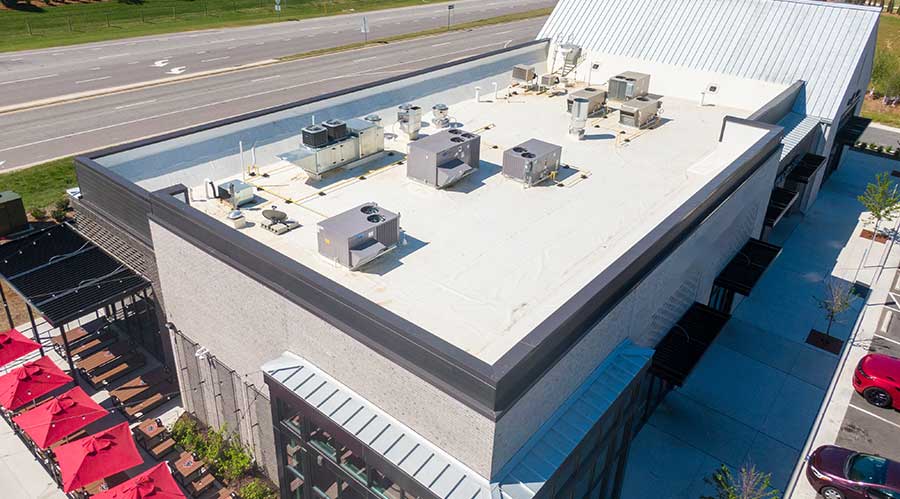
Where practical, HVAC and other serviceable equipment should be located at ground level. Although this may require additional space or longer utility runs, it will reduce roof penetrations, limit maintenance traffic and preserve areas that may later be used for solar.
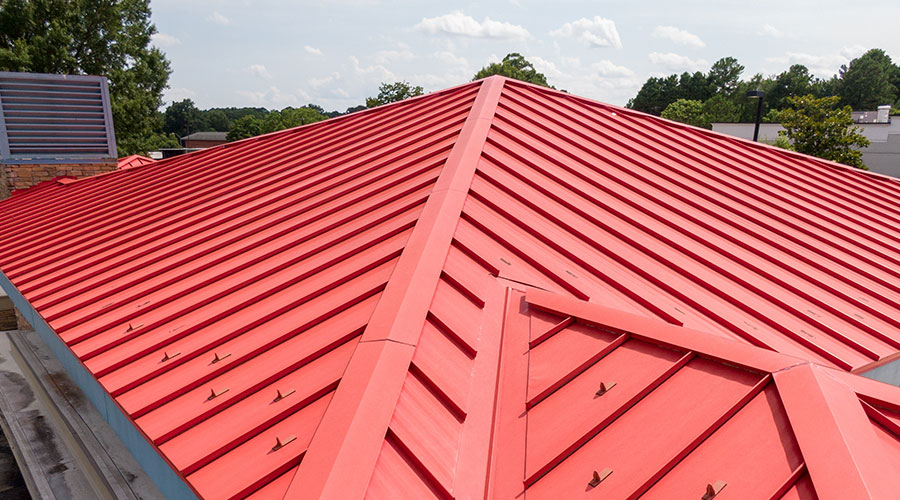
Standing seam metal roofing is particularly well suited to this increasingly multifunctional role because solar arrays, snow retention and other rooftop technologies can be attached without penetrating the roof panels. With non-penetrative mechanical attachment, solar installations can also often avoid the need for heavy ballast. That makes metal the most user-friendly roof system available while helping preserve roof integrity and long-term performance. Structural loading must be considered, particularly with ballasted solar systems, which can add approximately 6 to 12 pounds per square foot of dead load, and with vegetative roofs, where saturated soil can add substantial weight.”
— Rob Haddock, Director, Metal Roof Advisory Group, Ltd. & Founder and CEO of S-5!
“At this point, every new roof should be designed with future rooftop additions in mind, whether that's solar, a vegetative roof system or something else. Even if those features aren't installed right away, planning for them up front gives facility managers more flexibility down the road.
It's also important to have early conversations with the roofing contractor and manufacturer about how those additions will affect long-term serviceability, maintenance and warranty coverage. Understanding that before equipment is installed can help avoid costly surprises later.
Timing matters, too. While the industry has made great strides in making it easier to service or even replace roofing systems around solar arrays and other rooftop features, facility managers should think carefully before adding those systems to a roof that's already well into its service life. Removing and reinstalling those additions during a reroof can become a significant expense.”
— Mitch Gilbert, Vice President of Technology, Duro-Last
Jeff Wardon, Jr., is the assistant editor for the facilities market. With more than three years of experience, he covers topics including technology, wellness, sustainability and emerging industry trends. Connect with him on LinkedIn.
Related Topics: