Why Resilient Roofing Is More Than a Maintenance Plan
Experts say true roof resilience comes from aligning design with local hazards, managing water effectively, maintaining systems over time and planning early for eventual replacement.
While developing and implementing a comprehensive roof maintenance plan is a critical element in ensuring the system’s performance and resilience, it is just one of several important decisions owners must make in ensuring resilient roofing for their facilities. First, Varner emphasizes the role of proper design.
“Whether it’s a new construction or roof replacement, match your design to the hazards and exposures of your area, whether it’s the wind speed that’s expected, hail risk, climate or sun exposure,” she says. “Make sure that you’re specifying a tested roof system that has all of those enhancements at the perimeters and edges and enhanced performance specifications.
“Demand robust water management. Make sure that there’s positive drainage, enough slope, whether it’s in your structure, in the deck or in your insulation system. Maintain your drains over the life of the roof system. Make sure that your drains aren’t clogged and that there’s secondary overflow drainage so there’s no ponding or blockage that could become a leak.”
Perhaps most importantly during the design phase, pay attention to the details.
“Make sure all your details are correct,” Varner says. “This results from quality assurance during installation, having somebody inspect it during construction. Do all the field verifications to make sure everything is being installed properly at edges, perimeters and penetrations. Get your routine maintenance completed, especially after any type of storm event.”
Next, owners need to ensure that the organization protects the roofing system’s warranty by implementing an effective inspection and maintenance program.
“The caveat with roof warranties you’re going to read is that if (the roof is) properly maintained,” Kuriyama says. “That’s key for the building owners and building managers. One thing is designing your roof, but the other part is that you need to maintain it. It’s not just install it and forget about it. Regular inspection is part of it.”
Effective maintenance is more than just a short-term method for preventing leaks. It also has long-term implications.
“Replacing your roof is going to be costly no matter when you do it, especially if it’s a flat roof,” he says. “But if you’re a commercial building in a high-density city and you have all your equipment on the roof, replacing your roof is going to be a major expense. You need to maintain it, do inspections, do repairs promptly and monitor it. It is a big expense.
“You need to maintain it because life expectancy — 25 or 30 years — is just your common roof. But if you maintain it, you might extend its life. Your roof can last for 50 years if it's well maintained.”
Even the best-maintained roof systems do not last forever, and planning for its end also is a crucial, early step.
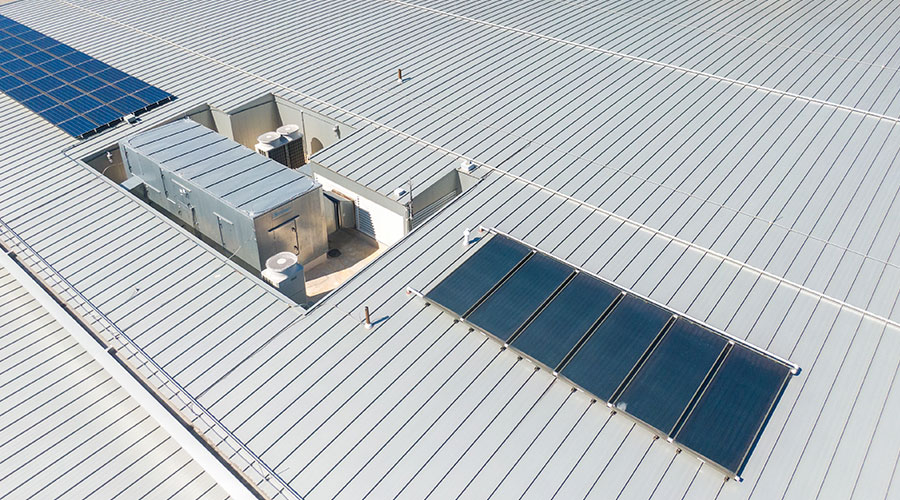
“If you’re putting mechanical equipment, chillers, antennas, telecommunication and solar panels over that, when the time comes to replace the roof, you have a burden to remove that,” Kuriyama says. “That should be also part of the resilient roofing thoughts. You need to remember it’s not a permanent solution. You’re going to have to replace it, and you need to design based on that.”
Perhaps the most important idea for owners to remember is that ensuring resilient roofing requires that they rethink much of what they know about roofing.
“A resilient roofing system isn’t one thing in particular,” Varner says. “It’s not one-size-fits-all. It’s going to vary based on your location and the utilization of your facility. There are lots of ways to improve your roofing system to make it more resilient regardless of your circumstances — things that could be implemented, a new construction or existing to help extend the lifespan of your roof and make your facility overall more efficient.”
Given its complexity and critical role in protecting facilities, resilient roofing also needs to be among the first considerations for owners.
“Resilient roofing is something that goes above and beyond what the industry standard or the code mandates,” Kuriyama says. “Resilient roofing should be considered for any type of building, especially for institutional and commercial buildings. It should not be an option. It should be something they consider from the get-go.”
Dan Hounsell is senior editor for the facilities market. He has more than 30 years of experience writing about facilities maintenance, engineering and management.
Related Topics: