Making the Most of Metal Roofing
Owners facing roofing system challenges can consider the benefits and challenges of metal roofs to protect facility operations and assets.
By Dan Hounsell, Senior Editor
Key Takeaways:
- Standing seam metal is one of the most durable systems available, and it typically outlasts most conventional roofs.
- A metal roof’s substrate matters enormously. An uneven or improperly prepared deck can affect the roof’s appearance and, in some cases, its long-term performance.
- One misconception about metal roofs is around fire rating. The metal itself is not a fire-rated product. The Class A rating comes from the complete assembly — deck, underlayment, coverboard, and panel together — not the metal alone.
Building owners and managers face a host of daily challenges in ensuring their facilities effectively support the mission of the organization, but no priority is higher — literally — than managing roofing systems. A leaking, failing or otherwise underperforming roof can quickly undermine a facility’s operations and activities, and it can present owners with costly decisions that are likely to affect facility performance and the bottom line.
Owners who face the challenge of whether to repair, recover or replace an aging roofing system have a number of system options to consider, and among them are metal roofs. Building Operating Management spoke with Zach Cadet, vice president with Fidelity Roofing, an HCR Group company, to learn more about the potential benefits and challenges of selecting, installing and maintaining metal roofs.
BOM: What potential benefits do metal roofing systems offer building owners and executives looking to replace or recover an existing roof?
Zach Cadet: Standing seam metal is one of the most durable systems available, and it typically outlasts most conventional roofs. When installed as part of a properly detailed assembly, it can achieve a Class A fire rating, which matters for institutional and commercial buildings. It also delivers a clean, uniform appearance. Because the seams, gutters, chimney caps, penetrations and custom flashings can all be fabricated to match, the finished roof reads as one integrated system rather than a patchwork of parts.
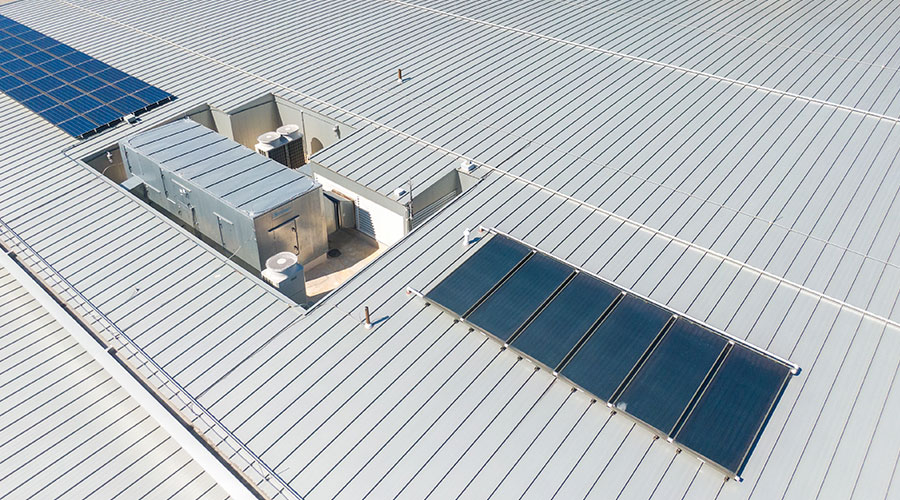
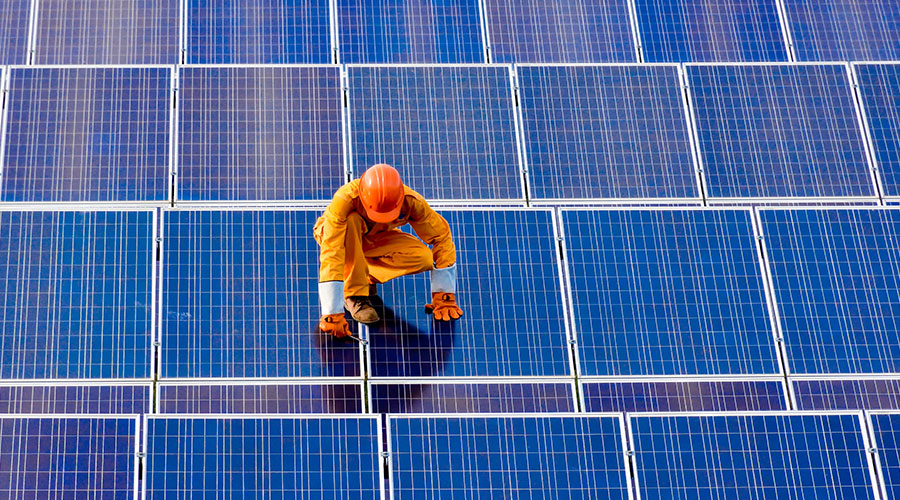
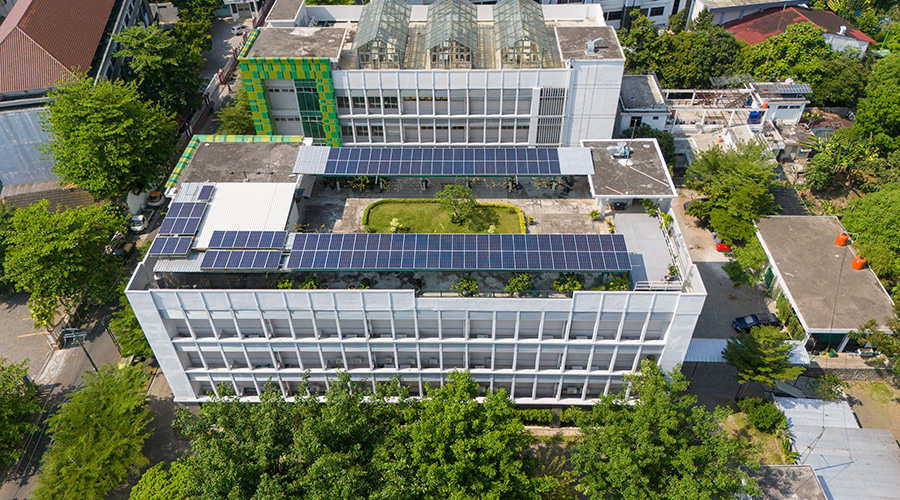
For owners planning to install solar power, standing seam construction can be a real advantage because panels can often be clamped directly to the seams with few or no roof penetrations, which protects the roof's watertight integrity.
Metal roofing is also available in a range of colors and panel profiles, and much of the material can be prefabricated and delivered straight to the job site, improving quality control and shortening time on the roof.
BOM: Are there particular situations in which metal roofs can be an appropriate choice?
Cadet: Metal is a robust choice for buildings in high-risk or high-exposure environments. It performs well in wildfire zones because it is noncombustible, sheds snow effectively in heavy-snow regions and resists puncture in hail-prone areas. When properly engineered and attached, it stands up to high-wind and severe-weather conditions.
BOM: What challenges related to metal roof systems do building owners need to be aware of?
Cadet: Two things are worth understanding up front. First, oil canning, the slight visible waviness in the flat areas of a panel, is an inherent characteristic of standing seam metal. It can occur regardless of manufacturer or installation method. It can be minimized through panel design, such as striations or rib rolling, and careful handling, but it cannot be fully eliminated, and owners should expect some degree of it.
Second, the substrate matters enormously. An uneven or improperly prepared deck can affect the roof’s appearance and, in some cases, its long-term performance.
BOM: Are there misconceptions related to metal roof systems that owners need to be aware of?
Cadet: One common misconception is assuming a single panel profile works everywhere. Rib and seam configuration have to be matched to the roof’s slope, panel length and drainage. The wrong panel on the wrong slope can invite water infiltration.
The other misconception is around fire rating. The metal itself is not a fire-rated product. The Class A rating comes from the complete assembly — deck, underlayment, coverboard and panel together — not the metal alone.
BOM: What else should building owners and executives be aware of regarding metal roof systems?
Cadet: Metal roof systems can be noticeably louder during rain or hail than some conventional roof products. That said, a solid deck, underlayment and insulation greatly reduce the effect, and it’s rarely an issue on a well-built commercial assembly. But it's worth setting expectations early.
Dan Hounsell is senior editor for the facilities market. He has more than 30 years of experience writing about facilities maintenance, engineering and management.
Related Topics: