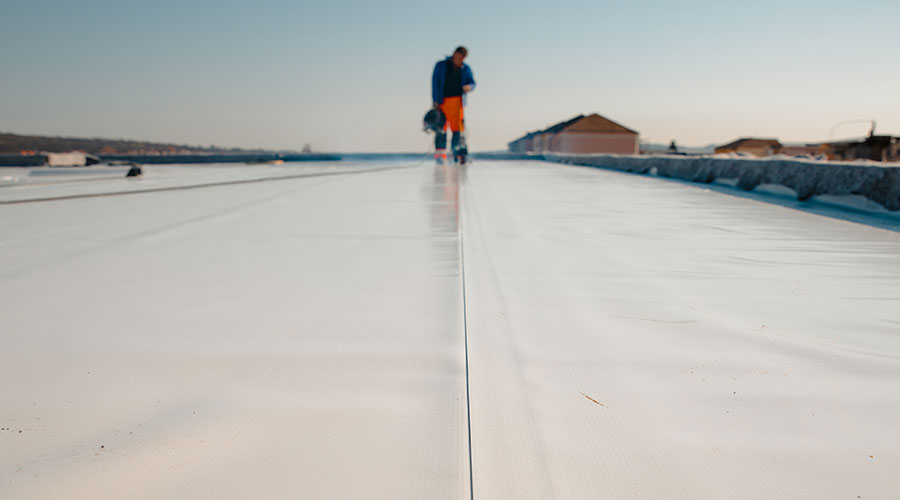
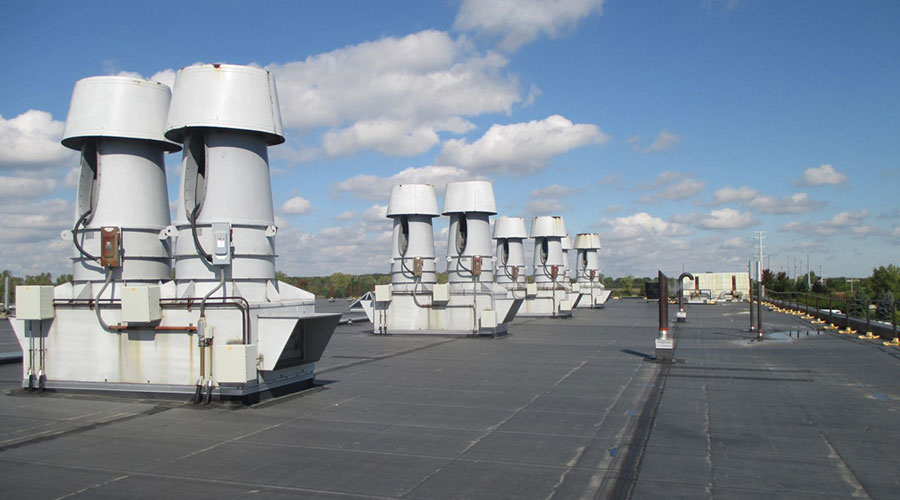
 Image credit: Hutchinson Design Group
Rethinking Roofing: Why Service Life Matters More Than First Cost
Focusing on upfront cost can lead to short-lived roof systems. A more strategic approach prioritizes durability, material performance and installation quality to maximize long-term value.
When engineering and maintenance managers consider roof systems, the initial cost often dominates the conversation. Yet the most economically sound decision considers a different metric entirely: resilience and service life.
A roof that costs more upfront but lasts twice as long with minimal maintenance and simple repairs delivers far greater value over its lifetime, transforming roofing from a commoditized purchase into a strategic investment.
The service life gap
Building and energy codes historically have treated service life as secondary to easily quantifiable attributes that include R-value and solar reflectance index, and designers have followed suit, optimizing for single metrics while the overall assembly's durability goes unaddressed.
The result is predictable: Roofs designed around one attribute — whether reflectance, recycled content or thermal resistance alone — routinely compromise the integrated performance factors that determine the number of years a roof lasts, often falling short of even a typical 20-year manufacturer warranty period.
Good intentions do not make good roofs. Holistic thinking does. Optimizing roof systems considers cost, long-term performance, specific building influences and installation realities.
Material selection and installation quality
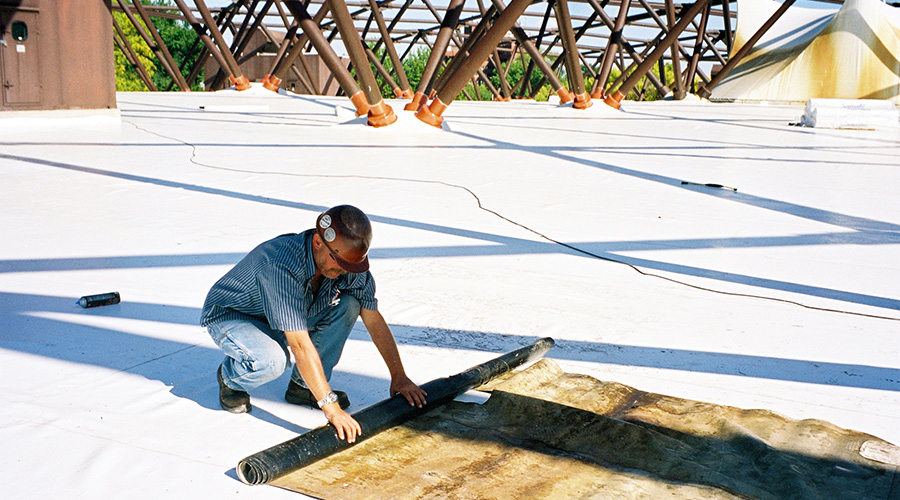
Ethylene propylene diene monomer (EPDM) roofing is among the industry’s most proven performers for low-slope roofs. Recent field studies document EPDM systems averaging 38 years of service life, with a notable share of installations reaching 40-50 years. That durability traces back to the material’s inherent resistance to the three primary aging mechanisms for low-slope roofs: ultraviolet (UV) degradation, ozone attack and the cumulative fatigue of thermal cycling.
Roofing contractors, system designers and consultants consistently project 25-40 years of service or more for properly installed EPDM, according to a 2025 survey of 570 roofing professionals released by the EPDM Roofing Association. But material selection does not stop at the membrane. Insulation compatibility, attachment method and membrane thickness must be chosen as a coordinated system.
Field investigations consistently trace more premature failures to inadequate maintenance and installation defects — including improper seam preparation, inadequate fastening and flashing errors at transitions — than to material degradation. A roof system is only as durable as its most vulnerable details.
Each attachment method has genuine merit, and each demands a level of craft that cannot be shortcut or value engineered without consequence. These shortcomings are mitigated when experienced contractors install systems designed by knowledgeable roof system designers and consultants.
Ellen Thorp is president of the Coalition for Sustainable Roofing (COSUR), which represents companies that manufacture a wide variety of roofing products.
Related Topics: