Fragmented Infrastructure Data Driving Trillions in Inefficiencies
New analysis highlights “infrastructure identity gap” as a major cost driver across building lifecycles. April 9, 2026
By Jeff Wardon, Jr., Assistant Editor
A recent report from UMIP Inc. suggests that one of the built environment’s most persistent — and least visible — challenges may also be one of its most expensive: fragmented infrastructure data.
The analysis, “The $2 Trillion Infrastructure Identity Gap,” estimates that disconnected and inconsistent lifecycle documentation across buildings and infrastructure systems could contribute to more than $2 trillion annually in global inefficiencies.
At the core of the issue is what the report describes as a lack of “persistent infrastructure identity” — a standardized way to track buildings and assets across their entire lifecycle. Unlike industries such as automotive or aviation, where assets are tied to identifiers like VIN numbers or tail numbers, most facilities lack a consistent identity that connects records over time.
For facility managers, the consequences are familiar. Critical documentation — from engineering drawings and maintenance records to inspection reports and renovation histories — is often scattered across multiple platforms and stakeholders. As buildings change ownership, undergo upgrades or transition between management systems, that information can become increasingly difficult to access or verify.
This report categorizes these inefficiencies as “lifecycle friction costs,” which show up in areas such as redundant inspections, time-consuming documentation searches, delayed insurance processes and incomplete maintenance histories.
The financial impact is significant across sectors. Commercial buildings alone may account for more than $300 billion annually in inefficiencies tied to fragmented data, according to the report’s modeling. In the U.S. residential market, the figure could reach roughly $400 billion each year.
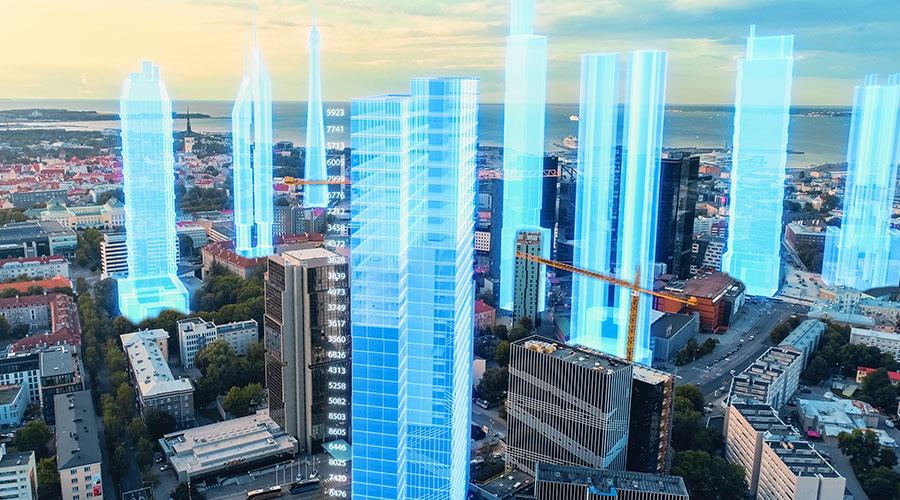
Beyond direct costs, the lack of connected data can also limit the effectiveness of emerging technologies. Digital twins, predictive maintenance tools and advanced analytics platforms all rely on consistent, high-quality data — something that is difficult to achieve when records are siloed.
To address the issue, the report proposes the concept of a persistent infrastructure identity framework. Under this approach, buildings and infrastructure assets would be assigned a unique identifier that remains with them throughout their lifecycle, allowing all related data to be anchored to a single reference point.
For facility executives, such a system could streamline maintenance planning, improve asset visibility and simplify processes like capital planning, insurance verification and real estate transactions.
Although the report is centered on modeled projections rather than audited data, it highlights a growing reality: As facilities generate more data than ever, the ability to organize and connect that information may be just as critical as the systems that produce it.
Jeff Wardon, Jr., is the assistant editor of the facilities market.
Next
Read next on FacilitiesNet