 Photo credit: Purdue University
Mowing Decisions That Make the Cut at Purdue University
Purdue University adapts to changing landscapes and mower technology advances in ensuring its landscape and turf make good first impressions.
Higher education is competitive, even outside the classroom. Colleges and universities nationwide vie for the attention of potential students and faculty members alike, and for many, the competition revolves around an area that many take for granted — landscapes.
Phil Richey, director of grounds at Purdue University, knows all too well that the landscapes he oversees often are central to the decisions students and faculty make about attending and working for an institution.
“We don’t get a second chance for a first impression,” he says. “Our staff understands that we’re the first thing that people see when they come on campus, and we’re the last thing they see on campus.” Critical to the appearance and performance of Purdue’s campus is the fleet of mowers Richey and his staff deploy.
An evolving campus
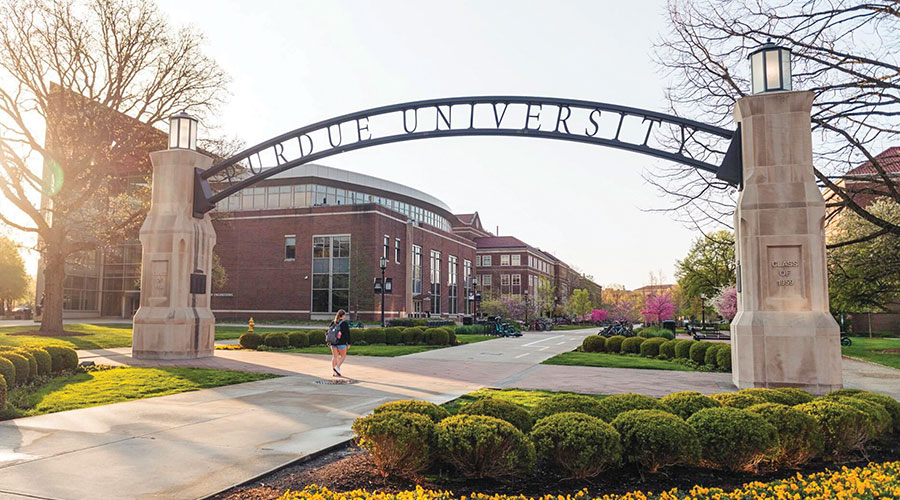
The Purdue University campus contains about 2,200 acres, and Richey’s department manages more than 1,600 acres.
“Our fine turf that we manage is about 368 acres, and our rough turf acreage is about 588,” he says. As with many higher education campuses, change is constant at Purdue, and the results of campus changes affect his equipment decisions.
“If I look at my mower fleet from several years ago versus today, I would say it’s a lot more diversified,” he says. “We have a lot more options that we can put people on to actually mow more efficiently.
“Our campus morphs a little bit every time a capital project goes up, and we have three major capital projects going on right now. We don’t need big pieces (of equipment) anymore, whether it’s taking care of our streets to mowing. We’re downsizing everything to where we can get in and around these more intimate spaces.”
To meet the evolving needs of turf areas, the department’s 22 groundskeepers who handle mowing and other landscape duties on campus use 27 pieces of mowing equipment.
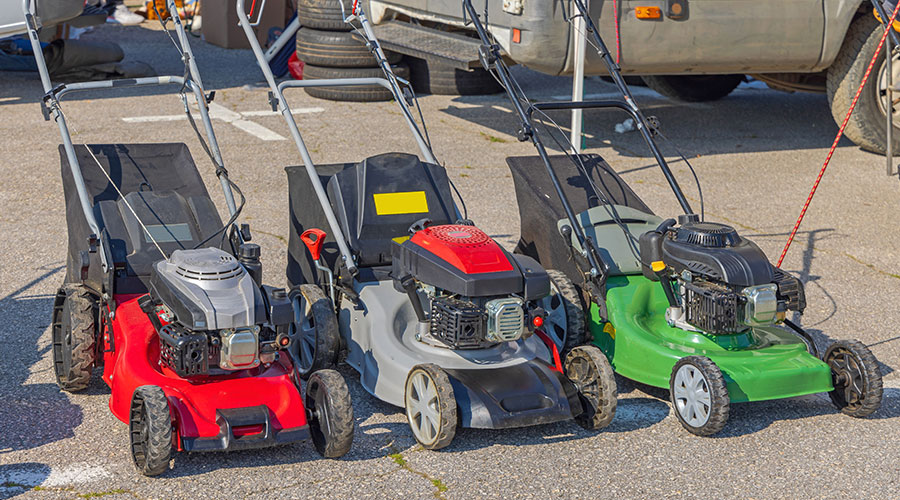
“We utilize zero turns quite a bit, and there are various sizes of those,” Richey says. “We’ve got some walk-behinds and push mowers. We pair those pieces of equipment to areas of campus to ensure efficiency.”
Managing mowing
An evolving campus landscape also means that Richey needs to remain up to date on changes in mowing technology that might benefit his department and operators when the time comes to replace equipment.
“We’re starting to look out of the box,” he says. “Is this an opportunity to go more autonomous, or is this an opportunity where an electric mower would fit into the budget? That’s how we’re looking at it.”
In some cases, Richey says he has found emerging mowing technology delivers less than promised.
“Some of the electronics on these engines and some of the mowers are supposed to be more efficient, but we’re not finding that,” he says. “We’re finding that it’s a pain, and it’s not bringing the efficiency the technology was supposed to be providing the owner or the operator.
“But that’s part of new technology. Some of it works, and some of it doesn’t work. It might work for different types of operators. Maybe they’re concentrating on different aspects of sustainability than others. We’re trying to be savvy about how we run our business and take care of the campus at a very high level.”
Among the technologies Richey says he is watching closely is autonomous electric mowers.
“That is the forefront of technology,” he says. “Some are using it very efficiently, but we have not ventured into it. When we do pull the trigger on that, we want to make sure it’s utilized efficiently. We’re looking at the autonomous pieces because we’re so cut up. We don’t have a lot of huge turf panels on campus, so we want to pair the right autonomous mower with what we have.
“We’re starting to go down the electric road. We have a lot of different handheld electric pieces of equipment that maintain our landscape and our turf. I’m trying to find the right electric ride-on mower for us so we can use it in an application and mow around residence halls earlier in the morning than we're allowed to at this point.”
Beyond equipment
Richey must look at the bigger picture when trying to maximize his department’s investments in mowing, which means understanding the way a piece of equipment will meet the demands created by a changing campus.
“How does our equipment fit into that designed landscape?” he asks. “We’ve worked hard to have a seat at the table of design here at the university, whether it’s a capital project or a smaller project that we will design in house.. My landscape architect does a really good job of helping with that design and collaborating with our managers through that design process.
“If there are turf or turf panels, how does that design flow so equipment can efficiently move through that space with minimal edging, minimal hand work and still not detract from the aesthetics? That’s one thing that affects those types of decisions.”
Like most grounds managers, Richey also must deal with staffing challenges when looking to hire potential equipment operators.
“Our campus is growing as far as population goes, and it’s becoming more dense,” he says. “With that in mind, I’m not of the mindset that anybody can just jump on a mower and go, and that gets right into some of our staffing challenges.”
Assessing the mowing skills of a potential new employee goes beyond their ability to operate the equipment.
“There are people that have the aptitude to get on a mower if they don’t have mowing experience and learn quickly and make the right decisions in very dense and populated areas,” he says. “When I say decisions, I mean safety but also decisions that can affect the optics or the risk of the university.
“Hiring the right employee is very critical, especially if you’re going to put them on a $20,000 mower. You’ll be mowing around 30-50,000 people out on campus. Even if pedestrians aren’t there, can they mow efficiently and quickly but safely without tearing it up? Do they have the judgment? We find that some people just don’t make that cut, but then we find other people that really fit into that position and work really well.”
Dan Hounsell is senior editor for the facilities market. He has more than 30 years of experience writing about facilities maintenance, engineering and management.
Related Topics: