How Drones Are Transforming Facility Maintenance
Drones can make inspections, cleaning and monitoring of hard-to-reach areas safer and more efficient, but facility teams must account for weather, regulations and operator training.
Key Takeaways:
- Drones can safely inspect and clean hard-to-reach areas such as roofs, facades, HVAC units and solar arrays without relying on lifts, scaffolding or rope access.
- Thermal imaging and aerial mapping allow facility teams to identify issues, monitor assets and document conditions while also supporting security, inventory and post-storm assessments.
- Despite their benefits, drones require trained operators and must account for weather, regulatory requirements, site complexity and other job-specific limitations.
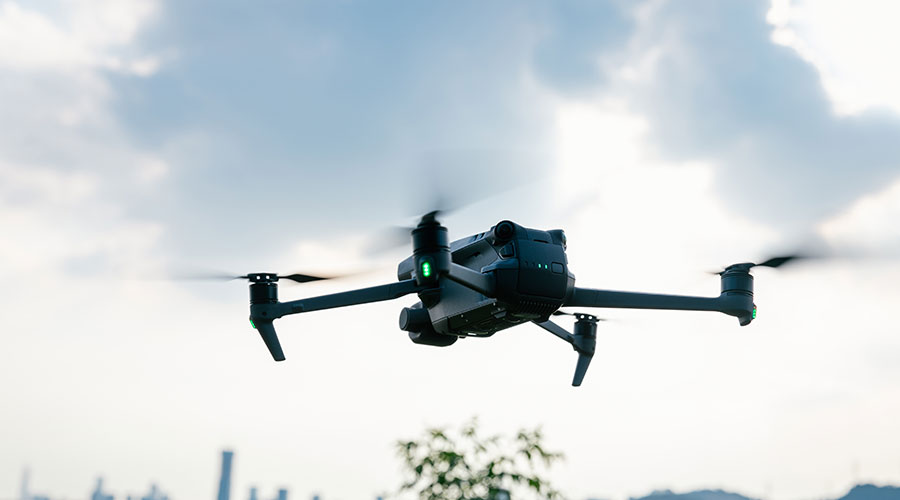
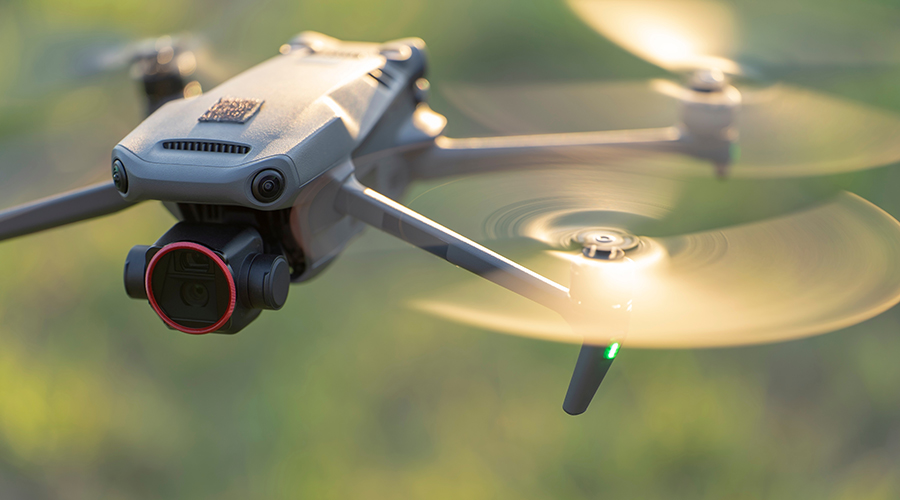
Drones make it possible to clean, inspect and monitor areas that were never reachable before and offer a safer solution to reaching facilities of all heights and shapes.
From power washing high-rise windows to inspecting HVAC units and solar arrays on rooflines, drones excel anywhere that normally requires a lift, scaffold, or someone repelling from a rope, says Will Myrick, sales executive, Drone Nerds.
“If the job involves getting eyes on something tall, wide, hard to reach, or dangerous, a drone should always be in the conversation,” he says.
Drones are not the end all be all solution to tall buildings, though, as they require trained operators, must adhere to strict government oversight and can be impacted by weather.
“Drones aren't a perfect fit for every job site,” says Kendall Hudson, brand designer and events lead, Lucid Bots,” pointing to a few common considerations facility managers should plan around, including weather dependency, site complexity, regulatory constraints, operator training and substrate limitations.
“None of these are dealbreakers, but they're worth factoring into a realistic rollout plan,” she says.
Drone use cases for facilities
One of the most common use cases for drones or aerial robotics is for inspection, including areas like roofs and building envelopes, facades and high-rise exteriors, HVAC units, solar arrays, gutters or drainage stacks.
Myrick explains that drones use thermal imaging to spot moisture intrusion, energy loss, and failing electrical connections without touching the surface.
Beyond inspection, facility teams use drones for site and asset mapping, perimeter and security patrols, yard and warehouse inventory counts, and fast documentation after storms or incidents.
Exterior building cleaning is another common use case, with drones being used to clean windows, office buildings and roofs.
“Pressure washing drones are changing how building owners approach cleaning high-rise facades, roofs, tanks, silos, solar installations, and other hard-to-reach assets,” says Myrick. “Instead of relying on lifts, scaffolding, or rope access, maintenance teams can clean vertical structures more safely, with less disruption, and often in a fraction of the time.”
Not only can this translate into reduced labor risk and lower equipment costs, but Myrick notes that more frequent preventative cleaning that extends the life of critical assets.
“As these systems continue to mature, drones won't just identify maintenance issues; they will increasingly perform the work, making them an integral part of modern facility maintenance programs rather than simply another inspection tool,” he concludes.
Amy Wunderlin is a freelance writer based in Fort Atkinson, Wisconsin.
Related Topics: