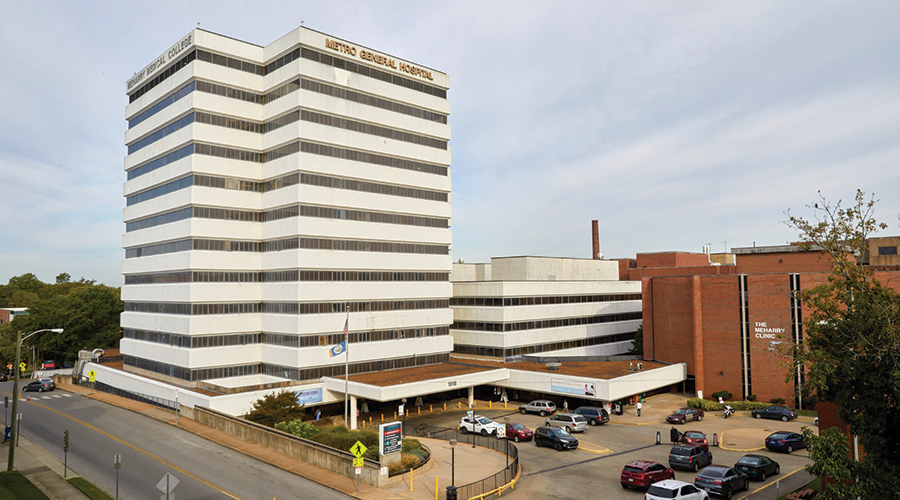
 Photo credit: Andrea Behrends
Facility Condition Assessments Help Nashville Hospital Manage Aging Infrastructure
At Nashville General Hospital, facility condition assessments guide capital planning, risk management and cross-departmental decisions for an aging healthcare campus with limited resources.
At Nashville General Hospital, FCAs are a critical part of managing the aging healthcare campus as it has a limited budget and high operational demands.
The public safety-net hospital located on the Meharry Medical College campus serves middle Tennessee and operates in a facility built in the 1970s, with major renovations completed in the 1990s, making it one of the oldest hospitals in the region.
Because of its age and mission, much of the hospital’s infrastructure is approaching or exceeding typical lifecycle expectations.
Jerry Galu, the hospital’s director of facilities management, says FCAs serve as the foundation for capital planning and risk management.
“You can’t make informed capital decisions without understanding what you’re working with,” he says.
The hospital’s most recent full FCA was completed in 2021.
“In an ideal world, you’d do them every couple of years,” Galu says. “But everybody’s competing for dollars. So, you have to make the most of the information you get when you get it. That report has to carry you further than you’d like sometimes.”
The FCA is a team sport
Nashville General Hospital’s FCA process involves not only the facilities team.
“You can’t do this in a silo,” Galu says. “The facilities team knows the equipment, the clinical staff know the impact and leadership knows the financial constraints. You need all these perspectives and sometimes even more in the room, or you’re not really prioritizing. You’re just guessing. When everybody has a seat at the table during the assessment, there’s less debate later about whether something is important or not.”
That collaborative approach is especially important in a healthcare environment, where one infrastructure decision can affect every other department’s day-to-day operations.
Communication with leadership is key when it comes to FCAs, Rankhorn says.
“The data should always result in a conversation,” he says. “Let’s say the air handler serving your surgery department is in bad shape. Most facility teams will say, ‘Let’s try to keep it running another year.’ But when you make that decision, you’re taking on the risk. The conversation should be, ‘Here’s what it costs if that system fails. Here’s how long it will take to replace it. Are you willing to assume that risk?’”
Elaina Myers is the assistant editor of the facilities market. She has covered various topics from pest management to resilience to sustainability and writes about all the holidays and special days in the facilities field. She also manages the FacilitiesNet social media accounts.
Related Topics: