Los Angeles Schools Tackle IAQ Challenges after Wildfires
Historic 2025 wildfires challenged the district’s facilities teams to address a host of problems, including indoor air quality issues caused by smoke.
By Dan Hounsell, Senior Editor
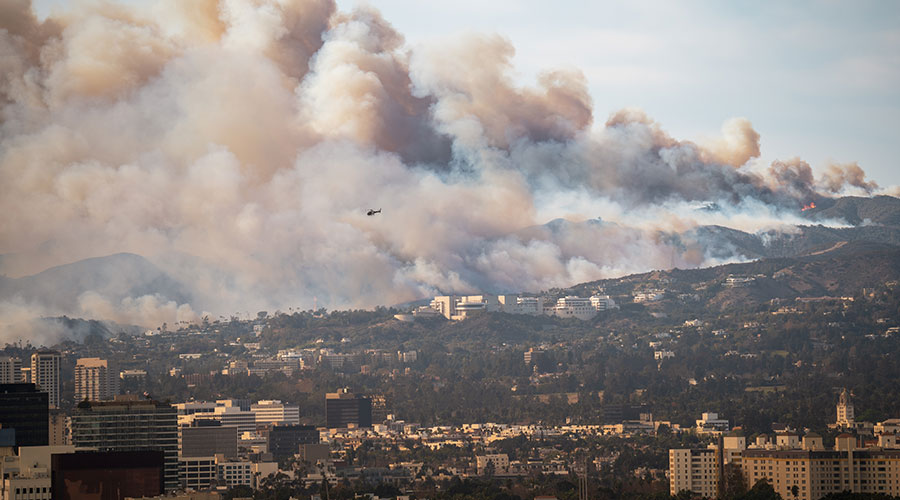
News footage of the Southern California wildfires of 2025 showed a region threatened on all sides by flames and skies filled with seemingly endless clouds of thick smoke. While the flames were extinguished within weeks of breaking out, the smoke from the fires and its impact on facilities in the region lingers more than a year later.
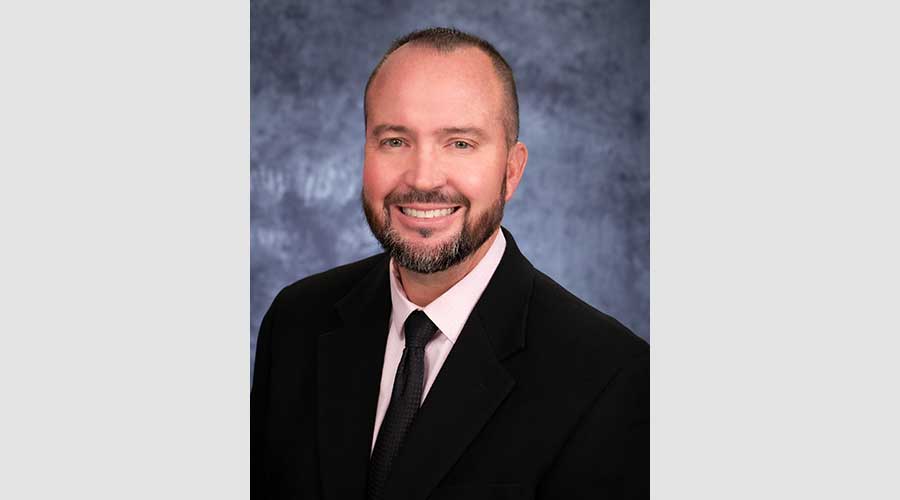
For Krisztina Tokes, the wildfires offered a host of lessons related to the effort required to guide the Los Angeles Unified School District and its students and staff to safety in the face of an unprecedented crisis. Among the lessons was the need to monitor indoor air quality (IAQ) in the district’s buildings and to take steps to remove harmful airborne particles.
“One of the big lessons learned is enhanced filtration because of the air quality — enhanced filtration and air quality monitoring to limit smoke intrusion and make sure our interior spaces are healthy and safe,” says Tokes, the district’s chief facilities officer. “That’s something that we saw with these fires. They impacted the entire region’s air quality, not just those areas as close to the fires.”
Assessing and responding
Wildfires are tremendous challenges, no matter the circumstances, but the sheer scope of the Los Angeles Unified School District made its challenge unique. The district — the nation’s second largest — spans about 710 square miles and encompasses the entire city of Los Angeles and parts of 25 neighboring cities and unincorporated areas in Los Angeles County.
“Our facility portfolio is more than 21,000 buildings with about 75 million square feet, and we serve over a half a million students,” Tokes says, who oversees the maintenance of all school and administrative facilities, including the development, maintenance and operations of schools, utilization of all facility assets and master planning for future projects. She also oversees the district’s capital bond program, which is currently executing about $9 billion worth of projects.
The size and intensity of the five wildfires that broke out in January 2025 is reflected in the destruction they left in their wake. The wildfires killed at least 31 people, according to the state of California. They forced more than 200,000 people to evacuate, destroyed more than 18,000 homes and structures, and burned more than 89.889 square miles of land.
“It was just unprecedented in regard to the impact in the region,” Tokes says. “We had five active fires in different areas of the LA county region. You had the Palisades fire along the ocean, you had the Eaton fires, you had a fire in the Hollywood Hills area, and you had another one in the valley. Then we had these hurricane-level winds. It just was unlike anything that we had seen before in this region across agencies.”
The school district estimates the total damage from the wildfires at $604 million — the projected cost to rebuild affected school campuses. The district’s efforts to recover from the wildfires started almost immediately after the fires broke out.
Tokes’ staff played a key role in ensuring a fast and safe evacuation of students and staff from district facilities as the fires burned.
“The response time and making sure all students were safe was incredible,” she says. “We were able to relocate the two elementary schools into existing campuses within three days. That was an incredible mobilization by people districtwide — our maintenance folks, truck operations, food service, the office of environmental health and safety, our technology division. It was really an incredible district-wide effort.”
Three district schools were physically damaged or destroyed in the fire. They include Palisades High School, where students returned to the school on Jan. 27 of this year after attending classes in a temporary facility in Santa Monica for a year, and Marquez Elementary School, which was destroyed in the wildfires.
“With that school, it was actually easier to bring students back because we didn’t have to do any remediation and cleanup of existing buildings,” she says. “We cleared the site, and we brought students back for the start of the school year. Within nine months of the fires, we had students back at that school in an interim portable campus.”
All other district schools reopened on Jan. 13, 2025, Tokes says, adding that five schools located closest to the fire reopened on a phased schedule, with all fully open by Jan. 24.
Clearing the air
One immense challenge to the school district’s efforts to address IAQ issues in its facilities was, again, the sheer scope of the problem.
“We had ash falling in schools that were 20 or 25 miles away from the fire,” Tokes says. “It didn’t matter where you were in the city. You had ash covering everything. We had schools that were in no immediate danger, and they didn't need to be evacuated. They weren’t within the area that actually was burned. But we still ended up closing all schools for one day just because of air quality concerns.”
The situation required Tokes and her department to take extraordinary measures to address the condition of classrooms and other facilities spaces.
“Our maintenance and operations folks cleaned all exterior and debris at every school,” Tokes says. “It was power washing the lunch tables, cleaning the door thresholds, window thresholds, outdoor play areas. Then we visually did an inspection of all of the air filters districtwide. 115,000 air filters had to be visually inspected, and then we replaced those that needed to be replaced.
“Not surprisingly, those that were closer to a fire, we replaced. The others could have just been older or dirtier, but we did replace all of those that needed to be replaced.”
In addition to the immediate efforts to clean the district’s facilities, the district took additional, important measures to improve IAQ.
“We purchased and installed air purifiers for every classroom districtwide,” Tokes says. “In the event that something like that happens again, schools will have the ability to use air purifiers.
“We also invested in air quality monitors. We had been relying on just the regional Air Quality Management District, but what we found is we weren’t getting a level of granularity, and it also was not accounting for all of the particulate matter that we needed. We needed to be able to act much more quickly. We needed better information to make informed decisions. We needed to pull an all-hands approach across the district.”
Tokes says the monitors are helping the district prepare for future wildfires that might require quick decisions.
“We installed these air quality monitors definitely at the schools that were damaged by the Palisades (fire), and we’ve since reopened some other areas, as well, so that we have a better ability as a school district to make those quick-time decisions: Are we going to close all schools or some schools when we’re in the middle of an emergency?”
Critical collaboration
One critical element in the Los Angeles Unified School District’s successful response to and recovery from the 2025 wildfires was the preparation the district went through years before, including decisions rooted in the goal of creating resilient facilities.
“Resiliency is always embedded in the earliest design stages," she says. “Even in the planning stages we’re looking at it, as well as in the design and then ultimately in the systems and materials that we include.
“We’re looking at defensible space, fire breaks, fuel-reducing landscaping and irrigation strategies. In terms of building materials, it’s the use of fire-resistant materials, ember-resistant roofs, fire-rated glazing. There are areas designated as fire zones, which require a higher kind of building resiliency. We have to meet the codes in those areas.”
The district’s successful resilience measures related to wildfires also included extensive preparation, communication and collaboration with a range of agencies and organizations that were involved with and affected by the wildfires.
“When you’re dealing with a cataclysmic disaster like this, it really requires an unprecedented level of multi-sector collaboration,” Tokes says. “You cannot do this on your own. Not only the facilities department, but it was the entire district rising to this challenge and then all of our other agencies as well, from the federal level all the way down. Strong alignment enabled faster decisions.”
The collaboration came from the entire range of groups involved in every aspect of the region’s recovery efforts.
“Then there was an incredible amount of support from our sister agencies and the state and at the federal level," she says. “The Army Corps of Engineers was fantastic. Once they were mobilized, they were very, very fast. They prioritized our schools for the cleanup, which really allowed us to start that remediation work, testing and remediation work.”
The district also relied on the state of California in ensuring recovery efforts could move quickly. The support included working on permit approvals from the Division of State Architects.
“They worked very closely with us to not only expedite the review of these interim portable campuses so that we were able to place the portables while we were also pursuing the permit approvals from them," she says. “For the permanent rebuild, they were also expediting approvals.
“All of the regulatory agencies that monitor health and safety also worked with us quickly, as well as our utilities. Utilities are not under our purview. You can provide all the electrical panels and hookups on your site, but if you don’t have something to connect to, you’re out of luck. They were really wonderful in ensuring that that we got the electrical hookups and the water hookups to reopen our sites.”
The efforts of Tokes and her team reinforce the mission of education facilities — and the role of facilities teams in carrying out that mission — to serve students and communities. To better understand how to carry out those efforts in the face of an immense disaster, Tokes says she talked with people who understand the challenges ahead — officials in Paradise, California, whose community were devasted by the deadly Camp Fire in 2018 and officials in Maui, where wildfires struck in 2023.
“We reached out right away after the fires to Paradise and also to Hawaii, and the message that they told us was that you want to bring your students back,” Tokes says. “It serves as a center of the community, and when people see students back in schools, it really shows that this community is rebuilding. We were both honored and excited to be able to do that for these communities.”
Dan Hounsell is senior editor for the facilities market. He has more than 30 years of experience writing about facilities maintenance, engineering and management.
Related Topics: