When Sustainability Becomes a Resilience Strategy
From Hurricane Harvey to rising climate-related disruptions, facility leaders are learning that sustainability and resilience are no longer separate goals.
Key Takeaways:
- Extreme weather events such as Hurricane Harvey demonstrate that facility resilience depends on protecting operations, utilities, staffing and supply chains, not just buildings.
- Climate-related risks are increasingly becoming operational risks, creating new challenges related to business continuity, costs and occupant safety.
- Sustainability initiatives such as energy efficiency, renewable energy and water conservation can also strengthen facility resilience and reduce vulnerability to disruptions.
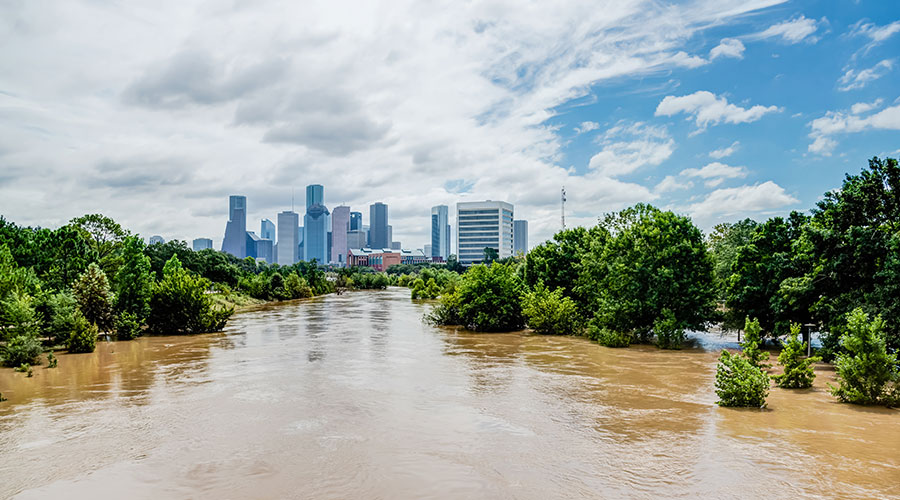
In August 2017, Hurricane Harvey stalled over southeast Texas and produced historic flooding across the Houston region. For hospitals and other critical facilities, the storm quickly became an operational stress test.
Flooded roads limited access for staff, patients, emergency responders and supplies. Some healthcare facilities had to evacuate or close, while others sheltered in place behind flood barriers and relied on emergency plans to maintain care. According to reports following the storm, dozens of Houston-area hospitals and healthcare facilities evacuated more than 1,500 patients, underscoring how quickly flooding can disrupt even highly regulated and mission-critical environments.
Like many commercial and institutional organizations impacted by extreme weather events, few expected the worst-case scenario to become reality, underscoring how rapidly climate-related risks are outpacing traditional facility planning assumptions.
The lesson for facility executives was clear: resilience is not only about protecting the building itself, but also about protecting access, utilities, staffing, supply chains and continuity of operations. In the years since Harvey, the storm has become a documented case study in how flood preparedness, infrastructure investment and sustainability planning can determine whether facilities remain functional under extreme conditions. For today’s facility management profession, one lesson stands above the rest: sustainability and resilience are not separate agendas. They are deeply interconnected strategies that determine whether a facility can continue to protect people and perform under stress.
The expanding risk landscape
Sustainability and resilience are no longer separate conversations. For facility leaders, they are converging into a single operational priority: protecting people, preserving assets and keeping buildings functional under increasingly volatile conditions. Climate change is no longer a distant or abstract concern. Its effects are showing up in the daily realities of facility operations through hurricanes, wildfires, heatwaves, flooding, poor air quality, utility disruptions and rising infrastructure strain.
At the same time, energy systems are becoming more volatile due to shifting demand patterns, regulatory pressures and aging infrastructure. The definition of sustainability in the built environment is expanding because long-term environmental performance now depends on climate resilience and facility operations should be able to reduce harm to the environment and people, adapt to evolving conditions and recover more effectively from adverse events.
The U.S. National Climate Resilience Framework reinforces the need to define sustainability more broadly. It calls for climate adaptation and resilience to be measured not only through risk reduction, but also through ecosystem health, human health and well-being, long-term operational durability and economic vitality. The first objective in this framework is to embed climate resilience into planning and management. This is where facilities strategic planning often falls short.
For facility managers, this evolving risk landscape introduces new challenges:
- Operational disruptions: Power outages, water shortages and HVAC system failures can halt business operations.
- Financial strain: Emergency repairs, insurance claims and energy price spikes drive up operating costs.
- Occupant safety risks: Indoor environmental conditions can deteriorate quickly during events such as wildfires, affecting health and productivity.
These challenges are interconnected. A heatwave can strain the electrical grid, trigger outages, compromise cooling systems and quickly create unsafe indoor conditions. In that way, climate risk becomes operational risk, and resilience becomes an essential measure of sustainable facility performance.
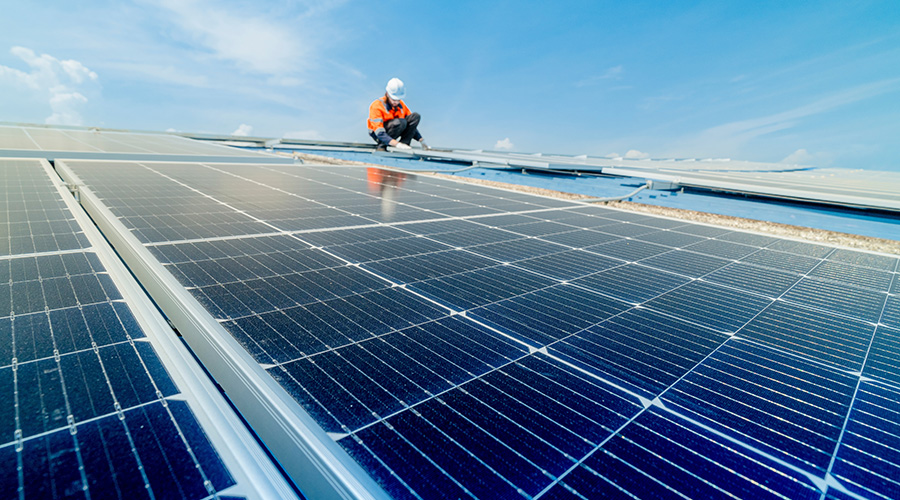
Traditionally, sustainability initiatives have been framed around environmental responsibility, reducing carbon emissions, conserving water and improving energy efficiency. While these goals remain critical, forward-thinking organizations are reframing sustainability as a core resilience strategy. Energy efficiency upgrades, for instance, do more than reduce consumption. These upgrades that enable lower energy consumption in turn ease grid strain. On-site renewable energy systems, such as solar panels paired with battery storage, provide critical backup power during grid disruptions. The introduction of renewable energy may also lower dependency on external energy supply and reduce vulnerability to price volatility. Water conservation systems, for example, reduce reliance on municipal supply during drought conditions.
Maureen Roskoski is a vice president with FEA with 28 years of experience in strategic planning, resilience planning, and workforce development consulting. She is one of Building Operating Management's Facility Influencers. Maureen is an expert in ISO management systems standards, including the ISO 22301 series on business continuity, the ISO 55000 series on asset management, and the 41000 series on facilities management, and a member U.S. Technical Advisory Group to ISO/TC 267 Facility Management. She supports clients with continuity of operations planning (COOP), organizational assessments, FM technology process improvement, sustainability, and resilience planning.
Mohammed Arafat is a business development specialist based in Washington, D.C., with a professional focus on facilities management, sustainability, and resilience planning. His work centers on strategic communication, client engagement, and developing solutions that support long-term operational performance and adaptability in the built environment.
Related Topics: