Claude Harding Keeps Art, People and Building in Harmony
At the Bechtler Museum of Modern Art, Claude Harding combines building knowledge, communication and teamwork to protect the facility and the art inside it.
By Mackenna Moralez, Managing Editor
Key Takeaways:
- Claude Harding’s deep knowledge of the Bechtler Museum of Modern Art helps him recognize subtle changes in the building before they become larger problems.
- Strong communication and relationships across departments allow Harding and his team to coordinate maintenance while protecting priceless artwork and supporting museum operations.
- Harding believes facilities management is ultimately about people, emphasizing teamwork, transparency, adaptability and a willingness to help others.
Some of the world’s most famous artworks capture the beauty in the mundane. Claude Monet’s Waterlilies series are paintings of flowers in his garden, and one of Vincent Van Gogh’s most well-known pieces is a painting of his bedroom. The pieces, while arguably simple in explanation, have garnered the hearts of thousands of people around the world. To Claude Harding, the museums that house these priceless pieces are also a work of art – it just looks a little different.
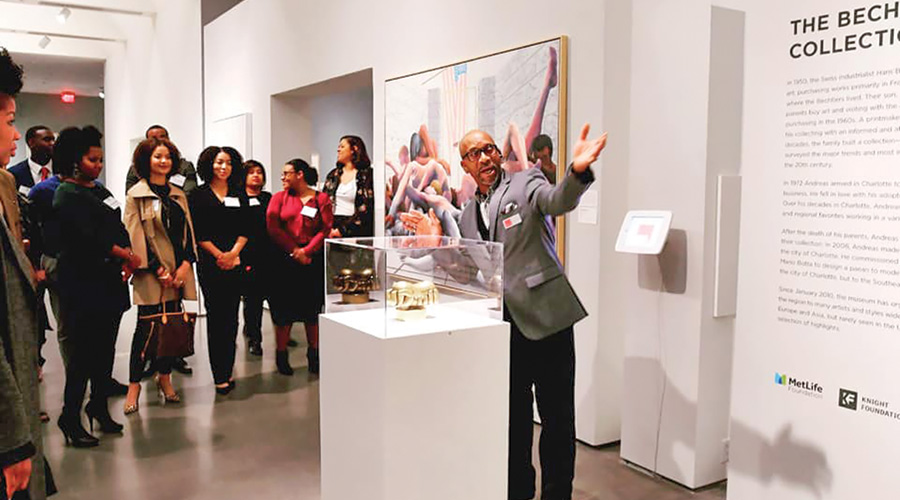
Harding is the security and facility manager of the Bechtler Museum of Modern Art located in Charlotte, North Carolina. The 36,000 square foot museum first opened in 2010 and is clad in terracotta that was mounted individually. He joined the museum 12 years ago and after all these years, he claims to still be learning new things about the building every month.
“I look at my building as a living, breathing entity all on its own,” Harding says. “You can see it, you can feel it – it’s alive. It sounds a certain way, it breathes a certain way. The air feels a certain way. Any deviation from that – I can tell something is wrong.”
Harding first began his career in broadcasting, working as an engineer, producer, writer and announcer before eventually moving into the security space when he became involved in facilities management.
“While I was working with the security team at the financial corporation, one of my responsibilities was to evaluate all facilities related situations and determine if an engineer was needed and relay any specifics to the engineers on duty during my shift,” Harding says. “Management, both security and building, had to be notified as well.”
Throughout his various careers, Harding has learned the importance of communication across various departments. At the museum, he sometimes serves as a liaison for the facility as it is owned by the city of Charlotte and needs to use pre-approved contractors. Before the contractors even enter the building, Harding ensures that they are aware of the type of facility they are working in so that no artwork is damaged during the scheduled maintenance period.
“There are things that I am responsible for, but then there are things that the city is responsible for,” he says. “So, if there is, for example, an issue with the plumbing, I reach out to my contact at the city, then he reaches out to the city contracted plumber and then we bring them in. They do the work they have to and they are cognizant of where they are and what they’re working near the entire time they are here.”
At the museum, Tuesdays are prescribed maintenance days. While general maintenance does occur throughout the week, larger projects are typically tended to on this day as the museum is closed to the public. For some people, the added pressure to get things done during a single day can be too much to handle, but Harding knows what he has to do and trusts his team to get it done.
“You have to be prepared for whatever may go on,” Harding says. “If I didn't break it and I can't fix it, there's no point in me getting crazy about it. I don’t want to drop over from stress. You have to know how everything works, but you also have to know the idiosyncrasies of the building because every building has them. Once you know those, it makes it much easier to deal with any issues that pop up.”
Building relationships
When most people visit a museum, they expect a solitary experience while occasionally being told not to stand too close to something. In his early days of working at the museum as a security guard, he learned about the museum’s art pieces so he could interact with guests who weren’t a part of a guided tour. The approach of leading with customer service, education and engagement while actively protecting the artwork created new, paid positions within the museum.
“Claude has maybe had more impact on company culture than anyone here," says Maggie Feldman, the museum’s visitor services coordinator. “Claude taught us that we can protect the art better by teaching people about why it matters and helping people to understand it at whatever level they came in. We wouldn’t have this distinctive customer service team without Claude's innovation.”
For Harding, facilities management is all about teamwork – even if that means stepping outside what traditionally falls under his job duties. With his background in radio and broadcasting, he supports the museum’s technology and sound operations during events and programs, helping ensure everything runs smoothly behind the scenes. In addition, he has served as the emcee for fundraising events and made opening-night announcements during jazz concerts.
“Claude contributes to our culture in ways that extend far beyond his role as security and facilities manager,” says Lauren Bunch, the museum’s assistant director for digital engagement. “Claude is always a great sport when I ask him to participate in content. He brings so much personality, humor and character to our social media. Over the years I’ve also learned that Claude is a music lover, plays guitar and is an artist himself. He connects easily with people and helps make the Bechtler feel welcoming, safe and personal.”
When it comes to working across various departments within the museum, Harding has learned a lot simply by watching others. He takes the positives from what he sees and understands that situations will go smoother if strong emotions are kept out of it.
“Learn to listen, do not yell or get emotional,” he says. “Gather as many answers as you can before the questions get asked because you know the questions will get asked. I have learned to read the organization. Always provide management with the truth about a situation. Once you have done that, you have fulfilled the primary goal. Management cannot say they did not know. Good news or unwelcome news, they were notified.”
Providing transparency into the day-to-day operations has earned Harding trust among upper management and his colleagues. Feldman says Harding has instilled a certain amount of spatial awareness and encourages employees to trust their instincts as it can help avoid costly repairs.
This approach, along with genuinely caring about his coworkers, has also helped strengthen relationships among staff in every department as well as community members.
“Let's face it, we’re not machines. We’re not going to be replaced by AI,” Harding says. “Because what we do can’t be done by a computer program. AI can’t change a light bulb. It can't change a pipe. It can't unclog a drain. It might be able to tell you how, but it can't do it. It helps us learn and grow as people. You have to feed off other people’s enthusiasm. They have to feed off of yours. When you do that, it makes for a much better, much healthier work environment. If you don’t care about the guy working next to you, what’s going to happen?”
Keeper of knowledge
Twelve years into his tenure at the Bechtler, Harding is still the first person that people call when something is astray. Fortunately for the staff, he always answers with a solution.
“I do not panic. I look for the most obvious (solution) first,if that is not it, then I dig deeper,” Harding says. “Not every issue that comes up requires you to send up a flare and call everyone in. In other words, do not panic, think.”
During an unprecedented snow event in Charlotte this past winter, Harding needed the facilities team to work overtime to ensure that the building’s systems could withstand the weather conditions. While working third shift, several people on first shift ended up calling out of work due to the weather, leaving them short staffed. He says that he had to radio in and express his need for help, and everyone was on board.
“When I say we need your help, people have jumped through hoops to help us because of that word – help," Harding says. "We like fulfilling each other’s needs as people. We all like fulfilling needs of others. And when you express that need, people do anything for you.”
One of his proudest moments, though, was when an exhibition came through the museum that involved several projectors, projection screens, speakers and what felt like miles of cables that needed to be flowed through the ceiling. The building’s ceiling is not open and was not made to hang equipment of that caliber, so Harding and his team had to think outside the box to find a solution.
“Even though facilities personnel may not get constant kudos, our work is always noticed. Going unnoticed means we are getting the job done,” Harding says.
Still, there is not one pivotal moment that has shaped Harding’s facilities management career. To him, every power outage, roof leak or burst pipe are all events that have left a lasting mark on him because they have been so different. Harding appreciates the challenges that come along with facilities management, and with many of his peers gearing up for retirement, he knows that he's not done with the industry just yet.
“I would hope that the people I have worked with remember me as being honest and even with a dash of wisdom,” he says. “My legacy will be decided by others after I am gone. In the meantime, I am dialed into the present.”
Mackenna Moralez is the managing editor of the facilities market and the host of the Facilities in Focus podcast.
Related Topics: