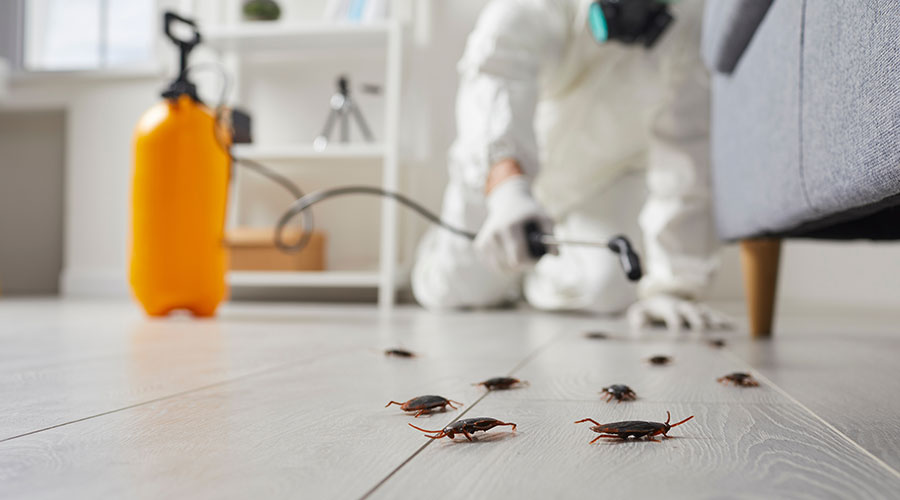
How To Stop Infestations Before They Start
To save time and money, facilities managers must implement proactive measures to eliminate infestation risks.
By Elaina Myers, Assistant Editor
Pest infestations are far more than an inconvenience for institutional and commercial facilities. From structural damage to physical contamination, the consequences of an unmanaged pest problem can be wide and costly. The good news for facilities managers is that proactive planning and smart management practices can prevent these infestations and save money that managers can use elsewhere.
The battle with pests dates back to the beginning of humankind.
“These specific pests are considered challenging pests because they’ve been with us since we were in caves,” says Dr. Michael Bentley, vice president of training and technical services for the National Pest Management Association (NPMA). “They’ve gained the ability to thrive in our built environment with us.”
For managers, this challenge means prevention should be the main focus.
The big three
At the core of effective pest prevention is understanding what attracts pests in the first place. Bentley says most pests are searching for the same things: food, water and shelter.
Reducing access to these resources is one of the most effective ways managers can prevent infestations. Bentley says sanitation is also a critical step.
Waste areas should be carefully managed, with tightly sealed lids on trash containers and consistent cleaning schedules. Larger outdoor bins should remain closed and be power washed to prevent pests from accessing food waste.
Managers also should understand that pests can take advantage of less obvious resources.
“General clutter, cardboard and other unused materials around a facility are easy to overlook,” Bentley says. “But if left unchecked and unmanaged, they can quickly become the perfect harborage sites and food resources for rodents, termites and other common pests.”
Keeping indoor and outdoor areas organized and free of debris can help significantly reduce the likelihood that pests will settle.
The exterior environment
Many infestations begin outside the facility, so landscaping and exterior maintenance play important roles in prevention.
Wood pallets, cardboard piles and unmanaged vegetation around buildings can quickly become problem areas.
“Termites and cockroaches will feed on anything with cellulose, and rodents will chew up almost anything for their nests,” Bentley says. “Removing these outdoor food resources is hugely important since many pests reproduce at very, very quick rates.”
Regular grounds inspections with a pest professional should focus on identifying and eliminating these conditions.
Facility teams also should monitor potential access points around the structure.
“Pests are going to be looking for potential entry points,” he says. “This doesn’t just have to be the obvious things like a bay door left open or a broken window. Any tiny crack, crevice or areas where plumbing and electrical lines enter a structure provide the ideal entry point.”
Addressing these vulnerabilities early helps prevent pests from getting inside.
Regular inspections
Having a go-to pest management professional who can conduct regular inspections is incredibly valuable for managers. These professionals are trained to identify even the smallest indicators that pests might be present.
“It’s easy to get tunnel vision when thinking about identifying pests,” Bentley says. “Typically, you aren’t going to see them because their biology and behavior is designed to keep them hidden.”
Pest professionals look for droppings in cabinets or along walls, which can often look like dirt to the untrained eye. They check for signs of chewing damage and activity in areas that can be easily overlooked as wear and tear.
Pest professionals also can correct common misconceptions about pests.
“Most people assume since their facility is mostly concrete and steel beams that they don’t have to worry about pests,” Bentley says. “But pests won’t stop there. They’re going to find potential entry points up under slabs or through walls. Cabinets, flooring and most packing materials have cellulose in them even at a low grade, so even in non-wood structures, there are still plenty of cellulose resources for pests to consume.”
Facility managers can find a list of pest professionals in their area by visiting pestworld.org.
Think long term
Preventive maintenance might appear to be an extra expense, but in the long run, it can save facilities thousands of dollars compared to the damage that pests can do.
“Termites alone do billions of dollars in damage every single year,” Bentley says. “The longer pest damage is left unaddressed, the greater likelihood of an increased cost to manage that issue. Most pest problems are easier to resolve when they are a single or small population problem versus trying to navigate a full building infestation.”
Having a proactive plan for persistent pests not only protects facilities and the people working inside. It also saves time and money for other building operations to continue running smoothly.
Elaina Myers is the assistant editor of the facilities market.
Related Topics: