MEWPs: High-Level Training Issues
Focusing on training priorities is crucial for facilities tapping into the flexibility of mobile elevating work platforms.
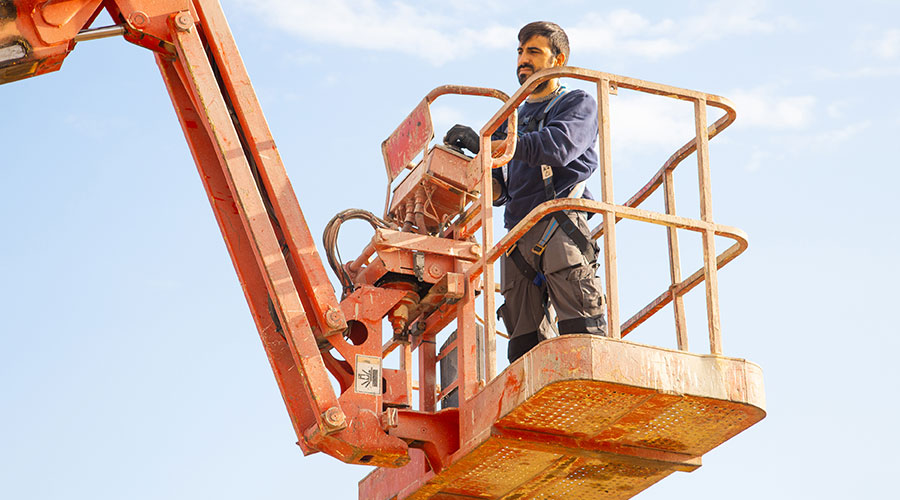
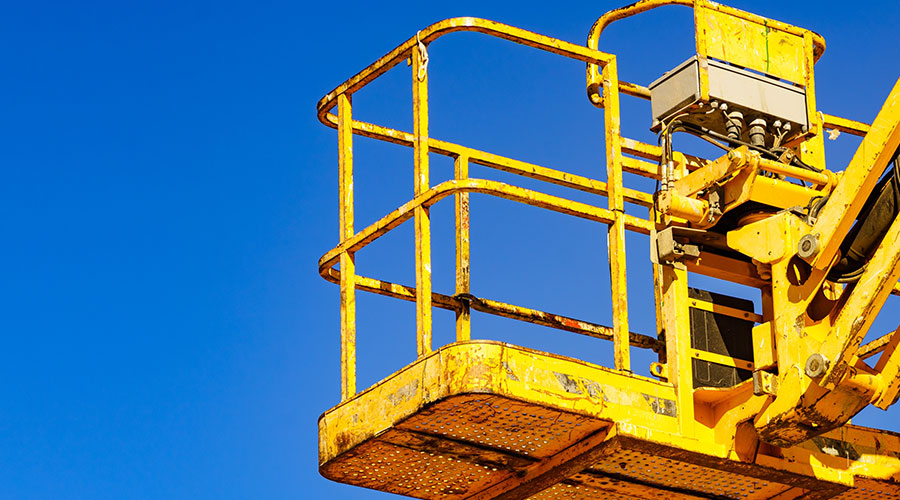
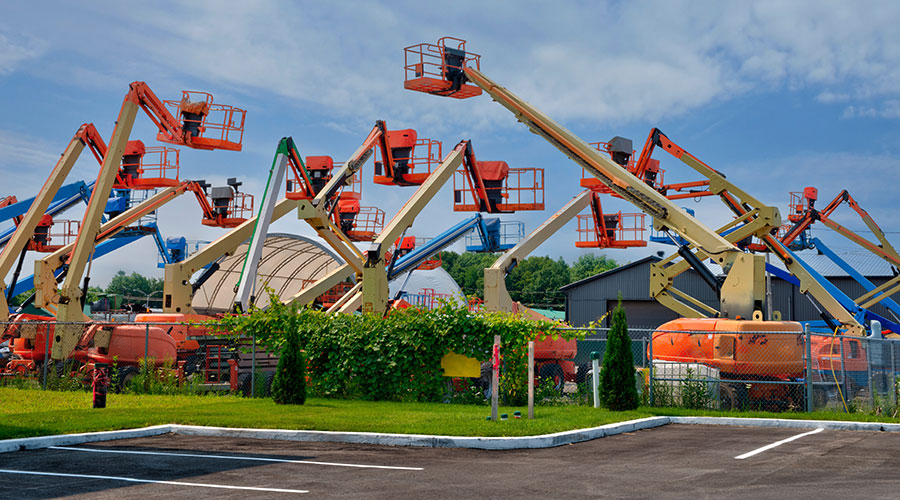
Maintenance and engineering departments are relying more heavily than ever on lift equipment to complete tasks in and around commercial and institutional facilities. From inspecting building facades, trimming overgrown foliage and maintaining windows to relamping overhead lighting and servicing HVAC systems, mobile elevating work platforms (MEWPs) have become indispensable tools in many building operations.
But as lift equipment becomes more sophisticated, the need for structured, standards-based training has grown rapidly. Whether managers are purchasing lifts or supplementing their fleets through rentals, they need to ensure operators are properly trained and certified to deliver safety and productivity.
The expanding role of MEWPs
Across facilities, MEWPs are no longer viewed as occasional-use equipment.
“Maintenance and engineering departments are using lifts more often and in more demanding environments than they did even a few years ago,” says Chalin Aswell, product line manager at Sunbelt Rentals. “We see heavy use in data centers, manufacturing facilities and large facilities where teams are constantly accessing overhead systems such as data, electrical, HVAC, lighting and structural components.”
As always, managers are under pressure to do more with less, and MEWPs are helping them achieve this goal.
“With tighter project timelines and industry-wide labor shortages, facilities crews need equipment that allows them to move fast and complete more tasks without downtime,” says Nate Hoover, senior director of product management at JLG. “This has driven the demand for higher-capacity models that can lift more tools, materials and workers at once, as well as for machines that reposition efficiently while elevated, simplifying workflow on the job.”
As lifts become more integrated into daily operations, the risks associated with improper use increase, and so does the need for well-trained operators.
Why training is a must
MEWPs present significant safety hazards when used improperly or by an operator with little experience.
“Lifts may appear simple to operate, but the risks associated with them — such as tip-overs, falls, electrical contact and entrapment — can escalate quickly without the right knowledge and skills,” Aswell says. “Training ensures operators understand not only how to use the equipment but also why certain controls, limits and procedures exist.”
From a compliance standpoint, training is also mandatory. OSHA regulations require that only trained and authorized personnel operate MEWPs, and ANSI A92 and CSA 354 standards define expectations for operator knowledge, familiarization and supervision. Failure to comply can result in fines and increased liability exposure.
Properly trained operators not only work more efficiently but also tend to make fewer mistakes and are better equipped to handle unexpected or emergency situations.
“Training is a proactive approach that allows organizations to adopt a safety culture by implementing appropriate preventive measures, which can significantly reduce the likelihood of accidents or near-misses,” says Logan Cunningham, senior manager of product training at JLG. “By fostering a risk awareness and prevention culture, trained operators create a safe working environment for themselves and their colleagues.”
Certification: What managers must require
One of the most important responsibilities for managers is ensuring that MEWP operators meet current certification requirements.
Industry standards define training as a multi-step process, not a one-time event. Cunningham says proper training includes three core components:
Theory training happens in a classroom or online and covers regulations, hazard recognition and safe operating practices.
Practical training is the hands-on portion conducted on the specific type of MEWP that will be used for specific tasks.
Evaluation of competency verifies that the operator has demonstrated both knowledge and skill that meets industry standards.
Operators also must be trained on the specific classification of lifts they will use. MEWPs are categorized by group A or B and type 1, 2 or 3, each with unique operating characteristics and risk profiles. An operator trained in one category is not automatically qualified to operate another.
“Once an operator has received theory and practical training on an ANSI classification, they will need to familiarize themselves on specific types of equipment using the manufacturer’s operation and safety manual,” Cunningham says.
Familiarization includes the following:
- identifying the location of the manuals
- requiring confirmation that the required manuals specified by the manufacturer are with the MEWP
- understanding the purpose and function of the controls specific to the model of the MEWP to be used
- understanding features, limitations and new technology
- understanding operating characteristics specific to the model of the MEWP.
Training alone is not sufficient. Managers must also formally authorize operators before they can use equipment to verify site-specific readiness. Authorization is granted when a lift operator has completed the comprehensive training and the site-specific and equipment-specific hands-on evaluations.
Common training gaps
Despite clear standards, training gaps remain in many organizations.
“One of the most significant gaps we encounter is that many new operators have no formal training at all before being asked to use a lift,” Aswell says. “In some cases, workers receive only a quick walkthrough of the controls, but they never receive the full operator training required to understand hazards, stability principles and safe operating practices.”
Another common issue is insufficient training for supervisors. Supervisors oversee operators directly and provide on-site direction for operators.
“Supervisors play a major role in ensuring safe lift operation, yet many have not received the level of MEWP awareness training needed to recognize unsafe behavior, verify proper inspections or understand the limits of the equipment,” Aswell says.
Operators themselves also might struggle with critical skills, including:
- assessing environmental conditions
- understanding load limits
- positioning platforms safely
- responding to emergencies.
These gaps often stem from a focus on speed over safety — an approach that increases the likelihood of injuries and fatal incidents.
Keeping training current
Training for MEWP operators is not a one-time requirement. Operators must be periodically reevaluated and retrained as needed.
Best practices suggest retraining every three to five years, though more frequent updates might be necessary in certain situations, such as:
- after an incident or near miss
- when introducing new equipment or significantly different lift technology
- when operators show declining proficiency or risky habits
- after extended periods without equipment use.
To meet the evolving demands of facilities and users, MEWP training requirements are also changing. Modern units incorporate advanced safety features such as load sensors, tilt alarms and collision-avoidance systems.
“Training is shifting toward understanding system limitations, not just manual operation,” Aswell says. “Operators will need to understand how digital safety features work, what alerts mean and how to react when automated protections activate.”
For managers, investing in MEWP training not only meets compliance requirements but also builds a culture of safety, efficiency and accountability.
Proper training reduces risk and ensures that equipment investments deliver maximum value. It also empowers operators to make informed decisions, respond effectively to challenges and contribute to a safer work environment.
“The best step any organization can take to comply with the standards is to prioritize and focus on training for all employees,” Cunningham says.
Elaina Myers is the assistant editor of the facilities market.
Related Topics: