What Facility Executives Must Know About the NYC Energy Code Update
How property managers can draw from NYC’s updated code to bolster building sustainability standards nationwide.
By Ronnie Wendt, Contributing Writer
Starting March 30, the 2025 NYC Energy Conservation Code (NYCECC) makes one thing clear for commercial property owners: go green or go home.
So, while this regulation is specifically for New York City, it's a good blueprint for building managers across the country. Facility managers should start planning upgrades now, as standards like this will spread over time, according to Melisa Yepes-Schaefer, a mechanical engineer at Goldman Copeland, a New York City-based consulting firm.
The 2025 NYCECC is more stringent than its 2020 predecessor, targeting approximately 10 percent to 15 percent additional energy savings depending on building type. Local Law 97 sets building emissions caps, while NYCECC governs design and construction efficiency.
Yepes-Schaefer sheds light on what these new standards mean for new builds, historic building renovations and change of use situations.
When the standard takes effect
Enforcement of the new rule will begin March 30, pending the availability of updated compliance software platforms. The need to comply with the new code hinges on project filing timing and submission status.
- New Projects: Job filings submitted on or after March 30 must comply with the 2025 NYCECC.
- Previously Filed Projects: Projects with complete energy submissions filed before March 30, can comply with the 2020 NYCECC.
- Incomplete or Modified Filings: Projects submitted before March 30, with incomplete energy analysis, or those undergoing material compliance changes after March 30, must comply with the 2025 NYCECC.
“Owners and design teams should be evaluating how upcoming filings may be impacted by the new code,” Yepes-Schaefer says. “Understanding submission status, anticipated filing dates, and potential design changes will help avoid delays or rework once enforcement begins.”
Key code changes
“There is a strategic shift in how the code is intended to work,” Yepes-Schaefer emphasizes.
She explains the earlier code placed restrictions on how much energy buildings use. “Now we're talking about when we use energy and how we use it,” she says. “There's a substantial change, moving toward electrification in New York City altogether. So, a lot of this code speaks to how we are managing electrical energy, to reduce peak demand on the grid.”
The update also aligns New York City’s requirements with the New York State Energy Code, which parallels ASHRAE energy standards, she notes.
“New York State requirements are not as stringent as New York City’s, but are somewhat aligned,” she says.
Electrification and fossil fuel restrictions
Perhaps the most consequential difference from the 2020 NYCECC is the new standard’s limits on fossil fuels.
While the earlier code allowed efficient gas-fired systems, the 2025 NYCECC effectively restricts fossil fuel-combustion systems in new construction, favoring heat pumps and electrically heated water instead.
The ruling aligns with Local Laws 154 and 97, making electrification a central feature of the update, Yepes-Schaefer explains.
Local Law 154 requires new buildings in New York City to be all-electric and free from fossil fuels by 2024 for smaller buildings and by 2027 for larger ones to reduce greenhouse gas emissions. Local Law 97 sets strict carbon emission limits for large buildings to further promote energy efficiency and sustainability in the city.
Mechanical systems, lighting, and building envelopes
Among the most significant changes in the new code are tougher efficiency standards for HVAC systems and lighting.
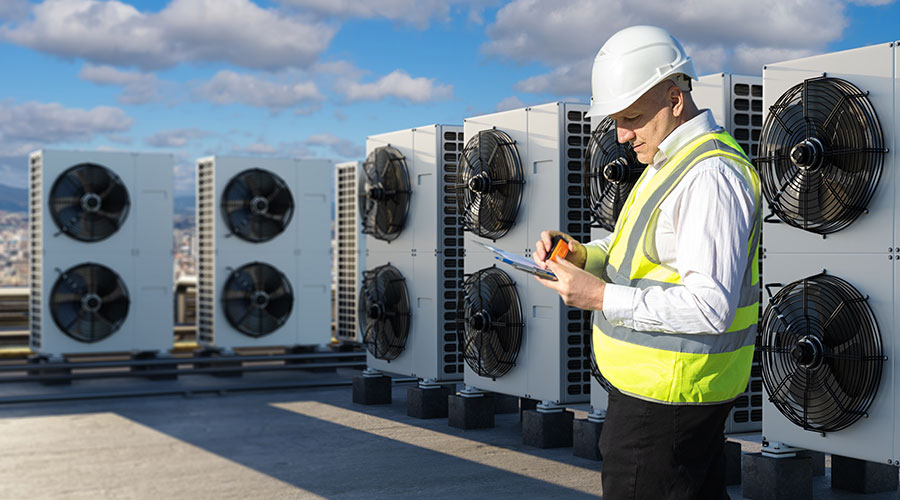
The standard mandates higher HVAC efficiencies for expanded heat recovery, and advanced mechanical controls such as demand-based ventilation, with stricter fan power limits. It also lowers lighting power density limits and encourages networked lighting controls, daylighting and automatic shutoffs.
Building envelopes must meet higher insulation requirements, thermal bridge mitigation, and air leakage control and verification. This applies to new construction and to building renovations, she says.
“Upgrades to the building envelope will be the biggest thing in major renovations or change of use cases,” she says. “The architect and engineers involved will need to demonstrate compliance in these cases because the projects are being treated as new construction.”
Impact on historic buildings
Historic properties will no longer receive blanket exemptions under the new standards, she adds.
“Previously, historic properties could claim an exception for the entire building,” she explains. “Now we'll need to understand what portions of that building have historic features, and how we can work around those. But everything else will need to be compliant.”
Still, owners can skirt required energy upgrades if they can show that they would compromise the building’s historic features.
“To do that, a registered professional would have to submit a report explaining what that historic feature is and how the requirements of this energy code will detriment that feature,” she says. “If they can show that, they may be able to avoid making those changes.”
However, Yepes-Schaefer predicts these exceptions will be rare and limited in scope.
Commissioning and testing changes
Commissioning, functional testing and documentation requirements will also expand under the new regulation, she says.
“There will be additional costs and schedule impacts during construction, whereas before installation the close out process was simpler,” she says.
Projects subject to the 2025 NYCECC will require functional testing across a broader range of systems, along with more detailed documentation and expanded sign-off requirements. The New York City Department of Buildings (DOB) will also have greater authority to review and enforce compliance with these outcomes.
Operational implications for facility managers
The changes will force many NYC facility managers to make the most of building management systems (BMS) and adjust to smarter controls. That shift may challenge facility managers who haven’t relied on these tools before, she says.
“The intent is to make sure that the equipment being installed is used and controlled adequately. This will require facility managers to pay attention and focus on their BMS to better control these systems,” Yepes-Schaefer explains.
A BMS monitors how energy is used throughout the facility, allowing managers to identify opportunities to increase efficiency. “Facility managers will gain insight into their building’s energy distribution to optimize performance by small, incremental changes,” she concludes, emphasizing that this is the key reason behind the NYC code change.
“The goal is to become more efficient. "The BMS gathers data that helps identify opportunities for gradual improvements in efficiency," she says.
While the 2025 NYCECC targets New York City, Yepes-Schaefer concludes it could ultimately shape how commercial buildings across the nation approach energy efficiency and sustainability.
Ronnie Wendt is a freelance writer based in Minocqua, Wisconsin.
Related Topics: