When Water Pushes Back
Effective flood protection anticipates extreme conditions and layers strategies that help buildings remain functional when water inevitably arrives. August 12, 2026
By Doug Coenen and Ray Drexler, Contributing Writers
Key Takeaways:
- Effective flood protection uses risk-based, layered design—such as protected openings, isolated utilities and elevated critical functions—to keep people safe and essential operations running during extreme events.
- Facilities should plan for water that may arrive deeper, faster and last longer than historic assumptions or minimum building codes anticipate, rather than relying on a single flood barrier.
- Passive, performance-based measures that operate automatically can limit damage, speed recovery and improve resilience when storms occur unexpectedly or without on-site intervention.
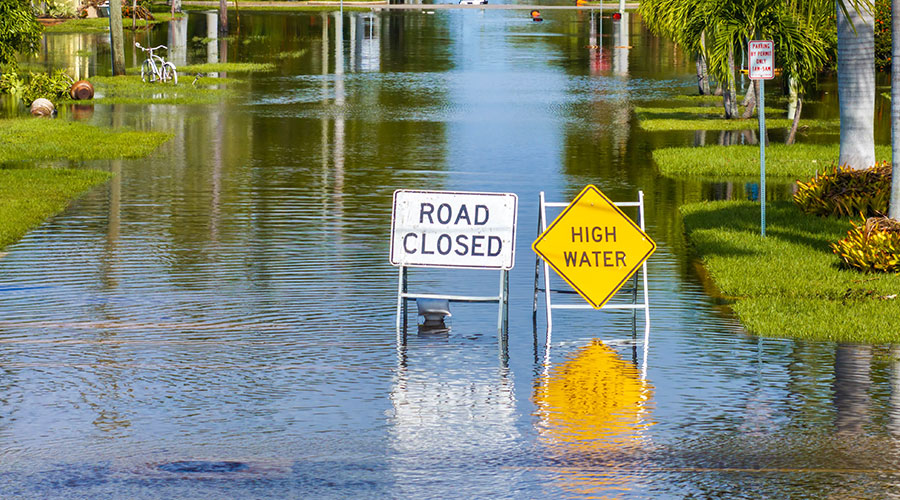
Flooding for many communities is not a question of if but when. When water exceeds the capacity of rivers, streets and drainage systems, it tests the assumptions embedded in institutional and commercial facilities. In those moments, outcomes are shaped less by prediction than by preparation.
Flood protection exists for these conditions of excess. It is the discipline of designing for water that arrives higher, faster or longer than expected, as well as ensuring that systems perform when they are needed most. While flood mitigation seeks to reduce impacts over time, flood protection focuses on what happens during the storm, when decisions made years earlier determine whether facilities remain functional or fail.
Designing for excess water
Effective flood protection begins with understanding the way water behaves during its most extreme moments. That means looking beyond minimum code requirements and focusing on performance during real events.
- How deep could floodwater become?
- How fast might floodwater arrive?
- Which parts of a facility must remain operational, and which can safely flood or recover quickly?
Flood protection strategies are built around risk-based design. Our teams evaluate flood depths, flow rate and durations alongside site constraints, building use and user tolerance for downtime. Strategies often combine passive systems that activate automatically during events with structural hardening, elevation or strategic compartmentalization of buildings.
This approach avoids treating flood protection as one barrier. Instead, systems are layered. Openings are protected, utilities are isolated and circulation paths are designed to remain functional when water levels rise. The goal is not to resist water at all costs but to guide it in ways that protect people, assets and continuity of use.
Performance during floods
The effectiveness of flood protection measures is measured during the storm, not after it. For example, repeated flooding in Kingwood, Texas, exposed how vulnerable critical facilities can be when water exceeds assumptions baked into older designs. Following significant floods in 2016, Hurricane Harvey in 2017 and Tropical Storm Imelda in 2019, flood protection for Kingwood High School was re-evaluated from the ground up.
The resulting system was designed to protect the campus from floodwater depths of up to 8 feet at the site’s most exposed edges. Automatic flood gates, flood walls 4-8 feet high and flood-resistant glazing were integrated into the existing building envelope. Passive systems were designed to ensure protection even when storms arrive overnight or without warning.
These measures have since been tested during heavy rainfall, demonstrating the way performance-based flood protection can allow critical facilities to remain usable, recover faster and avoid repeated loss.
Shaping flood outcomes
Flood protection is often framed as holding the line against water. In practice, stewardship asks a different question: How can engineering decisions shape safer outcomes when flooding occurs?
Designing for excess water means accepting that flooding will happen and planning accordingly. It means elevating critical functions, protecting openings and allowing less critical spaces to flood without cascading damage. When paired with forecasting, communication and emergency planning, flood protection becomes part of a broader stewardship strategy that helps facilities live with water across its most extreme conditions.
In regions where too much water defines risk, resilience is achieved not by eliminating exposure but by designing systems that perform when they are needed most.
Doug Coenen is a senior principal in Walter P Moore’s civil engineering group. Ray Drexler is a principal and senior project manager in the firm’s diagnostics group.
Next
Read next on FacilitiesNet