Image credit: Jeffery Totaro
Historic Vail Hall Restoration Blends Heritage with Modern Performance
Case study: Lincoln University’s restored and expanded Vail Hall preserves the architectural legacy of a historic HBCU landmark while adding sustainable features and modern administrative spaces. July 27, 2026
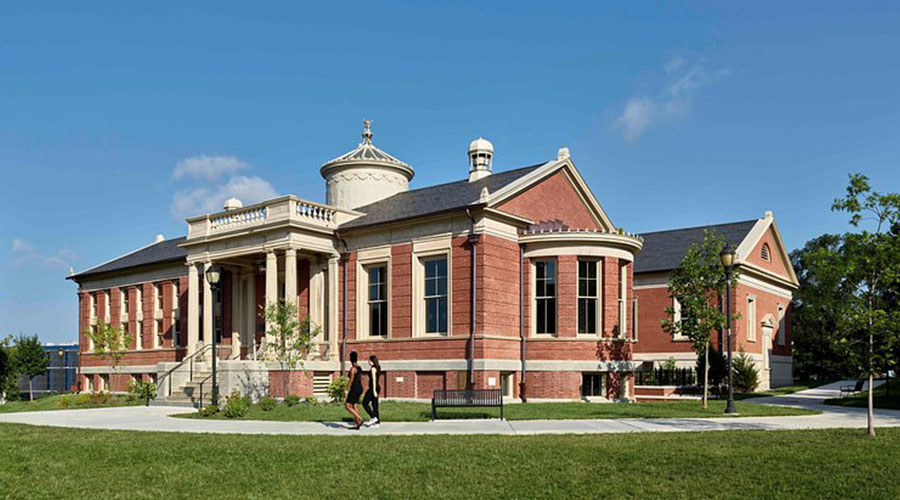
Situated on the north end of the Pennsylvania campus, the iconic Vail Hall is one of Lincoln University’s most important buildings. Founded in 1854, Lincoln is the country’s second oldest historically black college or university (HBCU). Vail was designed by architect Addison Hutton as the university library, and its steps served as the background for graduation photos through the years and included important graduates such as Thurgood Marschall and Langston Hughs. The historic portion of the building has now been carefully restored, with a cramped 1960s addition replaced by a new two-story wing that more than doubles the original footprint.
Now the home of Lincoln’s president and senior administration, the revitalized Vail Hall celebrates its architectural heritage. The original building is complemented by a new addition that echoes its historical sensibilities through a modern classical aesthetic – evident in exterior and interior details like brick and limestone cladding, a slate roof, paneled wood walls, terrazzo flooring and bronze railings. These timeless design elements allow the expanded Vail Hall to feel perfectly at home within the university’s historic campus context, which was listed as a historic district in 2022.
The restored historic section and new wing are connected by a narrow hyphen, resulting in an H-shaped plan that floods the interior with natural light while preserving more of the original exterior. Two accessible entrances were also added, enabling the building’s iconic front steps to retain their historic prominence on campus.
Spanning 6,900 gross square footage (GSF) of renovation and 11,000 GSF of new construction, the $18.5 million project’s program prioritizes using the grand historic spaces for Lincoln’s highest profile functions, with the president’s office occupying the former library reading room and a boardroom situated in the area that once held the stacks.
VMA’s interior design strikes an elegant balance between the old and new. Classic, traditional furnishings are thoughtfully mixed with contemporary pieces, creating an atmosphere that honors the building’s heritage while reflecting the institution’s forward momentum. Accents of Lincoln’s signature orange and blue hues further lend a vibrant, modern sensibility to the classical interiors.
To support the university’s sustainability commitments, the renovation modeled a 61 percent reduction in anticipated energy use through a high-performing building envelope with “100-year” materials and a new geothermal system – resulting in an EUI 48 percent below the national average for office buildings.
As a revitalized centerpiece of the campus, the transformed Vail Hall continues to serve as a vital part of the Lincoln University community, honoring its legacy while positioning the institution for the future.
Next
Read next on FacilitiesNet