How Restaurant Design Improves Efficiency and Guest Experience
Integrated design helps restaurant operators balance guest expectations, employee workflows and operational costs.
Key Takeaways:
- Early collaboration among architecture, interior design and foodservice teams helps restaurant operators align design goals with building codes, kitchen functionality, customer circulation and operational requirements.
- Durable, commercial-grade materials and carefully selected lighting, flooring, furniture and finishes can reduce maintenance demands, replacement costs and long-term operating expenses.
- Thoughtful layouts and efficient employee workflows can reduce staff fatigue, improve communication, speed up service and create a more consistent guest experience.
One of the most important roles designers play is helping operators bridge the gap between guest expectations and operational feasibility. Consumers expect speed, convenience and quality simultaneously. They want fresh food prepared quickly within inviting environments that feel comfortable and engaging, and meeting all those expectations at once requires balance.
Restaurant projects are inherently complex. Operators must navigate health department regulations, accessibility requirements, building codes, municipal approvals, kitchen functionality, customer circulation and brand identity, often congruently. When architecture, interior design and foodservice consulting teams operate independently, important operational details can be overlooked. Integrated design teams provide significant advantages because they allow all disciplines to collaborate from the earliest stages of planning.
A successful food and beverage facility must perform operationally, aesthetically and financially over time. For example, an operator might envision adding a drive-through to improve convenience and throughput. But local jurisdictions might require specific stacking distances, traffic circulation patterns or parking allocations that significantly impact the site plan. Without early architectural coordination, an operational goal can become difficult or impossible to execute.
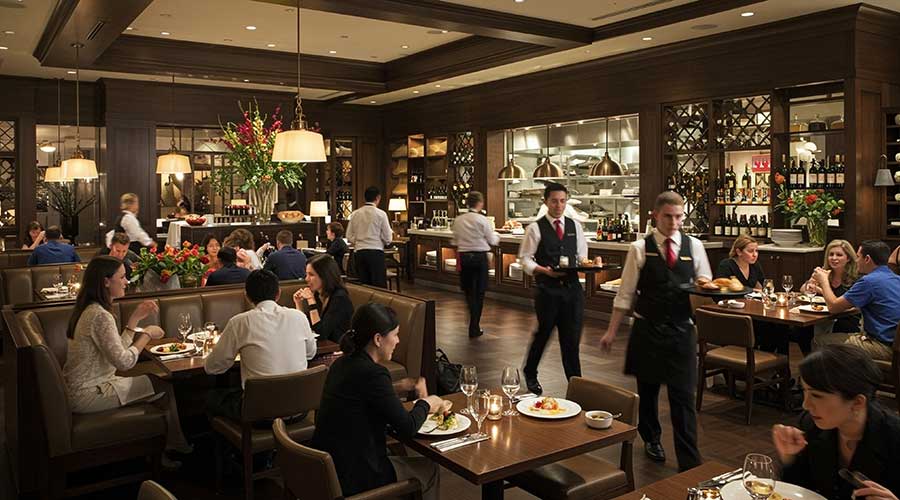
Similarly, interior design decisions must align with operational realities. Lighting, finishes, acoustics and spatial organization all influence the way guests perceive food quality and hospitality. Bright fluorescent lighting can negatively affect food presentation, while warmer lighting strategies can create more inviting environments. Color palettes, seating layouts and material selections also contribute to the guest experience. For example, casual dining concepts might benefit from brighter and more energetic tones, while upscale environments often rely on darker and more intimate atmospheres.
Visually striking materials might enhance the guest experience, but they also must be able to withstand the demands of commercial environments. Furniture, finishes, lighting, flooring and equipment selections influence maintenance requirements, replacement schedules and operational durability.
Materials that are difficult to clean, lighting systems that burn out frequently and upholstery that wears ahead of schedule are not just aesthetic failures. They are cost liabilities. Specifying commercial-grade finishes purpose-built for hospitality environments allows operators to protect their investment, reduce maintenance burden and uphold brand standards without compromise.
It should be a standard for architecture, interiors and foodservice teams to work collaboratively to evaluate every aspect of the guest and employee experience. This integrated process allows these project teams to identify challenges early, align operational goals with design intent and help operators make informed decisions that facilitate long-term success. This close collaboration also supports transparent communication, including valuable conversations surrounding total cost of ownership. Initial construction budgets are important, but long-term operational costs often have a greater impact on profitability.
Guests want environments that feel welcoming and intuitive, while employees need workplaces that reduce stress, support efficiency and allow them to perform confidently. When design successfully supports both groups, the operational benefits become significant. The implementation of thoughtful design helps employees experience less fatigue because workflows are more efficient, communication improves because stations are organized logically, and guests receive faster and more consistent service because operations function smoothly behind the scenes.
In an industry where labor challenges and space constraints continue, thoughtful design has become a competitive advantage. Restaurants that thrive in the coming years will not simply be those with the most visually appealing facilities. They will be those designed strategically to support operational excellence, maximize efficiency and deliver consistent guest experiences within increasingly constrained conditions. That level of performance requires more than aesthetics. It requires integrated thinking, operational expertise and collaborative planning.
Stacy Molnar is director of operations at Ideation Design Group and serves as the firm’s technical backbone and strategic guide. Getting his start in the industry in 1992 as a driver delivering architectural plans, Molnar’s extensive career is a testament to his persistence and hands-on expertise.
Jules Laurey III is director of foodservice design with the firm. Laurey brings over three decades of experience in culinary arts, hospitality management and hospitality design. Drawing on his deep understanding of food preparation and operational efficiencies paired with a keen eye for aesthetics, he regularly collaborates with brands seeking to define, refine and reimagine their identities.
Related Topics: