Lift Safety: Avoiding Falls and Securing Work Areas
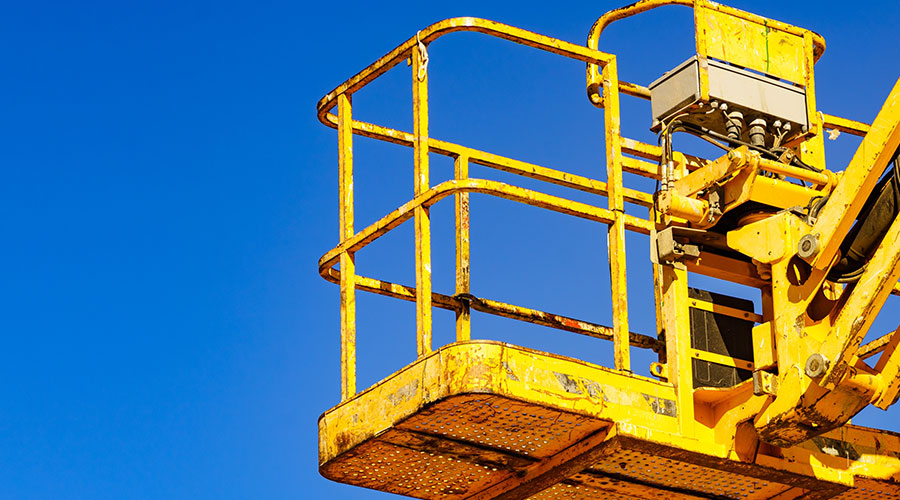
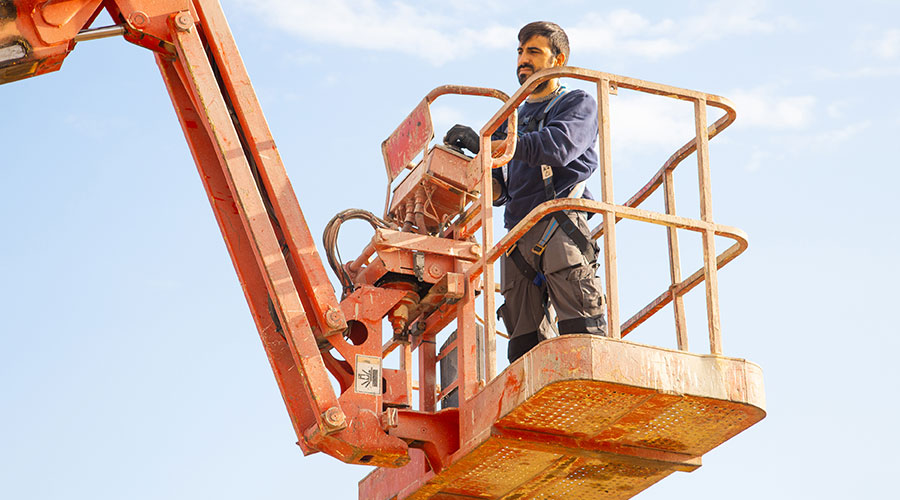
Fall-restraint devices vary by lift type. They are mandatory for all boom lifts and when required by the manufacturer. Scissor and mast lifts might not require fall protection. Newer models feature attachment anchor points on the platform, as operators should not use rails for this purpose.
Users should attach lanyards to the anchor provided by the manufacturer specifically for that purpose, not to guardrails or to objects or structures outside the platform.
Many organizations require operators to use fall protection, whether or not the manufacturer or regulations require it. Other organizations only use lifts that have proper guardrail systems and do not require the use of a separate fall-restraint system.
Finally, operators should never place ladders in the lift or stand on the unit’s rails to elevate beyond the maximum reach.
Secure Work Areas
Lift operators must be aware of activities taking place near their lift work areas. It is important to keep the public and building occupants away from these areas when possible. They also should be careful when using lifts in public-traffic areas, especially where doorways might swing into the equipment or nearby elevators might open.
Isolating the immediate work area also will prevent anything from bumping into the lift and minimize worries about objects falling from the lift and hitting someone. As the lift is elevating, the operator and employees on the ground should make sure appropriate clearance exists so overhangs or other protrusions do not cross the path of the moving platform. This precaution will prevent injuries to workers and damage to building components.
Jeffery C. Camplin, CSP, CPEA — mundycamp@aol.com — is president of Camplin Environmental Services Inc., a safety and environmental consulting firm in Rosemont, Ill.
Related Topics: