SPONSORED
Sign In App - Branded Feature
The Key to Stronger Emergency Preparedness and Response? It's 'the Other AI': Access Intelligence
Untitled Document
By Scott Meyer
When it comes to preparing for and responding to an emergency, leaders at Lanai Road Elementary School in Southern California know exactly how important planning, practice, and access intelligence can be.
When the Encino school was threatened by wildfires in 2025, its staff, students and visitors were ready, due in large part to a system implemented by the school that combines emergency preparedness and response with visitor management and compliance. Relying on the system, staff members mobilized to rapidly and safely evacuate everyone on campus at the time, even after local phone lines went down.
In this case, the system, Sign In App, “actually did save lives,” says one school official.
The outcome may have been significantly different had school officials lacked access intelligence—the ability to view visitor lists, track people’s whereabouts, communicate in real time, and take live headcounts to verify the evacuation was a success. As education institutions and a range of other organizations, from manufacturers and defense contractors to government agencies and healthcare, are discovering, a high level of access intelligence is essential when the stakes are highest.
Such a system can also yield big efficiency and productivity gains. In Lanai Road Elementary’s case, it’s saving staff huge amounts of time on an ongoing basis. With an easy-to-use kiosk-based sign-in process, it has cut visitor check-in time from two to three minutes to 30 to 45 seconds, making a “radical impact” on the productivity of front-office staff, who may process as many as 2,500 visitors during a given three-month period.

Meet ‘the Other AI’: Access Intelligence
Access intelligence is indeed a critical organizational attribute, especially in the context of emergency preparedness and response. It means having the real-time insight at hand to know exactly who is on-site, seeking access to, or engaged with your physical facilities, digital infrastructure and employees, why, and for how long. It also means knowing at any given moment where people are within your physical footprint and then having the ability to translate that information into rapid, effective action during an emergency, be it a natural disaster, severe weather event, or active physical or cyber threat.
With a high level of access intelligence, organizations can anticipate what’s coming, not just record what happened. That proactive posture is invaluable for emergency preparedness and response, and in shaping more personalized, curated experiences for visitors.
Is access intelligence a strength or a weakness for your organization? That depends largely on the systems and processes it uses. Manual visitor logs, siloed systems, spreadsheets and inconsistent protocols invite gaps, blind spots and risk across compliance, visitor management and emergency preparedness. During an emergency evacuation, for example, an organization could miss people in less obvious areas or waste valuable time because all they have is a paper roll call. In organizations where a steady influx of contractors, visitors and temporary workers create constantly changing onsite populations, this lack of full visibility into who’s onsite can create serious safety and compliance risks.
Risk lives in the gaps between the physical and cyber domains, where strong security in one can be compromised by weak, subpar security in the other. Access intelligence closes those gaps by connecting the two domains in one environment, giving organizations a full view of their visitors’ digital and physical identities.
This level of visibility is particularly important in preparing for and responding to a crisis.
The Link Between Access Intelligence and Emergency Preparedness
Organizations don’t come by access intelligence and a strong emergency preparedness posture by accident. Rather, they’re the result of having the foundational cornerstones in place to foster proactive planning, risk management, readiness, responsiveness, communication and compliance. Those cornerstones include:
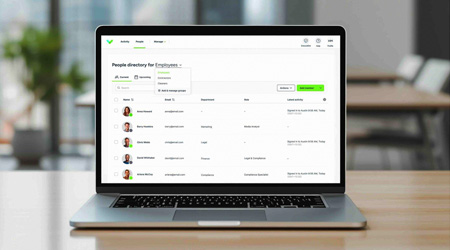
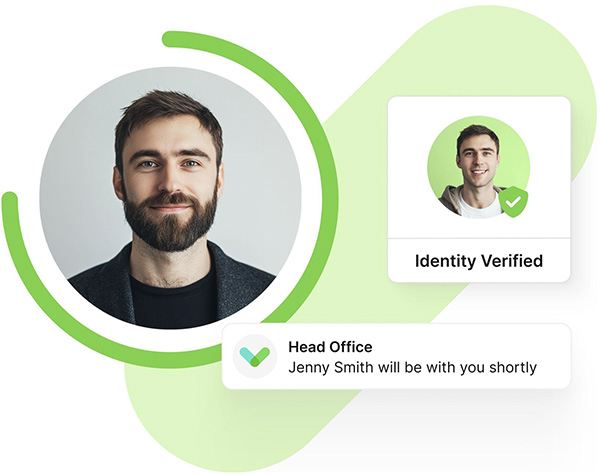
- A single platform for managing the full cycle of emergency preparedness and response. Preparedness and a rapid, effective response during an emergency are predicated on having a single environment from which to orchestrate the complete emergency cycle, from initial sign-in and safety briefing to incident notification, live accountability and after-the-fact evaluation and reporting.Visitors sign in with their contact details, receive safety briefings at check-in, and are automatically included in notifications should an emergency arise. The sign-in creates the safety net. Meanwhile, the system keeps the right people inside the organization apprised of exactly who is on site, when and why. It also serves as a communications hub to respond rapidly and clearly during an emergency, account for people’s whereabouts onsite, and document it all after the fact.
- Insight and multi-channel communications, all in real time. Even after phone lines went down, key staff members at Lanai Road Elementary could utilize backup communication channels for live headcounts during and after the evacuation. Whatever the type of emergency, safety coordinators must be able to instantly access live visitor lists (via a digital roll call synchronized across muster points and devices) to conduct headcounts. Then they can reach everyone onsite with clear, contextual (and multi-lingual) instructions via SMS or push notification, and account for them during evacuation. Configurable emergency message types, custom notifications, and multi-channel delivery are critical to providing clear instructions and rapidly reaching everyone on sitewith messaging that is specific to the situation—evacuate or shelter in place, for example.
- Proactive planning, training and preparation. As leaders at Lanai Road Elementary learned, advance response planning and training on the prescribed measures to follow during a crisis, along with practice exercises, are essential to a fast, successful response to an actual emergency.
- A strong compliance posture based on data and documentation. The same records that helped Lanai Road account for every student during the wildfire evacuation also can satisfy regulators, insurers, and state laws like Alyssa’s Law that require documented safety protocols in schools. Outside the education realm, meanwhile, data and documentation enable businesses to comply with regulations like OSHA 29 CFR 1910.38(a), which requires clear emergency plans and evacuation procedures, along with employee training and reporting. With visitor management, compliance and emergency preparedness all in one environment, organizations can tap into a single source of truth for audits and reporting. Every notification, response and accountability action is timestamped, creating digital records that represent a much stronger evidence base than a binder full of dog-eared manual logs.
- After-action insight to refine and improve emergency preparedness and response. How long did a practice evacuation take and what steps could be taken to shorten that time? How fast and accurate were roll calls? How did specific communications channels hold up during a crisis? Did the proper messages reach the right people at the right time? With the ability to gather and analyze data in the wake of the wildfires, Lanai Road Elementary could identify areas in which its planning, processes, training, etc., were strong and areas that could be improved.
Organizations like Lanai Road Elementary know from first-hand experience how important access intelligence is to emergency preparedness and response. Those that combine it with diligent planning and practice will shine when it matters most.

Scott Meyer was named CEO of Sign In App in January 2026 after close to two years as the company’s COO. He has more than 25 years of results-driven experience in cloud-, AI- and SaaS-based technology, including president and board roles at Xenial, Stratix Corporation and Nextep Systems. At Sign In App, Meyer has led the development of AI-first platform innovations designed to simplify the employee and visitor journey while meeting the complex security and GRC needs of today’s businesses.
To learn more about how Sign In App can help your organization strengthen its access intelligence, its emergency preparedness and response, and its overall security posture, while improving the quality of its employee and visitor experiences, visit https://signinapp.com/.