Maximizing Roof Performance: Climate, Maintenance and Reroofing Strategy
Long-lasting roofs depend on more than materials. Climate considerations, proactive maintenance and careful reroofing planning determine whether systems reach their full lifespan.
Climate zone is not a footnote in the design process. It is a primary driver of material selection. In hotter parts of the country where there are more cooling-degree days — ASHRAE climate zones (ACZ) 1–2 and sometimes zone 3 — UV degradation and thermal expansion govern design decisions, placing a premium on materials with proven resistance to oxidation and surface embrittlement over time.
In the middle and Northern parts of the country where there are more heating degree days or an even number of heating- and cooling-degree days — ACZ 4–8 — low-temperature flexibility and resistance to thermal shock become the critical criteria, particularly where freeze-thaw cycling and large day-to-night temperature swings are routine.
In these zones, a material selected primarily for its reflectance can be a poor fit for the actual stresses the roof will face, optimizing for one performance attribute at the expense of the chemistry and flexibility the climate actually demands. In some cases, condensation and related damage occur.
For example, other single-ply membranes offer different approaches, but some membrane types become brittle and prove difficult to repair after years of weathering, forcing premature replacement of otherwise serviceable roofs. EPDM retains its flexibility and surface receptivity well into its service life, meaning repairs and even modifications such as new curb installations can be made to aged systems with the same expectation of long-term performance as on newer ones.
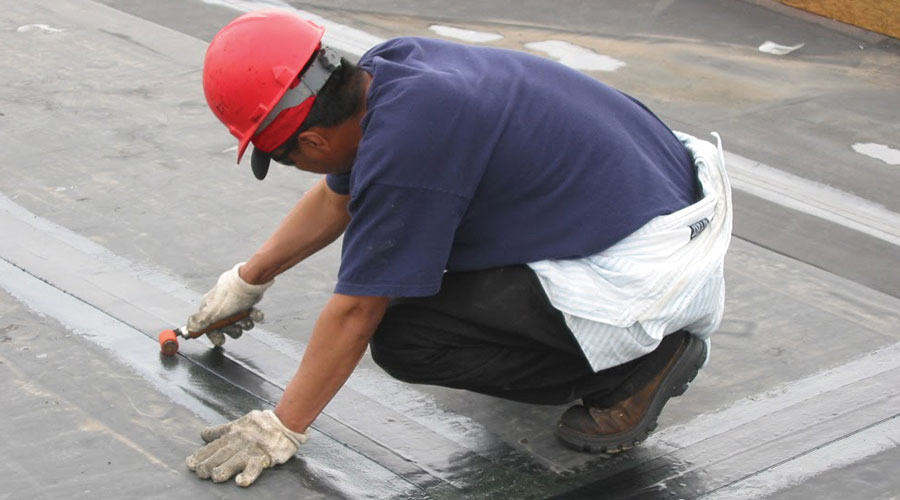
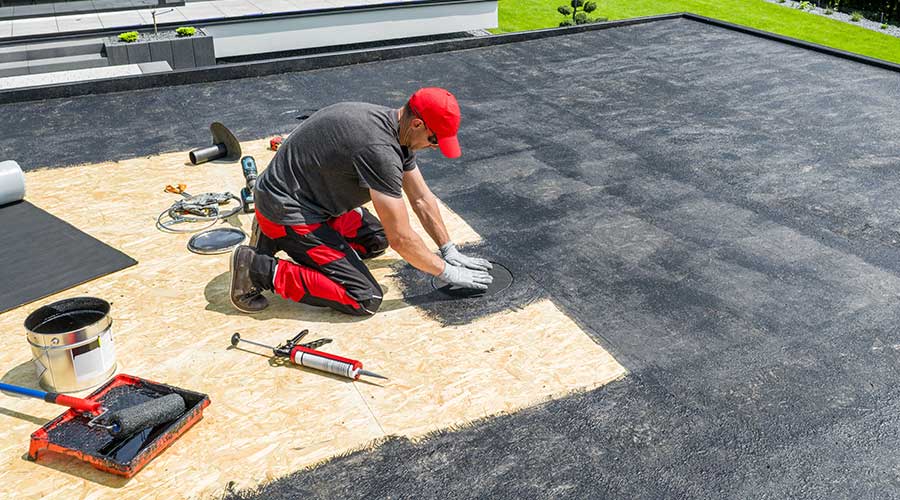
Field repairs typically involve surface cleaning, priming and applying a laminated patch or compatible repair material, a straightforward process that does not require specialized equipment or full-section replacement. This repairability extends to full restoration. Aged EPDM systems in some cases can be brought back to near-original performance through coating and surface treatment, avoiding tear-off and replacement costs entirely.
Maintenance: The investment that pays for itself
A roof designed for 40 years of service will not reach that milestone without active stewardship. Finding a failing drain seal or a lifted flashing termination during a routine inspection costs modest labor time. Finding the same problem after water has saturated insulation, wicked into the deck and traveled 40 feet to appear as a ceiling stain requires very different financial and staff resources.
Spring and fall inspections align with the natural stress points of low-slope roofs. Winter freeze-thaw damage is assessed in spring, and drainage paths are cleared and deterioration is identified before cold weather returns in fall. Severe weather events warrant additional unscheduled walkthroughs, since hail impacts and wind-driven seam stress often are not visible from inside the building until secondary damage already is underway. At least one inspection annually is essential and generally required by most manufacturers as a condition for low-slope roof system warranties.
Inspection scope matters as much as frequency. Flashings at penetrations, parapets, curbs and equipment bases are the most common failure points in any low-slope system. They demand deliberate examination, not a glance on the way to the drain.
Everything observed should be documented with time-stamped photographs filed in the building record. A series of inspection records over years becomes a diagnostic tool, allowing managers and front-line technicians to distinguish stable conditions from deteriorating ones and supporting warranty claims when they arise.
The reroofing challenge
Every roof eventually reaches the end of its functional life, and the way a building handles that transition determines whether reroofing delivers a reliable new asset or compounds the problems that made replacement necessary.
The work starts before any contract is signed. The existing assembly needs to be understood rather than assumed. Moisture surveys using infrared thermographic scanning or nuclear detection equipment can map saturated insulation invisible from the surface.
This intelligence is critical when considering a recover installation, since placing a new membrane over wet insulation traps moisture where it degrades R-value accelerates deck corrosion and undermines the new system from below. Such recover projects are also not code-compliant in most jurisdictions.
Deck condition is a second unknown that only the tear-off down to the roof deck reveals. Budgeting conservatively for potential remediation before construction begins prevents costly mid-project surprises. Code compliance adds further complexity because reroofing typically triggers adherence to current codes and standards, and the gap between original construction and today’s requirements can substantially reshape scope.
Minimum insulation R-values have increased considerably since the early 2000s, but high-rise buildings carry accumulated rooftop infrastructure, including curbs, counter-flashings, dunnage frames and overflow scuppers — all sized for the original assembly. Raising every element to accommodate thicker insulation is often prohibitively expensive, making early dialogue with code officials essential.
Wind uplift requirements deserve equal attention. Per the current ASCE 7 standard referenced in most jurisdictions’ code, a roof that is 200 feet above grade can face more than double the uplift pressure of the same configuration at 30 feet.
Beyond the technical considerations, reroofing happens on an occupied building with its own constraints. Moving materials and debris adds operational cost on a square-foot membrane price, and building owners may impose requirements beyond base code, such as hot-work restrictions, insurance carrier mandates, sustainability certification requirements or limits on elevator access.
Managers should encourage contractors to investigate these issues before developing a proposal so they can deliver estimates that hold. Managers who discover them afterward face a difficult conversation.
The sustainability connection
Service life directly impacts sustainability: A roof lasting 40 years instead of 20 years cuts material consumption in half over an 80-year building lifespan. It reduces landfill waste, eliminates the additional embodied carbon of premature replacement and minimizes business disruption from repeated reroofing projects. Longer service lives also provide more time for technologies to develop better end-of-life options for roofing materials.
The variables that determine the number of years a low-slope roof performs — material selection, installation quality, climate adaptation, repairability, active maintenance and reroofing planning — form a system. Any weaknesses limit the strengths the roof can otherwise achieve.
For managers, this situation means grounding decisions in life-cycle cost, treating maintenance as a required continuation of the capital investment and approaching reroofing with the same rigor applied to new construction. Owners and managers that get this right have fewer emergencies, lower total ownership costs and roofs that reach the service life they were specified to deliver.
Ellen Thorp is president of the Coalition for Sustainable Roofing (COSUR), which represents companies that manufacture a wide variety of roofing products.
Related Topics: