How Roofing Can Support Facility Sustainability
Manufacturers discuss how durability, energy efficiency, lifecycle costs and material selection are changing roofing decisions.
Key Takeaways:
- Facility managers should evaluate roofing systems based on lifecycle value, considering energy performance, maintenance, repairs, service life and replacement costs rather than first cost alone.
- Durability and resilience are increasingly important sustainability considerations because longer-lasting roofing systems can reduce material use, replacement frequency and waste over a building’s lifecycle.
- Energy codes, insulation, air barriers, attachment methods and environmental product data give facility teams additional tools for improving roof performance and aligning material choices with sustainability goals.
Roofing is increasingly being evaluated as more than a protective layer over a facility. For maintenance and engineering managers, factors such as durability, energy efficiency, lifecycle costs and material impacts are shaping how roofing systems are selected and maintained.
In this manufacturer roundtable, Facility Maintenance Decisions spoke with roofing manufacturers to discuss how facility teams can balance sustainability goals with long-term roof performance and operating costs.
FMD: Roofing plays a larger role in sustainability initiatives than it has in the past. What trends are driving this shift, and how has the role of the roof evolved in helping facilities meet broader environmental goals?
“Commercial roofing has evolved from simply protecting buildings from the elements to becoming a critical component of overall building performance. As owners seek to reduce energy consumption, lower operating costs, and meet broader sustainability goals, the roof plays an increasingly important role.
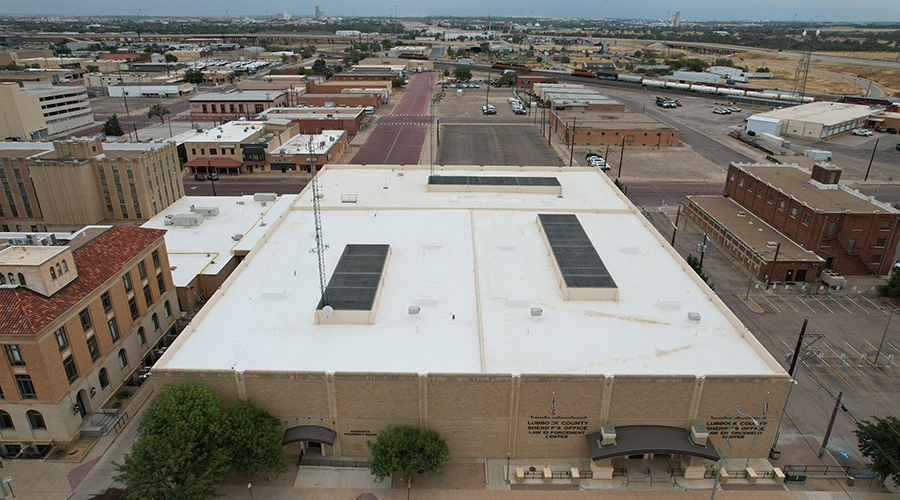
Because the roof is one of the building's largest surfaces exposed to the environment, it has a significant influence on energy efficiency. Proper insulation is one of the most effective ways to reduce heat transfer, while membrane color can also impact building performance. However, roof color should not be viewed as a one-size-fits-all solution. The optimal choice depends on the project's climate, geographic location, and heating and cooling demands.
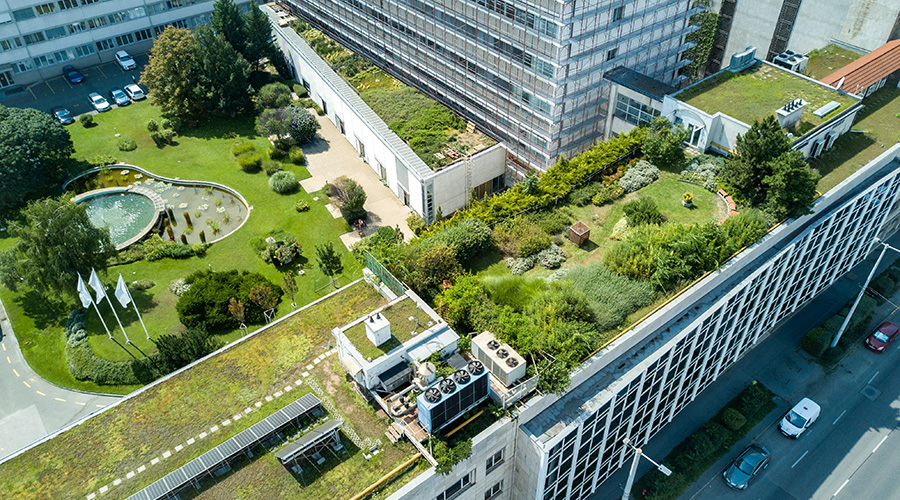
Sustainability also depends on durability. The most sustainable roof is often the one that doesn't need to be replaced as often. Roof gardens, paver systems, and even traditional stone ballast help protect the waterproofing membrane from UV exposure, temperature extremes, and physical damage, extending roof service life while reducing material consumption and landfill waste associated with premature replacement. These overburden systems can also help moderate rooftop temperatures, further contributing to building performance.
Additionally, the roof is an integral part of the building envelope. By contributing to a continuous air barrier, the roofing system helps minimize air leakage, improve energy efficiency, and support the building's long-term environmental performance.”
— Chris Kann, Product Manager – Specialty Products and Sustainability. Carlisle Construction Materials, LLC
“One of the biggest drivers is the heightened awareness created by recent hurricane-velocity storms and other severe weather events. Recorded wind speeds and the design wind speeds used for buildings have changed over time, particularly in coastal areas. That has increased the focus on wind resistance and long-term weatherability.
At the same time, sustainability is no longer measured only by energy use or recycled content. It is increasingly evaluated across the entire lifecycle of the building, including the sourcing and manufacturing of materials, transportation, installation, maintenance, replacement and end-of-life disposal or recycling.
The Athena Sustainable Materials Institute has helped advance that discussion by promoting lifecycle assessment and a longer-term view of building performance. Its work has supported the idea that major building-envelope components should be evaluated over a minimum 60-year building lifespan. That changes the sustainability calculation considerably. A roof that lasts 60 years or more carries a very different environmental burden than one that must be replaced two or three times during that same period. U.S. domestic steel producers have responded with 45 to 60 year no-cost warranties on roof materials.
The roof’s role has expanded beyond protecting the building from weather. It is now central to resilience, carbon reduction, renewable-energy integration and the long-term environmental performance of the facility.”
— Rob Haddock, Director, Metal Roof Advisory Group, Ltd. / Founder and CEO, S-5!
“The building envelope as a whole has been a major focus for improving energy efficiency for quite some time, and roofing materials are a natural extension of that trend. More recently, there's also been a growing focus on using lower embodied carbon materials when constructing new buildings and renovating existing ones. That's driving manufacturers to publish life cycle assessments and environmental product declarations to help quantify environmental impacts.
Having that information verified by a third party, and readily available, gives facility managers another tool to compare products and make decisions that align with their sustainability goals and the needs of their buildings.”
— Mitch Gilbert, Vice President of Technology, Duro-Last
FMD: Facility managers are often balancing sustainability objectives with budget constraints and long-term performance. What factors should they consider when evaluating roofing systems to ensure they achieve both environmental and lifecycle cost benefits?
“Facility managers should evaluate roofing systems based on total lifecycle value rather than simply the lowest initial cost. While first cost is always important, investing in a more durable, energy-efficient roof can significantly reduce operating costs, maintenance, and premature replacement over the life of the building.
The starting point is ensuring that the roof complies with the locally adopted energy code. These codes establish minimum insulation requirements, but they are just that - minimums. In many cases, increasing the roof's R-value beyond code can further improve energy efficiency and reduce long-term utility costs. Stretch energy codes and green building standards, such as the International Energy Conservation Code (IECC) and ASHRAE 189.1, can provide useful guidance when considering higher insulation levels. A continuous air barrier is equally important, helping minimize air leakage and reducing HVAC demand.
Durability should also be a primary consideration. Facility managers should select roof assemblies designed to withstand their specific environment, which may include thicker membranes, high-density cover boards for improved impact and puncture resistance, and fully adhered assemblies that minimize thermal bridging.
Finally, facility managers should evaluate the sustainability information provided by roof system manufacturers. Resources such as Environmental Product Declarations (EPDs), Health Product Declarations (HPDs), Declare labels, Material Ingredient Inventories (MIIs), and recycled content documentation can help project teams compare products, support green building certification programs, and satisfy project-specific sustainability goals. When considered alongside durability and long-term performance, these resources provide a more complete picture of a roofing system's environmental and lifecycle value.”
— Chris Kann, Product Manager – Specialty Products and Sustainability. Carlisle Construction Materials, LLC
“Facility managers need to distinguish between first cost and lifecycle cost. The least expensive roof to purchase is not necessarily the least expensive roof to own.
A proper lifecycle analysis should include the initial cost, expected service life, maintenance, repairs, replacement cost and frequency, operational disruption and disposal of the existing system.
This is where service life becomes critical. Metal roofing may carry a higher initial cost than many alternative systems, but its service life can be two to five times longer. Over a 60-year building lifecycle, a shorter-lived system may have to be purchased, removed and replaced more than once, while a long-life metal roof may remain in service for the full 60-year period or even longer. When all those costs and environmental impacts are considered, the roof with the higher first cost can become the least expensive and most sustainable option over the life of the facility.”
— Rob Haddock, Director, Metal Roof Advisory Group, Ltd. / Founder and CEO, S-5!
“The basics are still the basics. Selecting the right roofing assembly and having it installed by a quality roofing contractor remain the foundation for achieving a facility's long-term performance goals. Pair that with the right amount of insulation and a durable waterproofing layer, and you've addressed the biggest pieces of the puzzle.
Where things are becoming more interesting is how the roof is attached. New attachment methods that reduce thermal bridging can improve the overall energy efficiency of the roof assembly. It's a more nuanced part of roof design, but attachment methods represent one of the next frontiers for improving thermal performance while supporting energy savings and reducing carbon emissions.”
— Mitch Gilbert, Vice President of Technology, Duro-Last
Jeff Wardon, Jr., is the assistant editor for the facilities market. With more than three years of experience, he covers topics including technology, wellness, sustainability and emerging industry trends. Connect with him on LinkedIn.
Related Topics: