 New Columbia Solar
Don’t Dismiss Solar Even as Federal Tax Credits Fade Away
Facility influencer Ken Sandler explains the benefits of solar panels and what to expect from Trump Administration's stance on solar tax credits.
By Ken Sandler, Facility Influencer
Yes, federal tax incentives to put solar panels on your institutional or commercial facility are going away – but there remain lots of good reasons to go solar, which will only multiply in years to come.
So as not to bury the lead, I’m going to state the No. 1 reason upfront: power prices are going through the roof, making this a great time to either lock in long-term fixed rates with solar or at least hedge against price increases by producing a percentage of your facility’s power on-site.
I spoke with Billy Grayson, vice president at ICF, about all the reasons to put solar panels on your facility, about which he co-authored the recent piece, Darkness before the dawn? How commercial solar will still thrive post-ITC.
The immediate context is that the Trump administration and Congress rescinded the generous solar tax credits that the Biden administration and previous Congressional majority had established. The Federal Investment Tax Credit (ITC) for solar photovoltaic (PV) panels will sunset on Dec. 31, 2027, although projects can still qualify for the credits as long as they meet the deadline to begin construction by July 4, 2026. For all but the largest projects, beginning construction is defined as either initiating physical work of a significant nature or incurring at least 5 percent of total project cost.
So, there is a little wiggle room to squeeze in under the wire and still get the tax credit, if one can compete with all the other interested parties looking to get projects initiated and clear other hurdles in time.
Energy costs rise
But even if that timing doesn’t work for you, the reasons to solarize your facilities just keep getting more compelling. As I’ve discussed in my personal column, Regenerative Futures, rising energy costs are one of the biggest issues on facility managers’ minds today.
As Grayson put it in his article:
“This year wholesale energy prices rose 23 percent and retail electricity prices rose more than 10 percent, with some markets seeing much bigger increases. … ICF’s Power Market Outlook is projecting a 25 percent increase in electricity demand by 2030 which we believe will translate into electricity prices rising an additional 15-40 percent over the next five years. Even with labor and material costs rising with inflation, the average solar project would have a better payback in 2030 than a project built in 2024 that leveraged the ITC (based on avoided electricity costs alone, excluding RECs).”
The more you have to pay your utility for electricity, the more sense it makes to generate as much of your own power as you can, cutting your power bill and giving you extra credit off your bill through net metering, depending on your state’s policies.
Financing options
One popular way to finance large solar installations is through power purchase agreements (PPAs). The U.S. Environmental Protection Agency defines a PPA as “a financial arrangement in which a third-party developer owns, operates, and maintains the photovoltaic (PV) system, and a host customer agrees to site the system on its property and purchases the system’s electric output from the solar services provider for a predetermined period.”
Through a PPA, the facility manager gains the benefit of long term (typically 10-25 years) of stable, pre-negotiated prices without having to deal with operations and maintenance of the solar panels over that period. While the end of the federal tax credits has changed the PPA equation, this financing method remains a great way to hedge against electric rate increases. As Grayson put it to me, PPAs allow you to “make electricity costs predictable when nothing else is.”
Owners of large facilities and portfolios may also want to look into options to wrap solar purchases into energy savings performance contracts (ESPCs), by which means you can help finance the costs of solar through long-term savings from energy efficiency measures. This is an especially popular option for governments and institutions.
Grayson also encourages looking into your state’s community solar programs. Community solar, also called shared renewables, refers to programs where multiple parties will share the benefits of one solar site. This is relevant to facility owners if you have space on your roof or campus suitable to host large solar installations, but you don’t need the power for your own use and would be willing to provide it to others.
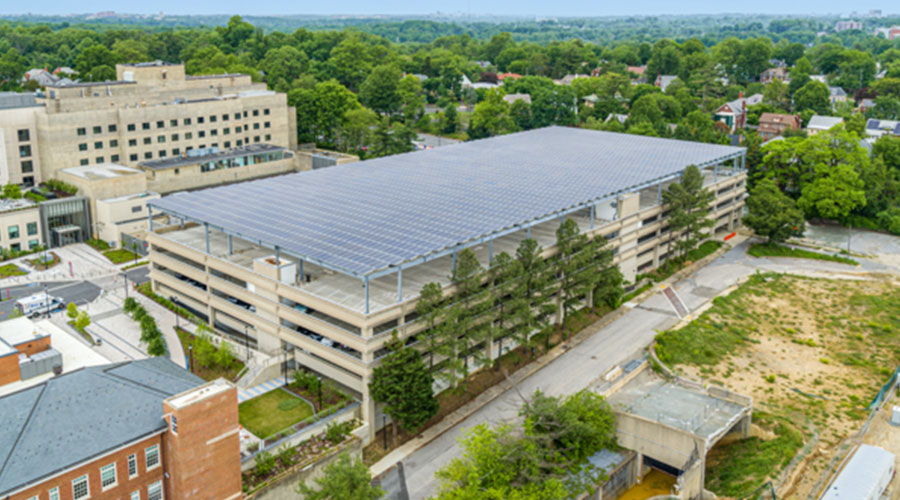
Legal and well-developed in some, though not all, states (see ICF’s interactive map), community solar can provide great opportunities to improve your public image and ties to your neighbors. See, for example, the Children’s National Research & Innovation Campus in Washington, D.C., which covered its parking garage with a 1,148-kW solar PV system and provides that power to more than 325 lower income households, each of which can save up to $500 annually.
Overall, it’s a good idea to evaluate whether you could be getting more value out of your rooftops and underutilized land. Even if you don’t want PV to power your own facilities or to help the community, it’s possible that you could benefit from renting space to others who want to use that space for solar panels. As Grayson put it, “Real estate wants to turn any income into rent.” And solar panels can in some cases be more lucrative sources of rent than more common roof uses like antennae or billboards.
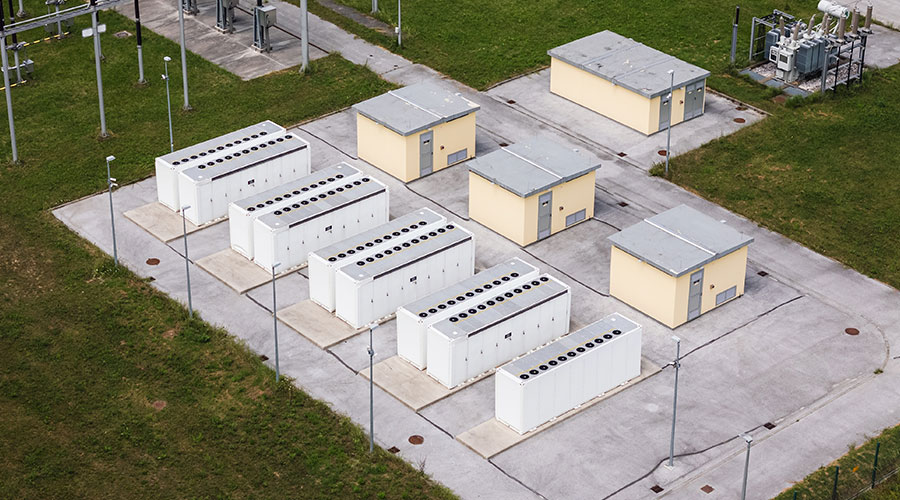
Another issue to consider is the synergy between solar PV and battery energy storage. One silver lining of the budget bill that phased out the solar tax credit is that it maintains the investment tax credit for energy storage, which is worth at least 30 percent and potentially as much as 50 percent if a number of additional requirements are met. Solar plus storage can be a powerful combination, expanding opportunities for emergency power backup, participation in state or utility demand response or virtual power plant programs and taking advantage of time of use electric rates.
Bright future
As Grayson emphasizes, there are many reasons to expect the solar picture to just keep getting brighter. One is the steady improvement in efficiency that PV shares with other technology sectors, with cost per watt installed increasing every year (very different from the commodity pricing patterns of oil, gas and coal). Another is likely future solar industry consolidation. Even if U.S. tariffs against the cheap Chinese solar panels flooding the world market hold, PV panel costs should continue to come down. And similar dynamics are playing out for building energy storage systems (BESS).
Installation costs should keep coming down as well, as states and cities provide increasing incentives and reduce administrative barriers that have kept the soft costs of solar artificially high. Meanwhile, with climate instability increasing, the benefits of resilient systems like solar plus storage will continue to mount.
All of this will play out as grid electricity prices, by all accounts, surge. So, the end of the federal investment tax credit may not in fact be the most important factor in the value proposition of PV for your facility. Look into it for yourself and then decide if you want to tap into the power of the sun, Earth’s best friend forever.
Ken Sandler, Ph.D., is a clean energy and sustainability analyst and thought leader who spent 35 years advancing green building and sustainability policies and programs across the federal government. In addition to being a FacilitiesNet sustainability columnist and Facility Influencer, he writes his own newsletter, Regenerative Futures, available on LinkedIn and Substack.
Related Topics: