How to Plan Plumbing and Restroom Upgrades in Commercial Buildings
A walkaround can reveal aging fixtures, but effective upgrades also require assessing whether the building’s infrastructure can handle new demands.
Key Takeaways:
- Leaking, outdated or code-deficient fixtures can signal that a restroom is ready for an upgrade.
- Plumbing improvements should go beyond code compliance to support the building’s performance and owner requirements.
- Before renovating, assess water, waste, venting and existing system loads to ensure the infrastructure can support the planned upgrades.
Plumbing systems and restrooms in institutional and commercial facilities are much more complex than they were even a decade ago. The changes have affected the basic components and roles of these critical areas, as well as the goals and potential benefits of upgrading them to address wider issues facing building owners and facility executives.
Unfortunately, building owners have a fair amount of work to do in understanding the challenges and opportunities that exist in these often-overlooked areas in their facilities.
“Most people take plumbing and plumbing design for granted,” says James Dipping, senior principal and plumbing engineering discipline lead with Stantec, an engineering, architecture and environmental consulting firm. “They just think it happens. Many owners think that plumbing systems are code driven, but high-performing plumbing systems are about much more than just meeting the minimum code.
“Plumbing systems can be very complex. It’s not just water and waste and vent piping, especially when you get into large buildings that have a lot of different applications going on inside of them.”
Looking for opportunities
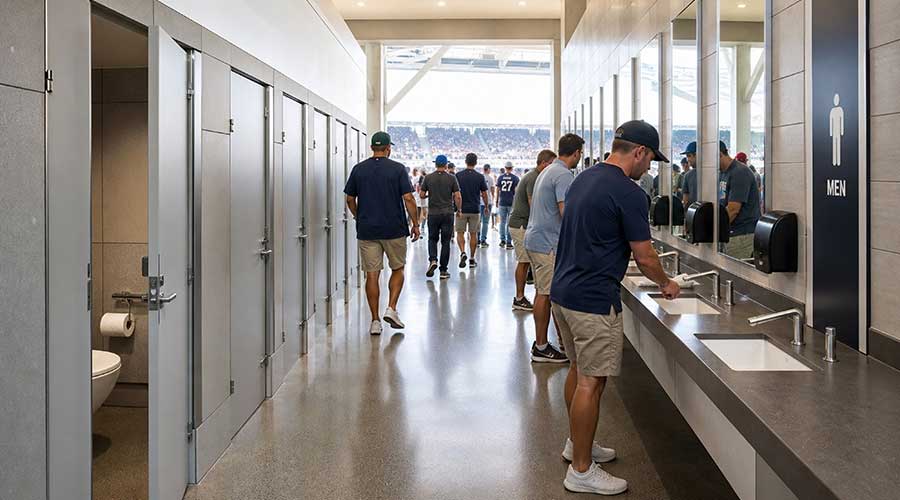
To understand the evolving role of restrooms and the benefits that can come from rethinking and upgrading plumbing systems, managers can start by using the most basic tactic — a walkaround.
“They can go into a restroom and see that it’s old, outdated fixtures are leaking or don’t even meet current code requirements,” says Karl Caouette, plumbing technical director with Henderson Engineers. “Basically, the age of the restroom will tell a building owner a lot — that it’s probably time to go ahead and refresh this space.
“Leaking faucets are a big thing. In some areas where there are hard-water quality issues, they will degrade plumbing fixtures over time. Typically, fixtures will last anywhere between 5 and 10 years with regular maintenance before they start to leak and start to become a financial burden to the owners.”
But for plumbing and restroom upgrades to be effective beyond daily performance, owners need to think beyond components and consider the facility and its construction.
“When you look at how owners and managers identify plumbing systems that are candidates (for upgrades), our job is to not so much identify the systems that are suitable but to do an assessment of the infrastructure to make sure it can support the upgrades that they want to do,” Dipping says. “They have an obligation to meet code, and we’re going to make sure there is enough water, there is enough waste, there is enough venting.
“What other infrastructure upgrades do we have to make in order to support the plan renovation to meet the owner's project requirements? The key factors that we're going to consider are going to be analyzing new loads applied to the existing infrastructure. What is the current load of the existing infrastructure to make sure we're not overloading it? Overloading can affect the whole building negatively, and it could bring the building out of code compliance.”
Dan Hounsell is senior editor for the facilities market. He has more than 30 years of experience writing about facilities maintenance, engineering and management.
Related Topics: