Plumbing Upgrades Improve Restroom Sustainability and Safety
Modern plumbing systems can support efficiency, occupant well-being and waterborne pathogen risk management.
Key Takeaways:
- Modern plumbing upgrades can improve infrastructure longevity, energy efficiency and alignment with sustainability goals such as LEED and WELL.
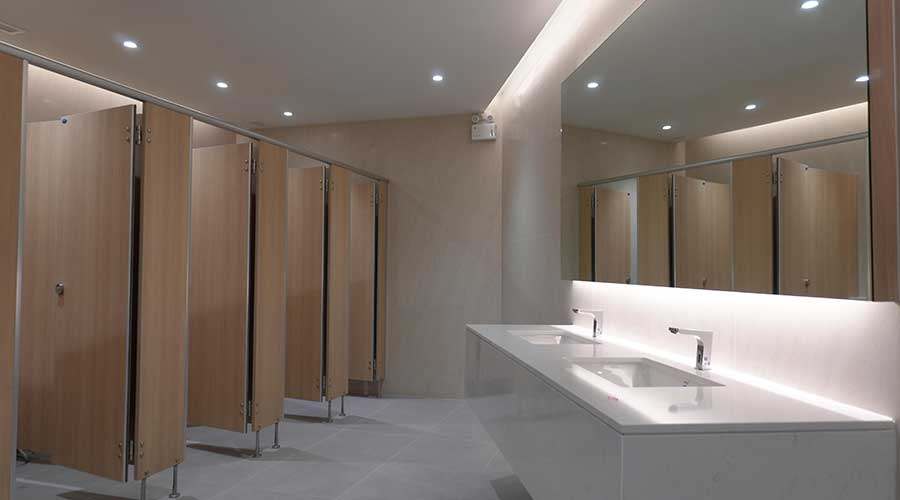
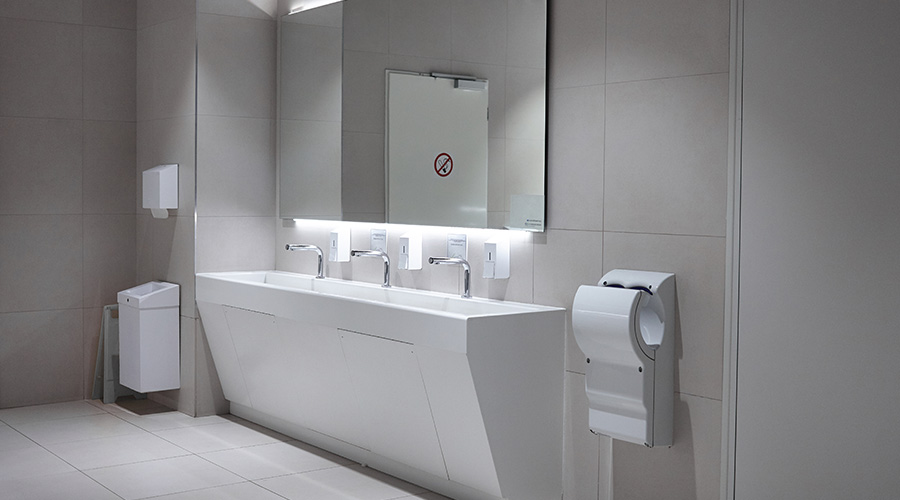
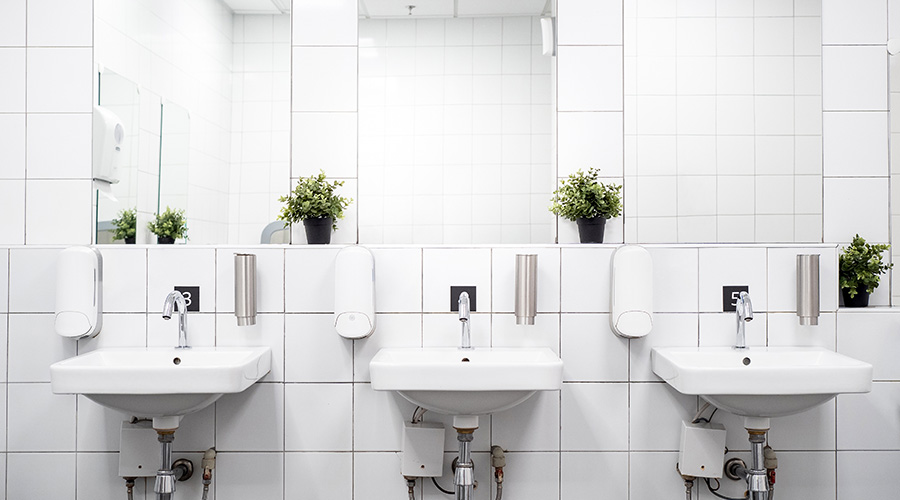
- Restroom layout may influence handwashing: placing lavatories near the exit can encourage users to wash their hands before leaving.
- Owners should consider Legionella and other waterborne pathogen risks and consult experienced plumbing professionals about mitigation options.
Upgrading plumbing systems can help owners and managers ensure that restrooms and their fixtures are operational and reliable, but increasingly, they are viewing these spaces in facilities in terms of broader issues. One such consideration involves a facility's sustainability and appeal to occupants.
“Upgrades can improve the flexibility of a building,” Dipping says. “They can certainly get you in line with code compliance. When you start looking at the infrastructure of a building beyond the renovation itself, you can improve the longevity of the infrastructure. You can improve the energy efficiency with modern equipment.
“For example, you can have high-efficiency water heating technologies. You can go with more sustainable electrification, whether that’s with heat pumps or similar technology. You can also look at low-flow fixtures, which are key in getting you to third-party rating systems, such as LEED and WELL. They make a building look like you’re thinking forward. They attract high-end tenants.”
As occupants pay greater attention to issues such as hygiene and well-being, upgrades can help owners address challenges related to design and the restroom's role in protecting the health of occupants.
“One of the key things that we learned as far as hygiene is concerned is that it really all depends on how the architect does the layout of their restroom relating to the front entrance of the restroom,” Caouette says. “If a user were to walk into a restroom and the very first things they see are the urinals and the toilets, the user is more likely to not go deeper into the restroom to wash their hands after using the facilities. We’ve actually got data that proves that.
“In one-third of restrooms that have their washing lavatories toward the opposite side of the restroom entrance, users will not wash their hands in lieu of having the washing facilities right next to the exit.”
Health and safety considerations related to restrooms extend well beyond hygiene to an issue that often makes headlines because of its threat to building occupants.
“Legionella and the mitigation of waterborne pathogens have got to be on the forefront of everybody’s mind when it comes to making sure that you're maintaining occupant safety with plumbing systems,” Dipping says. “We all talk about the litigation that’s associated with that. It could cost owners a lot of money to be ignorant on a topic or make decisions that put themselves and occupants at risk. Reach out to a professional or reach out to a plumbing engineer that has experience and understands the tools that are available to help mitigate Legionella risk in your domestic water system.”
Dan Hounsell is senior editor for the facilities market. He has more than 30 years of experience writing about facilities maintenance, engineering and management.
Related Topics: