Preventing Falls: Build a Stronger Fall Protection Program
Effective fall protection goes beyond equipment and training.
Key Takeaways:
- A written fall protection program can fail when documentation, training, equipment inspections and field practices are inconsistent.
- Elevated surface work plans help facilities teams identify hazards, equipment, access requirements and protective measures before work begins.
- Calculating fall clearance is critical because worker height, lanyard length, deceleration distance and the space below all affect whether a fall arrest system will work.
The problem usually starts with something simple: a lightbulb needs changing, or a rooftop unit needs checking.
No alarms go off. No sirens sound. But in that moment, the most common and most deadly workplace hazard in the United States can happen: a fall from height.
For 15 consecutive years, fall protection has ranked the number one safety violation on the Occupational Safety and Health Administration’s (OSHA) top 10 list. OSHA recorded 5,914 fall citations in 2025, with associated penalties totaling more than $46.8 million.
In 2024, 389 construction workers died in fatal falls to a lower level, accounting for more than one-third of construction fatalities that year, according to OSHA. But these deaths are preventable when employers plan appropriately and provide the right protective measures.
Bridging the gap
One common reason fall hazards continue to result in violations is the gap between a written program and what actually happens in the field, says Craig Edwards, division safety manager at ESFM, the corporate facilities management division of Compass Group USA.
“A company can have a strong fall protection program, but if it is not implemented and followed by the workers it is intended to protect, it will fail,” he says, adding that the gap is rarely caused by one issue.
“What I typically see is a combination of missing documentation, inconsistent training and equipment that is not being inspected or stored correctly. The program exists on paper, but not in practice,” he says.
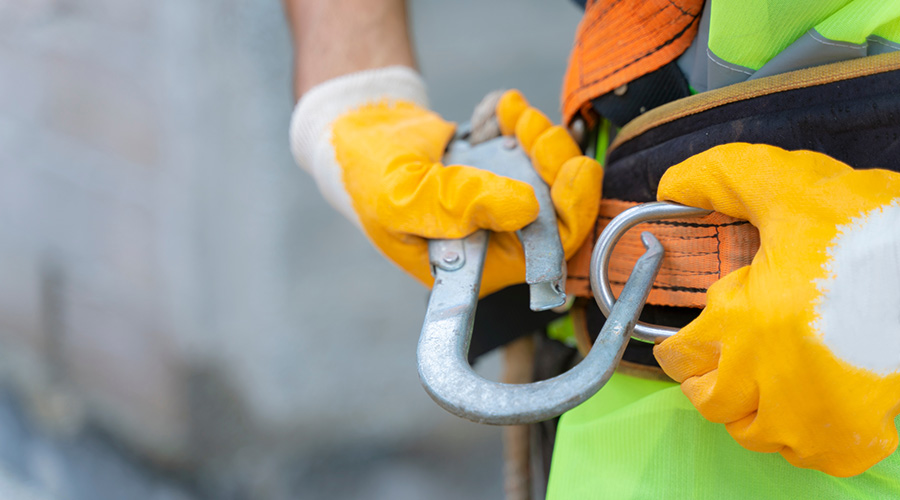
Preventing falls from height requires more than simply owning harnesses or having an OSHA training certificate on file. Maintenance and engineering must bridge the gap between having the right equipment and ensuring technicians follow hazard plans with actual work practices.
Creating a work plan
One of Edwards’ key recommendations is the use of an elevated surface work plan (ESWP) before work begins.
An ESWP establishes what employees will do, where they will do it, how high they will be working and what equipment and protective measures will be required. It can apply to work performed from a catwalk, scissor lift, boom lift, mobile elevated work platform (MEWP) or other elevated surface.
“The ESWP is where you slow the job down before it ever starts,” Edwards says. “If you skip that step, you’re already behind.”
The plan also should define:
- the scope of work
- the employees who will perform it
- the height of the work surface
- the way employees will access the site
- equipment they will use
- environmental conditions
- potential hazards to people working below.
Fall distance is another critical component.
“You have to calculate whether the system actually works in the real world,” Edwards says. “It’s not just the height of the platform. It’s the employee’s height, the lanyard length, the deceleration distance and the clearance below. If you don’t do that math, you’re guessing with someone’s life.”
Wearing a personal fall arrest system does not automatically make an elevated task safe. The organization must understand the amount of clearance available below the worker.
OSHA’s construction standard requires employees working on surfaces 6 feet or more above a lower level in many situations to be protected by a guardrail system, safety net system or personal fall arrest system. But facility managers should not interpret 6 feet as a universal “safe below this height” rule. Edwards says that work below 6 feet is an overlooked hazard, particularly because it can overlap with ladder safety requirements.
Elaina Myers is the assistant editor of the facilities market. She has covered various topics from pest management to resilience to sustainability and covers all holidays and special days in the facilities field. She also manages the FacilitiesNet social media accounts.
Related Topics: