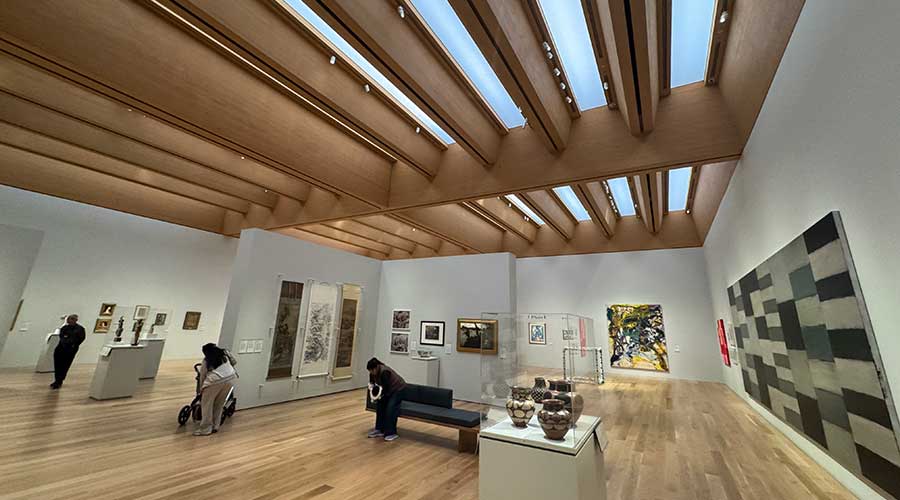
 Photo Credit: CGB South
Putting Art in a Better Light
Lighting upgrade at the Princeton University Art Museum illuminates priceless collections.
By Amy Wunderlin, Contributing Writer
Key Takeaways:
- Balance display with preservation: Tailor lighting to each artwork’s sensitivity, using controlled, diffused daylight where appropriate and excluding it from galleries with highly light-sensitive collections.
- Design for flexibility and comfort: Integrated lighting, shading, and controls let curators adapt illumination for different objects and exhibitions while supporting a consistent, comfortable visitor experience.
- Coordinate early to achieve multiple goals: Close collaboration among the university, architects, lighting designers, and museum team helped integrate preservation, energy efficiency, and occupant needs into the design from the outset.
The right lighting sets the tone for any institutional and commercial facility. It can create comfort, enhance an experience and even evoke a feeling — all of which are especially important considerations when designing an art museum.
Illuminating the new Princeton University Art Museum, which features expansive galleries and gathering spaces that serve as a community hub for the arts and humanities, required careful planning in order to not only create an exceptional visitor experience but to preserve sensitive artwork and cultural collections. The university also sought to improve building energy performance and occupant comfort.
“Each design decision was carefully considered to create an environment that is warm, inviting and conducive to the display and discovery of art,” says Ron McCoy, university architect at Princeton University.
The new facility replaces the former art museum and Department of Art and Archaeology. The 146,000-square-foot museum includes nine connected pavilions at the heart of the campus and expands the university’s space for the exhibition, conservation, study and interpretation of art. The museum showcases pieces from the university’s extensive art collections under one roof, featuring thousands of years of art from around the world.
One of the project’s most critical design concerns was lighting the facility’s four corner pavilions without damaging the delicate, high-value objects on display. Featured artworks needed to be lit in a way that honored their historic and artistic value while also enhancing their details for the human eye to study without strain or discomfort.
“The primary goal was to provide appropriate lighting for the museum’s diverse collection,” says Erin Flynn, the project’s executive architect and principal at Corgan, an architecture and design firm. “Achieving this required a thorough understanding of maximum footcandle requirements, opportunities for daylighting and the museum’s internal standards and practices for displaying different types of objects.”
Advanced daylighting advantages
The first step in solving this challenge was to understand the collection itself, Flynn says.
“We evaluated which galleries could accommodate daylighting and which contained light-sensitive objects that could not be exposed to natural light,” she says. “Working with Tillotson Design Associates, the team selected exhibition lighting systems capable of supporting a full range of accessories and controls to optimize illumination for different display needs.”
The Princeton University team chose to install integrated advanced daylighting technology throughout four of the museum’s large pavilions. They installed 144 of Solatube’s SkyVault M74 DS daylighting devices with collectors, thermal insulation panels and dimmers above a translucent ceiling, providing daylight throughout the galleries.
While the initial intent was to bring in controlled light through traditional light monitors, that approach proved cost-prohibitive, Flynn says, so the daylighting devices were chosen as an alternative. “They provide control over both light levels and internal shading systems, giving the museum the flexibility needed to effectively manage daylight throughout the galleries.”
The challenge was taking this approach while minimizing reliance on electric lighting, which can create uneven or less natural illumination for artwork. The use of controlled daylight diffusion helps minimize ultraviolet and infrared wavelengths that can contribute to cumulative artwork deterioration, and it enhances color accuracy and visitor comfort.
“The museum’s lighting requirements and diverse collection called for a multifaceted approach that combined carefully tailored exhibition lighting, daylighting strategies and sophisticated control systems,” Flynn says. “Lighting for each object was individually considered to ensure the appropriate presentation and conservation of the artwork.”
Achieving this level of precision required close collaboration with the museum team throughout the design process, she says.
Extensive lighting track infrastructure reflects the museum’s practice of illuminating objects from up to three different positions and provides curators with maximum flexibility. Also incorporated were integrated control and shading systems, which accommodate changing exhibitions and allow lighting conditions to be adjusted easily while maintaining a consistent visitor experience.
For spaces incorporating daylight, daylighting studies were conducted to verify that light levels remained within the appropriate footcandle ranges for each gallery. For example, areas like the Asian art pavilion were intentionally excluded from the daylighting strategy because its collection, including scrolls and textiles, is too sensitive to withstand exposure to natural light.
Skylights act as a primary source of natural light and were introduced where appropriate. Because the museum includes two distinct gallery types — enclosed pavilions without exterior wall glazing and connecting galleries with glazing that provide visitors with views of the campus and support wayfinding throughout the building — skylights were mainly used in the enclosed pavilions.
A secondary goal of the project was to prioritize energy efficient lighting systems, aligning with the university’s sustainability goals. This goal was achieved by incorporating thermal insulation panels to reduce solar heat gain to support artifact preservation and reduce HVAC loads.
Thoughtful design
Like most successful building infrastructure, Flynn says the lighting system achieves its greatest success by remaining largely invisible.
“At the Princeton University Art Museum, the technology, fixtures and coordination efforts recede into the background, allowing the artwork to take center stage,” she says, adding that as the result is a flexible and adaptable lighting environment that supports a range of exhibitions and ensures each object is presented appropriately.
“Visitors experience the collection as intended, without being distracted by the complexity of the systems working behind the scenes.”
The project also illustrates the way daylighting technology can help architects and building teams successfully balance three priorities that often compete: preservation, comfort and sustainability.
“The new art museum space represents Princeton’s enduring commitment to the visual arts, humanities, and liberal arts education,” McCoy says. “Its expanded galleries, learning areas, gathering spaces and visitor amenities create a more welcoming and accessible environment for object-based inquiry, scholarly collaboration and community engagement. By reuniting the art museum with the Department of Art and Archaeology and Marquand Library, the building also strengthens connections among teaching, research and the public experience of art.”
Flynn says much of the project’s success arises from the team’s ability to understand the museum’s operational needs, curatorial objectives and lighting priorities early in the design process.
“When design teams engage with these considerations from the outset, lighting solutions can be more seamlessly integrated into the architecture rather than added as separate systems later,” she says. “This collaborative and proactive approach results in spaces that are both highly functional and visually coherent, ultimately creating a better experience for museum staff, curators and visitors alike.”
Amy Wunderlin is a freelance writer based in Fort Atkinson, Wisconsin.
Related Topics: