Making Facility Condition Assessments Work
Assessments can uncover hidden maintenance and repair issues and help managers plan capital projects.
The often chaotic nature of maintenance and engineering management means that managers rarely get the whole story when it comes to institutional and commercial facilities. Daily maintenance activities, as well as broader facility upgrades, tend to focus managers’ attention on specific components and systems throughout facilities, rather than on the entire facility.
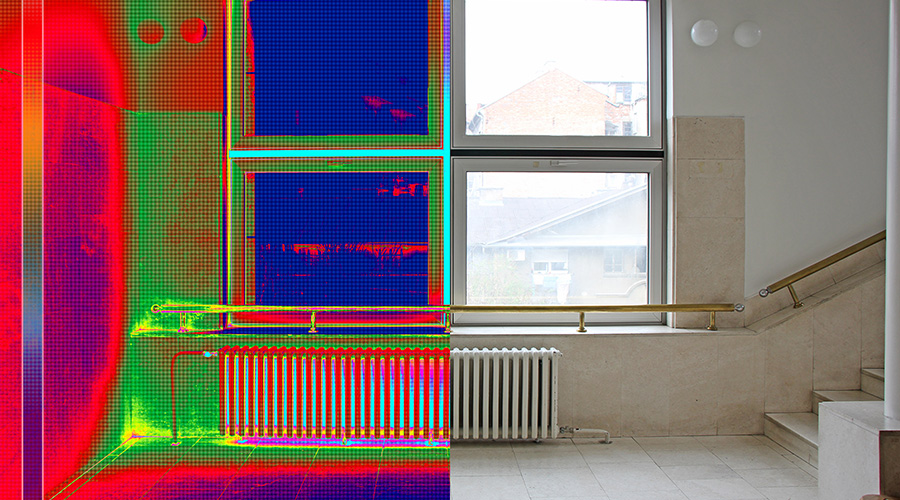
For managers to ensure that facilities help organizations serve their missions, they need the whole story, not just part of it. That is where facility condition assessments (FCA) come in. A facility condition assessment is a systematic evaluation of a building’s physical condition and systems that helps managers and their teams make decisions about maintenance, repairs and long-term capital planning.
“Managers need to understand the connection to organizational mission and link your report outcomes to organizational mission,” says Laurie Gilmer, president and chief operating officer of FEA, a facilities management and planning firm. “Use it as a vehicle to accomplish the mission. Then the FCA becomes a powerful tool to help you articulate why you need to do what you do. You’ve attached it to what you as an organization are about. Landing it within that context, that makes the FCA a really amazing tool. It’s more than a report on the shelf.”
What’s the frequency?
To be as effective as possible, managers need to take a structured approach to facility condition assessments, tailoring them to their facilities.
“The frequency and the scheduling depend to a large extent on the age, the condition and the type of the facility,” says Lawrence Keenan, senior vice president and director of technical services with Hoffmann Architects + Engineers. “A new building is going to have far different requirements than an older building with deferred maintenance.
“That ties into the condition. Condition and age are usually somewhat linked, but a poorly performing building with many work orders for leaks will require more frequent review than a brand new, pristine structure. Obviously, the type of facility is going to come into play. There are different forms of degradation for, say, a skylight versus a traffic coating on a parking garage.”
Gilmer says that while she sees facilities that perform assessments every 10 years or so, having them performed more often can benefit facilities.
“What is preferred and more useful is somewhere in the three-to-five-year range,” she says. “Five years, that’s probably the outside cycle if you were looking at scheduling cyclical FCAs. One of the reasons you want to do it on a shorter time frame and not wait 10 years is that things change so much in that three-to-five-year window. If you can do it on a three- or five-year cycle, the accuracy of the information that you’re using for financial planning is going to be better.”
While it might be tempting for managers to schedule a facility condition assessment in response to a particular event or emergency, managers need to focus on the longer-term application and benefits of the assessments.
“An FCA is more of a planning tool,” she says. “It’s broad in its scope. For an immediate failure, it might prompt a manager to put together an FCA if it inspires them to think about financial tools, risks to the facility, etc. But it’s really meant to be a broad application for specific pieces of equipment and elements within the building. If that’s your immediate concern, you’re probably just looking at a localized investigation.”
Dan Hounsell is senior editor for the facilities market. He is an award-winning journalist, has spoken at NFMT and other national conferences and has more than 30 years of experience discussing and writing about facilities management, maintenance and operations issues.
Related Topics: