What to Consider When Taking on a Lighting Upgrade Project
Lighting upgrades are more about long-term values than just fixture replacements.
Future-ready lighting control strategies now focus on modular systems, intelligent controls and human-centered design to deliver long-term value, operational insight and sustainable performance across modern buildings.
For building owners and facility executives, the message is becoming increasingly clear: the future of lighting is not just about better fixtures – it’s about smarter systems that deliver comfort, data, flexibility and long-term value across the organization. As sustainability targets tighten, energy codes evolve and expectations around occupant experience rise, lighting is emerging as one of the most strategic elements of modern building infrastructure.
Yet many lighting upgrades still begin with the wrong question.
“Lighting upgrades shouldn’t start with, ‘Let’s replace the light bulbs,’” says Lupita Legaspi, principal at engineering firm AlfaTech. “They should start with strategy.”
Before evaluating fixtures, rebates, or even payback calculations, Legaspi believes executives need to step back and ask two foundational questions: How long are we planning to remain in this space? And how is this space being used today versus how might that change in the future?
Those answers, she says, should shape every decision that follows.
“If an organization plans to occupy a building long term, it may make sense to invest in a comprehensive system that includes advanced controls and infrastructure improvements,” Legaspi says. “If the space is temporary, a more targeted retrofit may be appropriate.”
This strategic lens has become even more important as building use continues to evolve. Offices are adapting to hybrid work models, warehouses are incorporating automation and healthcare facilities are expanding services.
“Programming matters,” Legaspi says. “All of these shifts should influence the lighting approach and decision making.”
Systems, not fixtures
According to Heinrich Thye, secretary general of the Zhaga Consortium, many organizations still approach lighting upgrades with a short-term mindset.
“A common mistake is to evaluate lighting as a one-time installation rather than as infrastructure that will evolve over 15 to 20 years,” Thye says. That perspective, he says, often leads to decisions that optimize for immediate cost savings but limit future adaptability.
For facility leaders, Thye says the focus should not be limited to reducing watts. “Executives should look beyond simple wattage reduction and focus on the total lifecycle value of a lighting system,” he explains. That broader view includes energy savings, maintenance costs, operational flexibility, lighting quality, and digital readiness.
Standardized systems, he adds, “protect the investment by preventing vendor lock-in and enabling future-proof upgrades.”
Legaspi echoes that systems-based perspective.
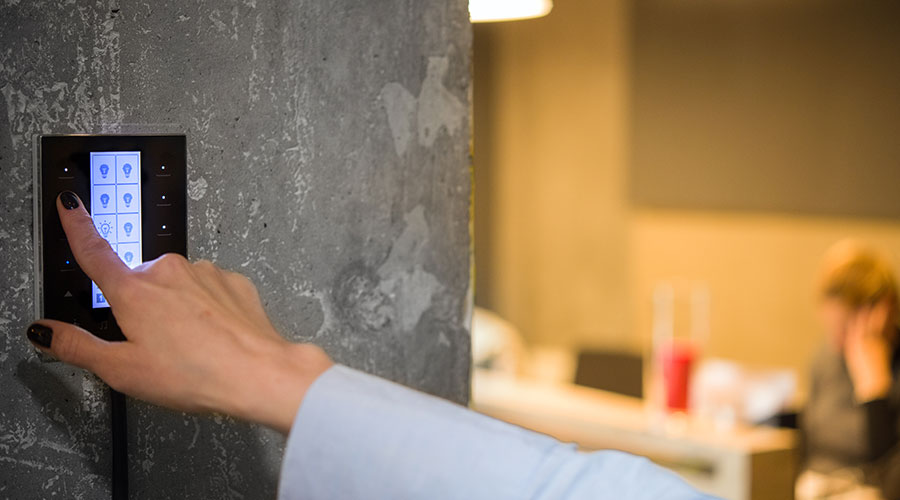
“LED upgrades reduce wattage, but controls are what truly improve payback because they reduce runtime,” she says. “Occupancy sensing, daylight harvesting, scheduling, HVAC automated response to occupancy, and task tuning can significantly increase energy savings beyond LED upgrades alone.”
That additional savings often shortens the payback period and makes the investment more attractive to investors and financial stakeholders.
Lifecycle costs and regulatory pressure
Energy performance, however, tells only part of the financial story. Legaspi urges executives to consider lifecycle costs just as seriously.
“With LED and controls upgrades, executives can expect reduced maintenance, longer system life, and better serviceability,” she says. “Over time, maintenance savings meaningfully improve overall return on investment.”
In a regulatory environment where energy standards tighten every year, these considerations become even more important.
“We live in a world where energy standards and regulations become stricter and tighter every year, with many codes already requiring advanced controls,” Legaspi notes. “Upgrading strategically can avoid future reinvestments and help facilities stay aligned with sustainability goals over time.”
Thye sees this shift aligning with broader circular economy principles.
“Lighting has evolved from simple LED retrofits to modular systems with sensors, connectivity and replaceable components,” he says. “Repairability and long-term serviceability are becoming just as important as energy efficiency.”
When it comes to financial evaluation, Thye encourages executives to take a layered approach.
“It is important to look beyond energy savings alone and consider total lifecycle costs,” he says. Maintenance savings, integration with building management systems, and improvements in employee well-being all contribute to the real return on investment.
Ultimately, he believes lighting should be treated as strategic infrastructure. “The smartest lighting upgrade is not just the most efficient one today, but the most upgradeable one for tomorrow.”
Maura Keller is a freelance writer based in Plymouth, Minnesota.
Related Topics: