Why Portable Cooling Isn’t a Plug-and-Play Fix
Portable cooling often gets treated like a quick fix, but experts say that mindset leads to failures, higher costs and operational risk.
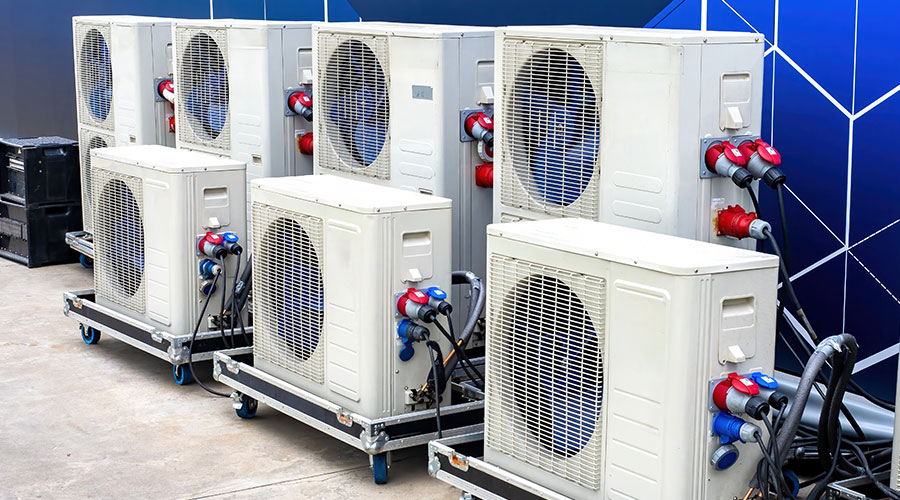
Portable cooling has a reputation problem. In many institutional and commercial facilities, it is still treated like an appliance: Roll it in, plug it in, point a hose out a window, and the problem is fixed. That plug-and-play mentality is exactly the way temporary cooling turns into nuisance trips, wet floors and unhappy occupants.
“When a client’s critical equipment or spaces face a temperature emergency, the natural tendency for facility managers is to fix the problem fast,” says Kaye Scheurer, senior director of engineering operations, workplace management, at JLL. “However, portable cooling isn’t something you can improvise. It requires advance planning, especially because of the wide range of sizes and system configurations, from small, single-point units to large, whole-building solutions.”
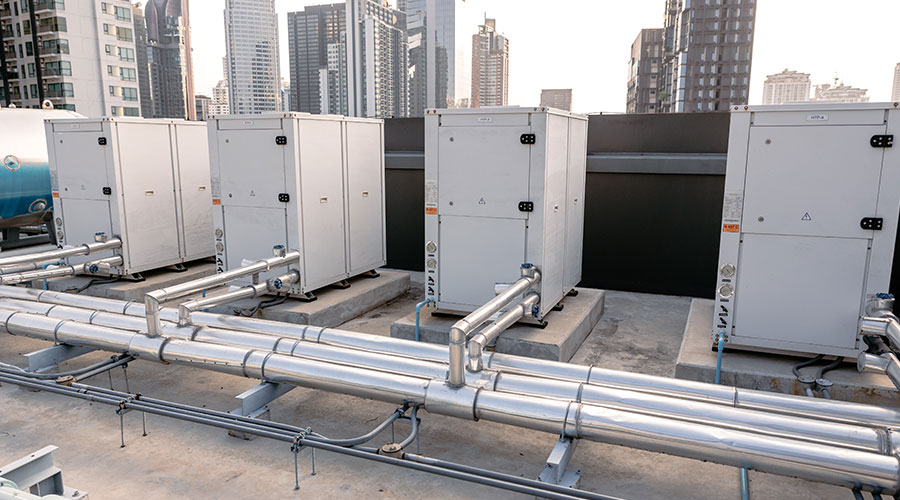
Scheurer says maintenance and engineering managers should treat portable cooling like a temporary mechanical, electrical and plumbing (MEP) project and plan for electrical, airflow routing and heat rejection, condensate handling and safety and logistics.
The takeaway for managers is straightforward: Portable cooling works best when managers treat it like a scoped installation with a commissioning plan, not an emergency gadget.
“Portable cooling is a sound interim strategy during planned shutdowns or phased retrofits, or short-term heat waves or peak load relief, and during disaster recovery or insurance events,” says Nick Angerosa, executive vice president, national customer solutions at Limbach, a building systems manufacturer. “Portable cooling becomes risky and expensive when used for chronic under-capacity problems. As a general rule, if the runtime exceeds one cooling season and no capital plan exists, you should reassess.”
Joel Williams is a freelance writer based in Frankfort, Illinois.
Related Topics: