How New Geothermal Technology Makes HVAC More Practical for Schools
An Illinois school district is using Dynamic Closed Loop geothermal technology to overcome site limitations.
Key Takeaways:
- Dynamic Closed Loop geothermal technology can make geothermal heating and cooling more practical for facilities with limited space by reducing the size of the underground energy capture field.
- North Shore School District 112’s project highlights how geothermal can provide consistent temperatures, improved ventilation and potential long-term maintenance advantages while supporting broader sustainability goals.
- Federal, state, local and utility incentives can significantly improve geothermal’s financial case, shortening the payback period and making advanced HVAC upgrades more achievable for school districts and other institutions.
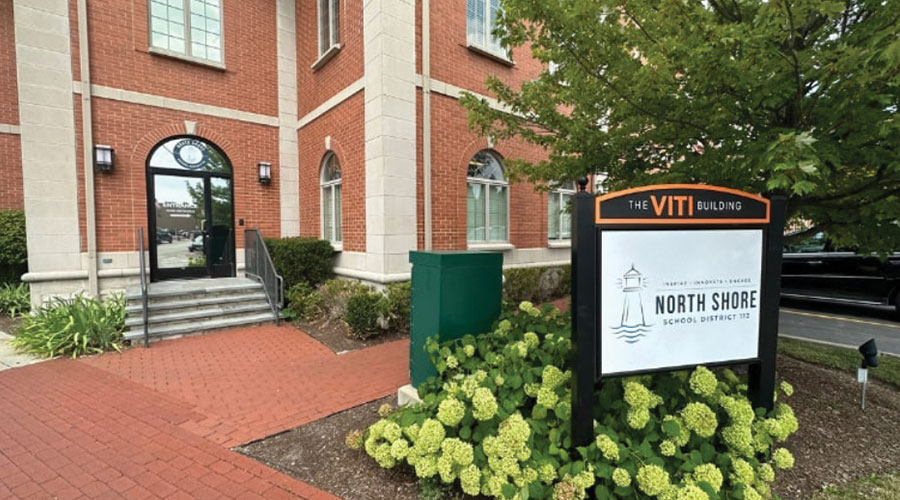
While Waunakee has shown what conventional geothermal can achieve over the long term, North Shore School District 112 is exploring how innovations can make geothermal practical for more buildings.
With a commitment to fiscal responsibility and environmental stewardship, this district investigated geothermal energy, seeking to reduce energy usage, lower emissions and enhance comfort within the building.
“As the project moved forward, it was important to identify a solution that aligned with the district’s educational mission and its long-term sustainability goals,” Patrick Heneberry, account executive for Trane Services says.
He added that the challenge was finding a solution that didn’t require large underground bore fields associated with traditional geothermal systems. Here, a Dynamic Closed Loop geothermal offered a viable solution.
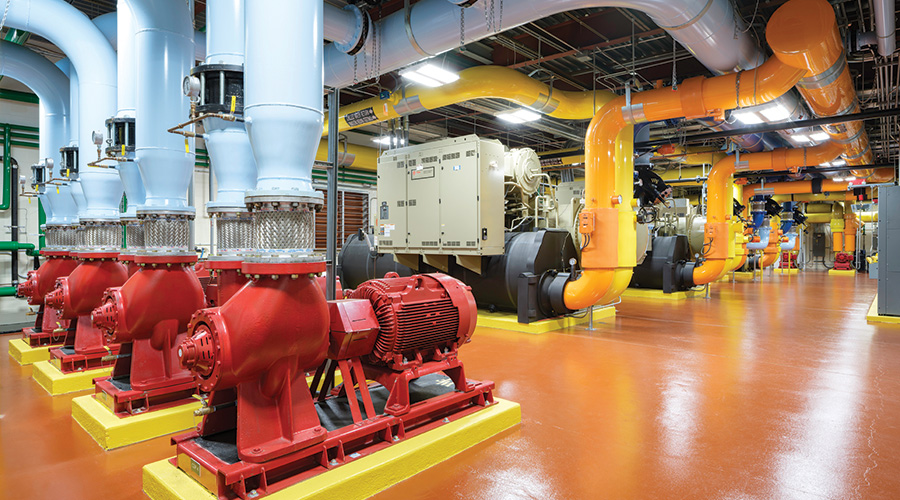
Unlike conventional geothermal systems that exchange heat through extensive underground bore fields, Heneberry shares that DCL technology uses “underground flowing water to improve heat transfer, which can reduce the size of the required energy capture field. That smaller footprint can make DCL technology especially attractive for facilities where available site space is limited.”
Nicholas Long, a geothermal researcher with the National Laboratory of the Rockies, says Dynamic Closed Loop is part of a broader wave of geothermal innovation that includes thermal energy networks that connect to multiple buildings across campuses.
“Geothermal technology has been around for a while,” he says. “We know how it works and more entities are comfortable with it.”
Benefits abound
North Shore School District 112 moved forward with its DCL geothermal project after extensive planning and carefully evaluating site conditions and long-term goals.
“A geological survey indicated that the site was well suited for this type of system, and the project team took a phased, consultative approach to evaluating feasibility and implementation,” Heneberry says. “The district was looking for an innovative solution that could support both infrastructure modernization and long-term sustainability goals, and this project presented an opportunity to do both.”
But, he says, projects like this can deliver benefits that extend beyond energy savings.
“Modern geothermal systems can deliver more consistent temperatures and improved ventilation to create a more comfortable indoor environment,” he says. “In a school setting, that can contribute to a better day-to-day experience for students, teachers and staff, supporting the learning environment districts want to provide.”
Geothermal systems may also reduce long-term maintenance demands, he adds.
“Facility managers should expect planned maintenance, as they would with any high-performing HVAC system, but geothermal systems can offer long-term operational advantages depending on the overall system design,” he says. “Many times, they can reduce maintenance associated with certain conventional heating and cooling equipment configurations while also supporting durable, efficient operation over time. As always, maintenance requirements depend on the application, design and operating conditions.”
According to Heneberry, DCL geothermal’s potential extends beyond K-12 schools.
“DCL geothermal has potential for facilities with long ownership horizons, decarbonization goals and an obvious need for efficient, reliable heating and cooling,” he says. “Schools are a strong fit because they combine long-term planning with clear sustainability objectives, but other institutional and campus-style environments may also be suitable candidates when site conditions are favorable. As with any geothermal application, the local geology and underground water conditions play a critical role in determining viability.”
Paying for the investment
Geothermal was a smart money move for both districts, too.
Waunakee’s first geothermal installation predates today’s federal incentives, so district leaders relied on referendum funding supported by a detailed lifecycle cost analysis. Independent engineers showed that lower utility costs would offset the district’s additional investment in roughly 10 to 12 years, giving the school board confidence to include approximately $1 million for geothermal in the 2014 capital referendum.
The district's other two installations will receive federal tax credits to offset the costs, adds Steve Summers, executive director of operations for Waunakee Community School District. The district is projected to get $1 million for the Heritage Elementary School system and $4-5 million for the Waunakee Middle School system.
North Shore combined referendum funding with federal, state, local and utility incentives to strengthen the project’s financial case.
“Inflation Reduction Act (IRA) tax credit opportunities were an important part of the broader funding picture, and Trane helped identify incentive pathways that could support the district’s goals,” Heneberry says. “The result was a project approach that combined community support with available sustainability incentives to make an advanced HVAC upgrade more achievable.”
Barnes notes that today’s incentives, which remained intact in the Trump Administration’s Big Beautiful Bill, have changed how organizations evaluate geothermal.
“When you look at the numbers, you might spend $500,000 on a traditional system versus a million dollars on a geothermal system, but when you install a geothermal system, the federal government may give you up to 50 percent of that system back as a direct payment,” Barnes says.
For Summers, today’s incentives only strengthen the case he made to his school board over a decade ago.
“Today, when you factor in the tax credits plus whatever your state might be willing to do, plus your utility savings, the return on investment is not as long as it was before,” he says. “I think it’s an easier decision today than it was 10 years ago.”
Ronnie Wendt is a freelance writer based in Minocqua, Wisconsin.
Related Topics: