How Grounds Managers Turn Technology into Results
As new tools enter the field, grounds teams are rethinking staffing, workflows and decision-making—using technology not to replace labor, but to maximize productivity and deliver higher-performing landscapes.
Battery-powered equipment is becoming more popular among grounds departments, but McKenna says he is not completely sold. Electric handheld tools such as blowers and edgers show promise, but they still can fall short of diesel and gasoline tools when it comes to raw power and long-term durability.
“This technology is still evolving," he says. “Some of my initial frustrations with this equipment were that the overall power of the unit wasn’t equivalent to our gasoline-powered ones, and the battery life just wasn’t there. This has improved, and now we are replacing smaller, gas-powered units as they come to the end of their life with electric” tools.
Johnson says Westminster Parks tests small, battery-powered units in select areas where noise reduction and emissions are beneficial, but larger zones still demand the power of traditional machines.
Michigan State University has transitioned its larger, two-stroke units to battery-operated versions to meet the university’s sustainability goals, Bailey says, adding that battery-powered tools are helpful in settings where noise and emissions matter, such as student residential zones and high-foot-traffic areas where crews must perform early morning work.
Bailey says battery-powered tools require planning for battery life and charging infrastructure. He advises managers to keep enough batteries on hand for an operator to run the equipment for an entire shift.
“Charging stations, connectivity for autonomous features and maintenance protocols all factor into whether a battery-powered solution is practical,” he says. “The shift is more than mechanical. It changes workflows and requires planning around electricity supply and charging capacity.”
Staffing and operational efficiency
Technology also can help grounds managers make the most of limited labor.
For example, McKenna manages a small full-time crew supplemented by student workers whose schedules fluctuate with academic and athletic calendars.
“Autonomous units allow us to prioritize the work and frees staff to focus on event preparation, landscape details and problem areas that demand human judgment,” he says.
Johnson sees a similar pattern in Westminster, where robots and modern tools reduce repetitive work and enable staff to tackle maintenance tasks that improve public experience and safety.
Bailey uses automated systems to develop more disciplined grounds care schedules at Michigan State University. Rather than relying on memory or paper maps, his team uses geographic information system technology to assign tasks, monitor progress in real time and adjust plans midday if needed. He says this level of operational agility enhances campus responsiveness, especially during peak seasons.
Balancing innovation with practical reality
Across all three departments, these managers stress that modern technology should supplement traditional approaches, not replace them.
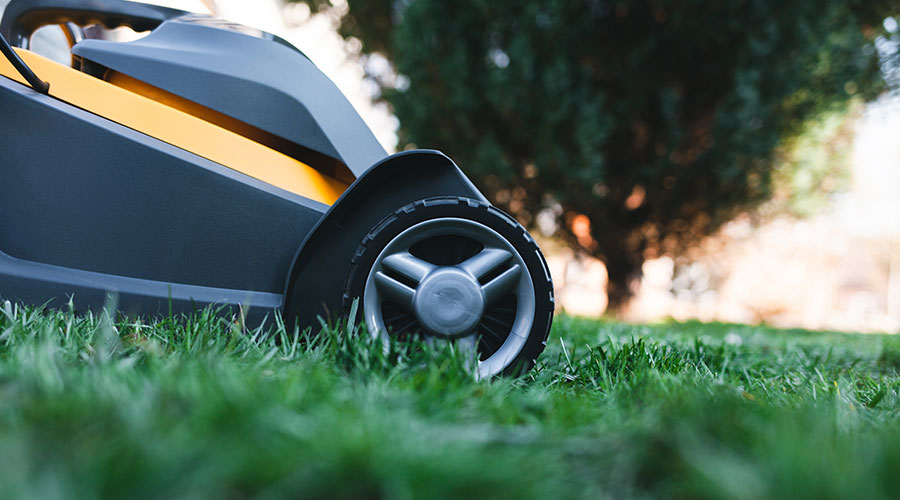
McKenna says autonomous tools work best when deployed strategically in spaces where they complement staff skills and workload. For example, when his team took on maintaining the university’s track facility, it added 3 acres of grass that required mowing.
“My staff wasn’t expanding, so a robotic mower made sense,” he says. “But for core facilities like main stadium turfs or tennis courts, traditional equipment still delivers the control and performance we need.”
Johnson concurs.
“Automation supplements our staff,” he says. “It doesn’t replace them. The key is blending new tools with proven methods.”
Bailey takes on a broader perspective
“There’s no one-size-fits-all solution,” he says. “Each facility must evaluate its priorities, areas of responsibility and available resources before investing in automation or battery-powered equipment.”
As institutional and commercial facilities embrace automation, electrification and data-driven fleet management, one thing becomes clear: modernization centers on elevating the work itself.
Autonomous mowers, GPS tracking and electric tools offer efficiency and insights that traditional methods alone cannot provide, but they do so only when platforms are thoughtfully integrated into existing workflows.
“The lesson is to approach modernization thoughtfully," Johnson says. “Each facility has unique needs. There’s no one-size-fits-all solution, but with careful planning, innovative technologies can be a powerful asset.”
Ronnie Wendt is a freelance writer based in Minocqua, Wisconsin.
Related Topics: