Women in Facilities Management: Making the Industry More Inclusive
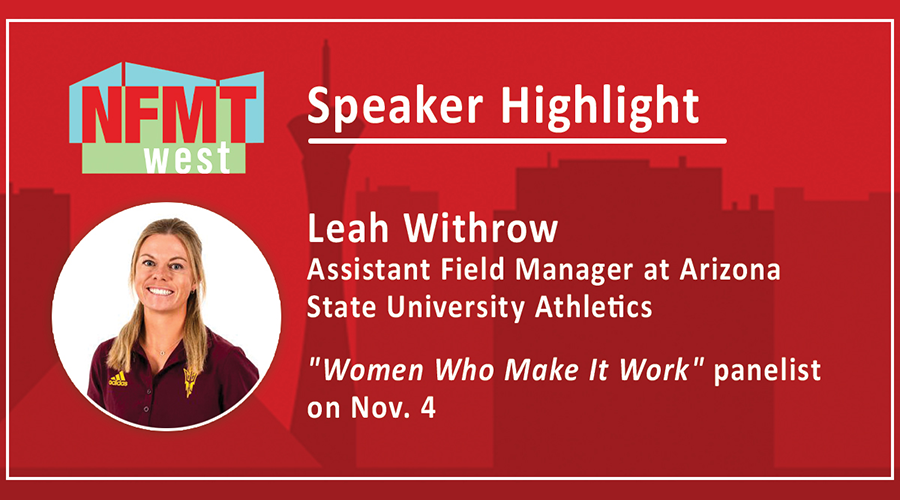
Leah Withrow of Arizona State University Athletics discusses how facilities leaders can create more inclusive workplaces and challenge outdated assumptions about women in hands-on roles. September 9, 2026
By Jeff Wardon, Jr., Assistant Editor
Key Takeaways:
- Facilities organizations can improve inclusion through practical changes such as providing women’s locker rooms and properly sized uniforms at work locations.
- Women in hands-on facilities roles should be treated as equal employees rather than singled out or underestimated because of their gender.
- Challenging assumptions about women’s physical abilities and recognizing the different perspectives they bring can strengthen the facilities management profession.
As more women enter facilities management, the industry is beginning to confront long-standing assumptions about who belongs in the field. Leah Withrow, assistant field manager at Arizona State University Athletics, discusses the practical changes, workplace attitudes and misconceptions that can make facilities careers more welcoming to women.
That and more will be covered in her session “Why Horseshoes Win: Rethinking Women’s Access, Inclusion, and Growth in FM” at NFMT West in Las Vegas from November 3 to 4.
FacilitiesNet: Facilities management has traditionally been a male-dominated field. From your perspective, how has the industry's approach to inclusion evolved, and where do you still see opportunities for improvement?
Leah Withrow: I think we’ve evolved mainly through the number of women joining the industry. I don’t think the industry itself has necessarily evolved to accommodate more women; I think more women have simply found an interest in facility management.
Every year, more and more women are entering the industry in different capacities—on the field side and the facility side. And, obviously, there’s always room for improvement.
I’d love to see more accommodating facilities, such as women’s locker rooms alongside men’s locker rooms in shops and other work locations. Women’s sizing in uniforms is also still very uncommon, and it can be frustrating trying to do a job in a men’s large when you’re a women’s small. It can be tough.
I’d like to see more progress in acknowledging that women are part of this industry and in making our day-to-day experience at job sites easier.
FN: What are some practical steps facilities leaders can take to create workplaces where employees from all backgrounds feel valued and have opportunities to grow?
Withrow: First and foremost, I think we want to be treated like any other employee, to some extent. We’re there to work just as much as our male counterparts are, and simply including us and acknowledging us as workers is a huge step.
I’d also love to see less of the feeling that we’re being singled out or put on display—like, “Oh, look, a girl’s doing it.” Sometimes it can feel like we’re made into a circus act or put on a pedestal just because we’re women in the field.
I think we just want to be treated equally to our male counterparts: to do the job, be respected at work, and not be called out simply for being women.
FN: If there was one misconception about inclusion in facilities management that you wish more organizations would challenge, what would it be, and why is addressing it important for the future of the profession?
Withrow: One big misconception—especially in facilities and other hands-on work—is that women can’t carry our weight. There can be this assumption that we can’t lift what men can lift or be the “brawn” of the operation.
But we can. There are many ways to get a job done. I’ve had to come up with creative ways to lift heavy things, but I can still do it. Limiting women because of assumptions about the physical side of the job really sells us short.
We also bring different ways of thinking to work. Women can bring organization and different thought processes, and facilities management can benefit from that perspective. I think the occupation is missing out when it doesn’t recognize the value of the female side of things.
FN: What do you think will be the most important takeaway from your session?
Withrow: I’m hoping that, by the end of our panel and session, women feel like they are part of this industry and truly welcome in it. I hope they feel that the hurdles they may face are manageable and possible to overcome.
And if facilities management is their passion, I hope they can find joy in it—and not let old standards or other people’s opinions keep them from pursuing and enjoying a job they want to do.
To learn more about incorporating more inclusive practices, be sure to check out Withrow’s session at NFMT West 2026 this November. Register for West here.
Jeff Wardon, Jr., is the assistant editor for the facilities market. With more than three years of experience, he covers topics including technology, wellness, sustainability and emerging industry trends. Connect with him on LinkedIn.
Next
Read next on FacilitiesNet