Women in Facilities Management: Build Skills and Opportunity
Veronica Rivera of College of the Siskiyous discusses inclusion in facilities management, professional development and the importance of communication and mentorship. September 23, 2026
By Jeff Wardon, Jr., Assistant Editor
Key Takeaways:
- Professional development and hands-on training can help facilities teams build technical skills while creating opportunities for employees to take on greater responsibilities.
- Rivera says women can succeed in facilities management by leveraging communication skills while developing the mechanical, electrical and plumbing knowledge needed for the job.
- Effective facilities leaders need to communicate with vendors, staff, students and other stakeholders while remaining present and engaged in day-to-day operations.
Facilities management requires a broad mix of technical knowledge, communication and relationship-building, but women continue to navigate a field that is seen as traditionally male-dominated.
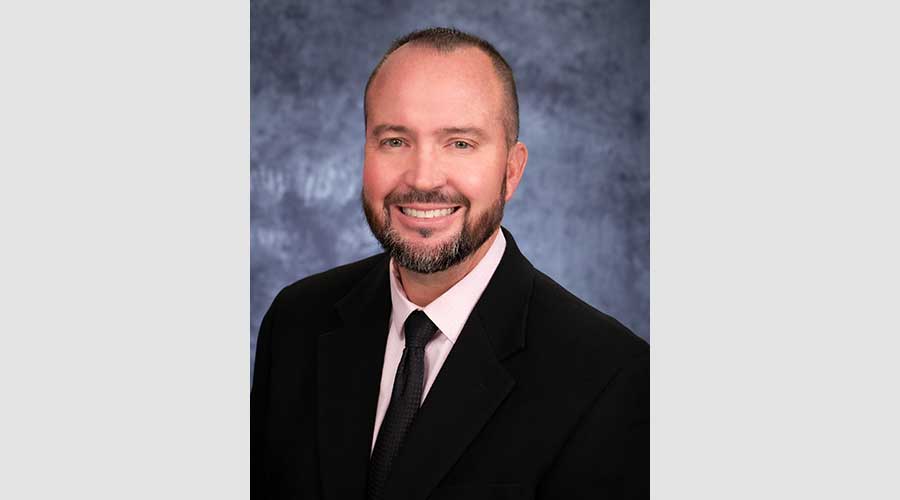
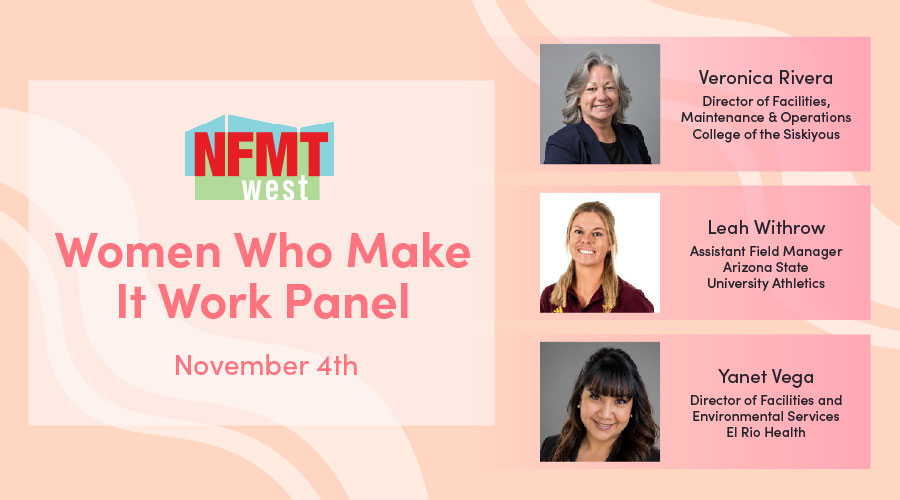
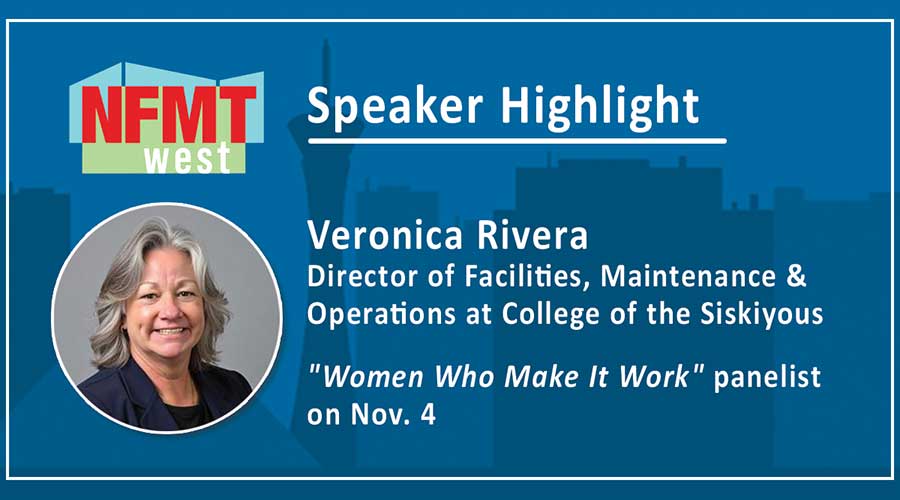
Veronica Rivera, director of facilities, maintenance and operations at the College of the Siskiyous, discusses how professional development and hands-on learning can help build stronger teams while challenging assumptions about who can succeed in FM. This and more will be covered in her session “Why Horseshoes Win: Rethinking Women’s Access, Inclusion, and Growth in FM” at NFMT West in Las Vegas from November 3 to 4.
FacilitiesNet: Facilities management has traditionally been a male-dominated field. From your perspective, how has the industry's approach to inclusion evolved, and where do you still see opportunities for improvement?
Veronica Rivera: For improvement for women, my goodness, it takes strong woman leadership to support another woman. That’s the only opening you really have in a man’s world.
I’ve always been in a man’s MOS, if you will, right? I started off in the Marine Corps as an air conditioning and refrigeration mechanic. Then I went straight into the IBEW JATC, the union apprenticeship program, in San Diego.
So my construction knowledge is valuable, and it gives me the resources to manage this position. After being in this position, I think anyone can do it, as long as you’re present and you understand some sort of mechanical, electrical or plumbing work. You have to have some sort of construction knowledge.
You can be very good at planning and scheduling and managing your resources, contractors, generals, subs and all of that. You can be very good from the desk and not really have all that knowledge. But when it comes down to invoicing and what they’re proposing, that’s the hard part if you don’t understand construction.
Writing contracts and understanding the needs — that’s big. I can’t say that it’s been women- or female-friendly.
But most of my constituents around me are at Butte College and College of the Redwoods. We are all facility directors, or female facility directors. One is from architecture, and one came up through the ranks over 30 years.
So, I can’t say anything’s changed to make it easier for us to get in here. It’s just really, honestly, knowledge-based. And consistency and presence — you have to have your presence, especially when you’re in construction.
FN: What are some practical steps facilities leaders can take to create workplaces where employees from all backgrounds feel valued and have opportunities to grow?
Rivera: For us, for me, for this district anyway, I am big on professional development. I always seek opportunities to train the staff on the next steps. Electrical safety, right? That’s a yearly, annual training, so I’m constantly trying to increase what I can bring to the table for them to learn and make it a better team.
The more they know, the better the team is. So, I’m always bringing professional development to the table. And if anybody wants to become part of maintenance or has that drive to be a little bit better, a little bit higher, I’m always open to training them.
Even with my own electrical work, I take custodians who want to learn LED retrofits and give them the opportunity to hold the tool, do the thing and learn. Sometimes I’ll hear, “Hey, I retrofitted all of my fluorescent lights to LEDs because you showed me.” It’s just the small things like that that I continue to do.
I refuse to allow the team to become stagnant. And even if it is DEI training, which is sometimes not always the biggest acceptance in there, it’s still part of my job to train the new people and make it all-inclusive. So, we don’t sit stagnant, for sure. And to me, that’s the killer of all teams: stagnation.
So, if you’re on my team, you’re a lifelong learner.
FN: If there was one misconception about inclusion in facilities management that you wish more organizations would challenge, what would it be, and why is addressing it important for the future of the profession?
Rivera: I think the misconception is that women cannot do this job. I think the misconception truly is that men are the only fit for this management job, and I think that is absolutely false.
And I’ll tell you why I think women are good — better, even — at this job than men: We’re talkers. If we don’t have the answer to something, you can bet we’re on the phone calling and asking. If we don’t understand something that’s going on in our department or on a construction project, we absolutely will pick up the phone and call the next person.
I’ve worked with several men — well, I haven’t worked for, I’ve worked with, with several men — who refuse to pick up the phone and call that tech service or call that next person to get your answers or even develop planning.
We women are natural communicators, and this position, I would say, is 85 percent communication, if not more. Communication, communication in every direction: letting the district know what’s going on, always being that middle ground for the connection with your staff and all your faculty, right?
Everybody’s safety depends on what you do in this position. With construction, communication is paramount. And boy, if anything, women are really good at communicating.
So, yeah, the misconception that this is a man’s world? No, no, that’s false.
You can be very successful as a woman in this position. And you can learn MEP — mechanical, electrical and plumbing. That’s something that’s very easily learned once you’re in this position.
FN: What do you think will be the most important takeaway from your session?
Rivera: This is such a hard job. I don’t wish it on anybody, that’s for sure. This is a tough position. I could be a lawyer. I could be a contractor, which I am. I could be an architect. I could be an engineer.
Each person, each section of that, has a big portion of this project, of this position. So, my takeaway is, it’s not always just knowing the construction. It’s understanding your relationships with your vendors. It’s understanding your relationship with the staff and the students and everyone else you serve.
This position is a dynamic position, and you have to communicate. It’s incredibly important that you communicate. And that’s it. Just be a good communicator and be present. I hope that’s what they get from my session.
To learn more about how women can grow in facilities management, be sure to check out Rivera’s session at NFMT West 2026 this November. Register for West here.
Jeff Wardon, Jr., is the assistant editor for the facilities market. With more than three years of experience, he covers topics including technology, wellness, sustainability and emerging industry trends. Connect with him on LinkedIn.
Next
Read next on FacilitiesNet