How Stanford's Cary Wilder Leads Facilities
Stanford University’s Cary Wilder believes nothing is beyond repairs Cary Wilder believes nothing is beyond repair.
By Mackenna Moralez, Managing Editor
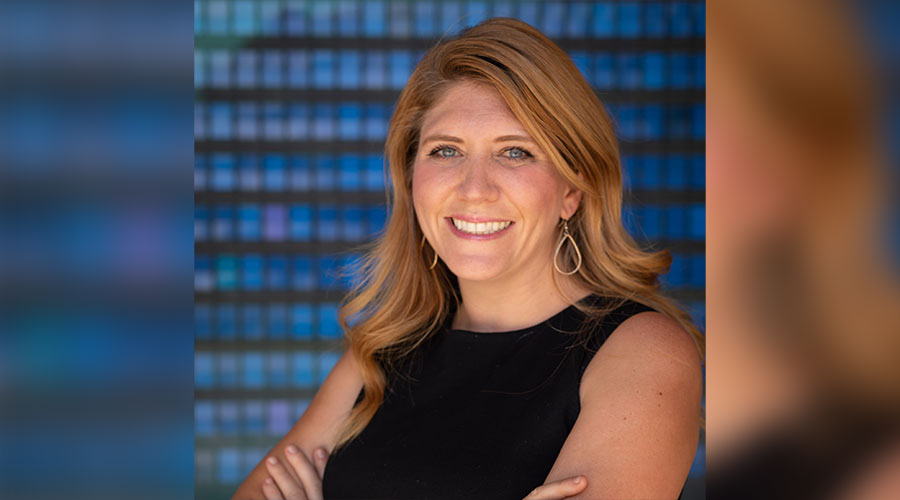
Like many others in the industry, Cary Wilder didn’t actively seek a career in facilities management – it found her.
While working for a real estate developer, she dealt with property acquisitions and maintenance. As the company expanded, so did her role. When asked if she wanted to stay within property management or transaction correspondence, she chose the former.
“I don’t know why I picked it,” Wilder says. “I think I liked being helpful. It just felt nice to be able to help people when there was a problem – and I think that might be my superpower. Obviously when people call, they are in a panic because something is broken. I just never get riled up. Everything’s fixable. I would just tell them, ‘Here’s what I’m going to do. Here’s the expected time period. Here’s what we’re going to do in the meantime, and we’ll get it solved. Don’t worry, we’re on the case.’”
Wilder’s calming presence and problem-solving demeanor has led her through an extensive career in facilities, ranging from R&D industrial buildings, Class A office spaces, retail shopping centers and, now, Stanford University. As the associate director of projects and renewal strategies at Stanford Graduate School of Business, Wilder oversees several preventive maintenance and asset management programs. In addition, she has spearheaded multiple sustainable initiatives, allowing for more sustainable and cost-effective operations.
“Cary has truly elevated her role by bringing a level of expertise and excellence that is indispensable,” says Lee Redmon, director, facilities operations, Stanford Graduate School of Business. “She is always ready to collaborate, no matter the complexity of the task, ensuring that every assignment is successfully completed while also reflecting on how it can be improved in the future. She has mentored her fellow project managers, helping them develop both their skills and their responsibilities. Under her leadership, the project team has become known for their diligence and hard work, proving to be reliable in conducting research, managing budgets, and successfully guiding projects — regardless of size or scope — through to completion, as long as they receive school approval.”
Wilder is known for her proactive approach in maintaining open communication channels and addressing tenant concerns, allowing her to foster long-term relationships and high tenant satisfaction. Her ability to build strong partnerships across team members and vendors has significantly reduced response times for repairs and maintenance, often completing projects on time and within budget, ensuring more reliable operations across the university.
To better work with her community, Wilder created a resource-sharing network among property managers. By leveraging the combined purchasing power of multiple properties, she has been able to secure better rates and service quality.
“With project management and facilities, you never quite know what you’re going to find,” Wilder says. “A leak could be very straightforward or you could open up the wall and it’s far worse than you ever imagined. I think the patience and the resiliency is just knowing that even if it’s a bigger problem than what we thought, everything is still fixable. It’s just going to take a little bit more time, a little bit more money.”
Communication style
Wilder’s role can be viewed as a direct line to senior management at the university. She is able to clearly communicate the problems, timelines and expected costs in a language that they understand.
“I think it’s meeting each person and giving them the information that they need,” she says. “I often remind my team, put yourself in the position of somebody on the outside. What information do they need to know? Certainly, you’re an expert and you know the project inside and out, but when you’re sharing the information, an outside person may not know that acronym or the construction jargon. Is there a way to sort of simplify what’s happening in layman’s terms so that when somebody from the accounting team is reading it, they feel as though they understand what the project’s going to be and they feel comfortable with what to expect.”
Wilder largely attributes her communication style to having three young children. Being a mom and working in facilities means that there is always some type of problem that needs to be diffused or a negotiation that needs to be made. And while the to-do list of both roles may seem never ending, she remembers that she is their partner and relationships require a little extra nourishment in order to truly thrive.
“I have been yelled at a lot,” Wilder says. “I’m the person that people think they can take it out on. But I just keep talking to them with a calm voice and saying, ‘I hear you, that is so frustrating. I’m going to help you.’ It’s hard to be angry when somebody is validating them. All I want is to be able to work together.”
Her team acknowledges that she continuously raises the bar for everyone by encouraging them to think critically, ask the tough questions and come prepared. By shifting the mindset of just “getting it done” to doing it the correct way every time, she has created a culture of accountability and excellence.
“Cary has really set the bar high for what is possible and how a team should organize and manage itself,” says Devin Trop, facilities project manager, Stanford Graduate School of Business. “She doesn’'t just lead by example when it comes to efficient workflow, but she is also always on the spot when it comes to her efforts in building up the people around her. She is always on the lookout for positive and proactive ways to make everyone around her stronger, while still acknowledging and embracing the importance of the fact that we are all human and not machines.”
Campus improvements
In 2018, Stanford University made the commitment toward achieving zero waste by 2030. To support this goal, Wilder led the charge in implementing energy-efficient improvement projects, such as adding LED lighting to campus classrooms and adopting building sustainability practices. In addition, she collaborated with city officials to improve the cleanliness and maintenance of city sidewalks and public trash pickup.
Recently, Stanford received complaints from students about the comfortability of chairs in certain classrooms. They had slight tears in them and colors had faded, making them unsightly. Similar to lighting and temperature in classrooms, comfortability plays a significant role in student learning outcomes. The more uncomfortable students are while learning, the worse they will do in their classes. Wilder knew that the chairs had to be improved, but new furniture is expensive.
“We found a company that was able to reupholster the chairs for like a quarter of the cost of a new chair, so we went with that,” Wilder says. “They are so cushiony and they look great. There’s now a cohesive color because over the years they were slightly different shades. So now we have a better quality, better looking finished design at a fraction of the cost. Knowing that these perfectly good chairs just needed to be reupholstered and didn’t end up in a landfill is just a huge win.”
Along with meeting sustainability goals, Wilder has made significant strides in meeting the facility’s operations through space reallocation. Since the COVID-19 pandemic, a majority of education staff worked from home, leaving many office spaces to be underutilized while there was a growing demand for classroom and event space to accommodate increasing student enrollment.
Wilder was approached to conduct a comprehensive space utilization analysis to identify underused office areas for potential reconfiguration. The space needed to accommodate at least 70 people, allow for tiered seating and fit within Americans with Disabilities Act (ADA) guidelines. She explains that the security team was constantly getting counts of who’s in different office spaces to figure out what was being utilized daily and what was being underutilized. Once finding the appropriate space, Wilder and her team were able to transform an existing office space into a classroom and staff breakout room.
“It’s an incredible win, but it did take a lot of metrics,” Wilder says. “The creative solution in a tiered classroom is how do you enter with ADA accessibility? We worked with the architect on lots of different ways to make this classroom fit in this building that already exists. We only had this square footage to work with, so we came up with different kinds of ways we could do it. Eventually we ended up going through a walkway that had a planter to add a door, so we could have ADA accessibility.”
While there were staff members who were glad to work remotely or “hotel desk” when they came to campus, Wilder did have tough conversations with some staff members. She approached the situation by understanding that everybody’s office space is important and personal but knew that it was for the betterment of the entire university. Part of her role in the reallocation project was making herself available. Throughout projects she offers to walk the space with people and specifically show what they were going to be working on.
“I think it (construction) can feel really overwhelming,” Wilder says. “I like to send pictures of what’s going to be the old and what’s going to be the new. I think it’s sharing the information that matters to that audience. We don’t need to get into the nitty-gritty behind the scenes. It’s really what are they going to see and feel. The people in that office space are going to see somebody working on a ladder, they’re going to hear construction noises. Just tell them what they need to know.”
Supporting all
If Greg Osipoff had to choose a word to describe Wilder, he would select “reassuring.” He explains how she anticipates issues before they arise and consistently looks at the bigger picture without compromising the details.
“Cary is strategic and exceptional at managing complex projects,” says Osipoff, the graduate school’s associate director, facilities operations. “Cary navigates vendors, contractors and stakeholders with ease while keeping everything on track. I always feel more prepared and more confident when Cary is involved.”
Wilder spends time giving back to new and emerging facility management professionals, organizing and leading numerous training sessions focused on best practices, technological innovations and sustainable management. She advises new facility managers to be proactive, build a strong network and to be resilient and patient. In addition, she believes in giving praise in public and corrections in private. To her, it is important to give people learning opportunities without embarrassing them for doing something wrong.
“Cary is a teammate who thoughtfully refines ideas and processes,” says Redmon. “She enhances both her own skills and those of her colleagues through collaboration. Courageously, she introduces concepts that may not initially be well received, but over time, they prove to be the innovative solutions that are necessary and fitting for the situation.
“We take pride in our positivity and resilience, and Cary consistently maintains a positive attitude, even when others may not feel motivated. As a mother, wife, project manager, and leader, she skillfully manages a significant workload with grace, always striving to give her best in both good times and challenging situations while valuing her family's needs as she seeks a balanced work-life dynamic.”
Mackenna Moralez is the managing editor of the facilities market and the host of the Facilities in Focus podcast.
Related Topics: